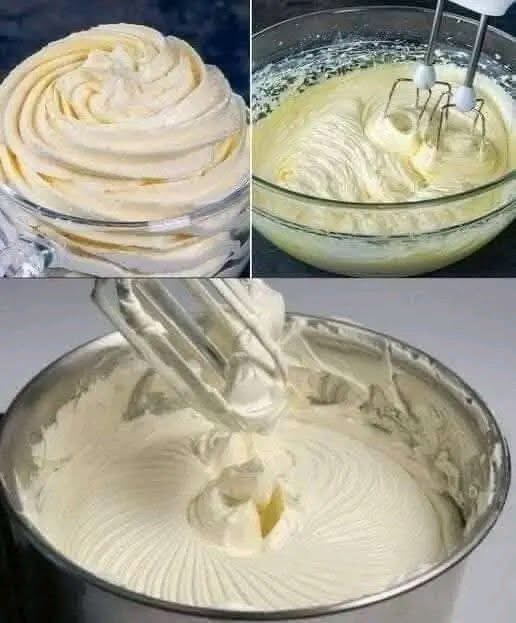
Ingredients
- 2 cups (454 g) unsalted butter, softened to room temperature
- 6 cups (720 g) powdered sugar, sifted
- 2 teaspoons pure vanilla extract
- 2–4 tablespoons heavy cream or whole milk
- ¼ teaspoon fine salt
Optional:
- 1 teaspoon almond extract
- Food coloring (gel preferred)
- Cocoa powder for chocolate buttercream
- Lemon zest for citrus flavor
Equipment
- Large mixing bowl
- Electric hand mixer or stand mixer
- Rubber spatula
- Fine sieve
- Measuring cups and spoons
- Piping bags and decorating tips
Step 1: Prepare the Butter
Allow the butter to soften naturally for about one hour before beginning.
Properly softened butter should:
- Feel cool to the touch
- Press easily with your finger
- Not appear oily or melted
Cold butter will create lumps, while melted butter produces runny frosting.
Step 2: Beat the Butter
Place the butter into a large mixing bowl.
Using medium-high speed, whip the butter for approximately five minutes.
During this process the butter becomes:
- Pale yellow
- Light
- Airy
- Creamy
This is the secret behind professional-quality buttercream.
Step 3: Add Powdered Sugar
Reduce the mixer to low speed.
Add powdered sugar one cup at a time.
Mix completely before adding the next cup.
This prevents clouds of sugar from flying everywhere while ensuring a perfectly smooth frosting.
After all the sugar has been incorporated, scrape down the sides of the bowl.
Step 4: Add Flavor
Mix in:
- Vanilla extract
- Salt
These simple ingredients dramatically improve the overall flavor by balancing the sweetness.
Step 5: Add Cream
Pour in two tablespoons of heavy cream.
Beat on medium speed.
If the frosting feels too thick, add one tablespoon of cream at a time until you achieve the desired consistency.
Step 6: Whip Until Fluffy
Increase the mixer speed to high.
Whip for another four to five minutes.
You’ll notice the frosting becoming:
- Silky
- Bright
- Smooth
- Extremely fluffy
This final whipping stage creates thousands of tiny air bubbles that make the buttercream light and luxurious.
Perfect Consistency Test
Your buttercream is ready if:
- It forms stiff peaks.
- It holds its shape.
- It spreads easily.
- It pipes beautiful swirls.
- It looks glossy without appearing greasy.
Chocolate Buttercream
For a chocolate version, add:
- ¾ cup unsweetened cocoa powder
- Extra tablespoon of cream if needed
Beat until fully combined.
Cream Cheese Version
Replace one cup of butter with:
- 8 ounces cream cheese
This creates a tangy frosting that’s perfect for carrot cake and red velvet cake.
Coffee Buttercream
Mix together:
- 2 teaspoons instant espresso powder
- 1 tablespoon warm water
Allow to cool before adding to the frosting.
Strawberry Buttercream
Add:
- ½ cup freeze-dried strawberry powder
Mix until evenly distributed.
The frosting becomes naturally pink with an intense berry flavor.
Lemon Buttercream
Mix in:
- Zest of one lemon
- One tablespoon fresh lemon juice
Perfect for spring and summer desserts.
Cookies and Cream Version
Fold in:
- 10 crushed chocolate sandwich cookies
Mix gently with a spatula.
Best Cakes for This Frosting
This buttercream pairs beautifully with:
- Vanilla cake
- Chocolate cake
- Red velvet cake
- Lemon cake
- Strawberry cake
- Coconut cake
- Marble cake
- Banana cake
- Funfetti cake
- Coffee cake
Cupcakes
This recipe generously frosts:
- 24 cupcakes
Each cupcake can be decorated with large bakery-style swirls.
Layer Cakes
Enough frosting for:
- Two 8-inch layers
- Two 9-inch layers
- One tall six-inch cake
Decorating Tips
For beautiful designs, use piping tips such as:
- 1M
- 2D
- 6B
- French Star
- Open Star
- Closed Star
These produce elegant swirls just like those shown in the image.
Coloring Buttercream
Gel food coloring is preferred because it:
- Produces vibrant colors.
- Doesn’t thin the frosting.
- Mixes evenly.
- Requires only a small amount.
Always add color gradually until you reach your desired shade.
Storage
Refrigerator:
Store in an airtight container for up to one week.
Freezer:
Freeze for up to three months.
Before using again:
- Bring to room temperature.
- Rewhip for three to five minutes.
It will return to its original fluffy consistency.
Troubleshooting
Frosting is too thick
Add one tablespoon of cream at a time until smooth.
Frosting is too thin
Mix in additional sifted powdered sugar.
Frosting is grainy
Beat longer and make sure the powdered sugar was sifted before mixing.
Frosting separates
The butter may be too cold or too warm.
Allow it to come to room temperature and continue beating until smooth.
Buttercream is too sweet
Add:
- Extra pinch of salt
- Small amount of lemon juice
This balances the sweetness without affecting texture.
Professional Baking Tips
- Always use high-quality butter for the best flavor.
- Sift powdered sugar to avoid lumps.
- Beat the butter first before adding sugar.
- Use room-temperature ingredients.
- Scrape the bowl frequently during mixing.
- Whip long enough to incorporate plenty of air.
- Avoid over-adding liquid.
- Chill frosted cakes briefly before transporting.
- Keep the mixer on low while adding sugar to prevent a mess.
- Taste the frosting before decorating and adjust the vanilla or salt if needed.
Nutritional Information (Approximate)
Per serving (2 tablespoons):
- Calories: 190
- Fat: 11 g
- Carbohydrates: 24 g
- Sugar: 23 g
- Protein: 0 g
- Sodium: 25 mg
Final Thoughts
A great buttercream frosting is one of the most valuable recipes every baker can master. With just a handful of pantry staples—butter, powdered sugar, vanilla, cream, and a pinch of salt—you can create a frosting that is incredibly smooth, rich, and versatile. Whether you’re frosting a birthday cake, piping elegant cupcake swirls, filling macarons, or decorating cookies, this classic buttercream provides a reliable foundation that can be customized with countless flavors and colors.