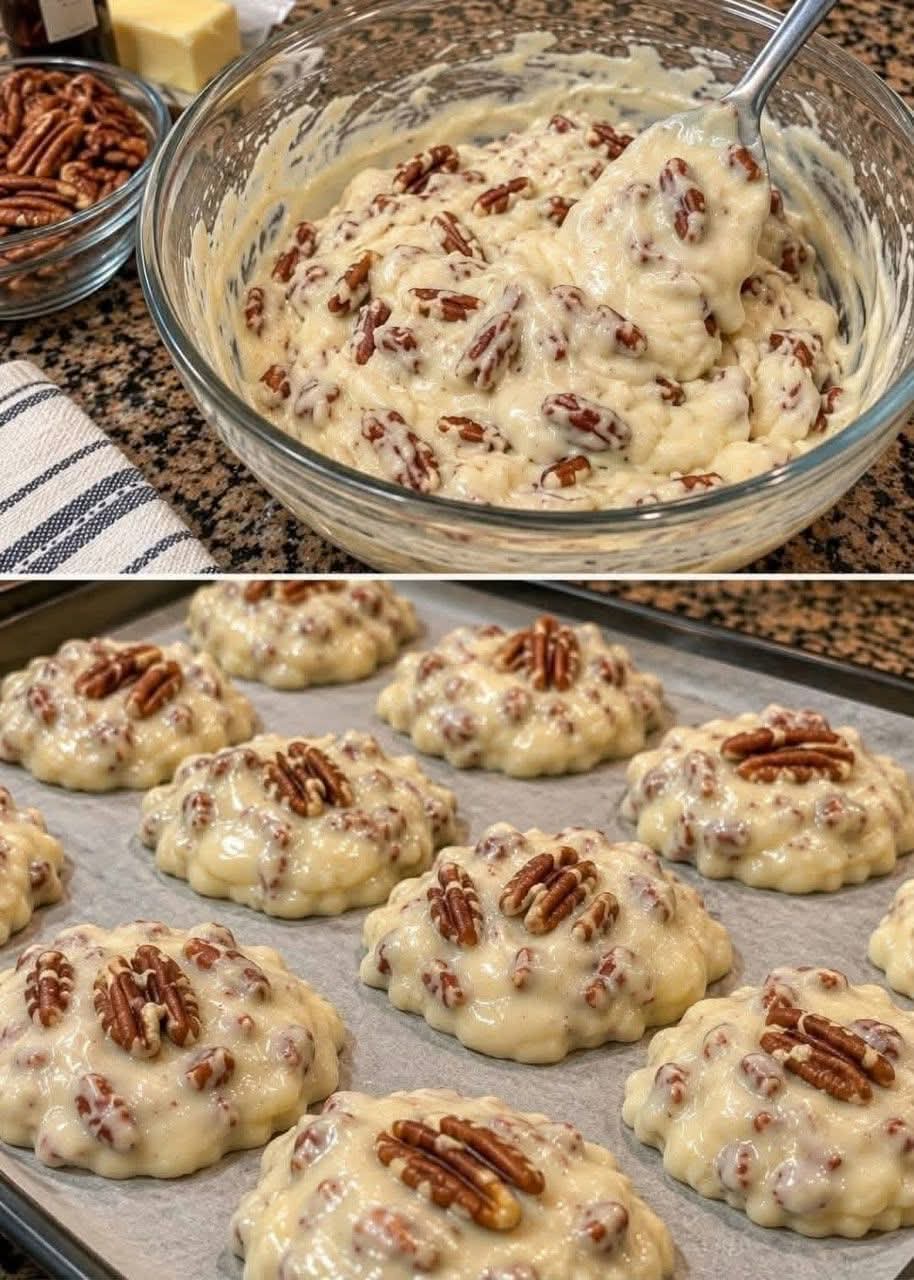
Why You Will Love These Pecan Praline Cookies
There are many reasons to add this recipe to your collection of favorite homemade desserts. First, pecans provide a wonderful combination of nutty flavor and satisfying crunch. When paired with butter, brown sugar, and vanilla, they create the familiar taste of traditional praline candy.
Second, these cookies are easy to customize. You can make them with chopped pecans throughout the dough and decorate the tops with whole pecan halves. If you prefer a sweeter finish, you can also drizzle them with a simple praline glaze after baking.
Another advantage is that the cookies can be prepared ahead of time. They are excellent for holiday celebrations because you can bake them a day in advance and store them in an airtight container until serving.
The best part is their texture. The centers remain soft and tender, while the edges become lightly golden. The pecans add a pleasant crunch, and the optional glaze gives every bite a rich, candy-like sweetness.
Ingredients for Creamy Pecan Praline Cookies
This recipe makes approximately 18–24 cookies, depending on the size of each portion.
For the cookies
- 1 cup (226 g) unsalted butter, softened
- 3/4 cup (150 g) packed light brown sugar
- 1/4 cup (50 g) granulated sugar
- 2 large eggs
- 2 teaspoons vanilla extract
- 2 1/2 cups (315 g) all-purpose flour
- 1 tablespoon cornstarch
- 1/2 teaspoon baking soda
- 1/2 teaspoon salt
- 1 1/2 cups (150 g) chopped pecans
- 1/2 teaspoon ground cinnamon, optional
For the creamy praline glaze
- 1/2 cup (100 g) packed brown sugar
- 3 tablespoons unsalted butter
- 1/4 cup (60 ml) heavy cream
- 1/2 teaspoon vanilla extract
- 1 cup (120 g) powdered sugar, sifted
- 1–2 tablespoons milk, as needed
- 1/2 cup pecan halves, for decorating
The glaze is optional, but it adds a creamy, praline-inspired finish that makes these cookies especially delicious.
Kitchen Equipment
Before beginning, gather the following equipment:
- A large mixing bowl
- A medium mixing bowl
- An electric hand mixer or stand mixer
- Measuring cups and spoons
- A rubber spatula
- A baking sheet
- Parchment paper
- A small saucepan
- A wire cooling rack
Using parchment paper helps prevent the cookies from sticking and makes cleanup easier. A cookie scoop is also useful because it helps create evenly sized portions that bake at approximately the same rate.
Step-by-Step Instructions
Step 1: Prepare the oven and baking sheets
Preheat your oven to 350°F (175°C). Line two baking sheets with parchment paper and set them aside.
Preparing the baking sheets before mixing the dough makes the process easier. It also allows you to transfer the cookies directly into the oven once they are shaped.
If your kitchen is warm, keep the butter softened but not melted. Butter that is too warm can make the dough spread excessively during baking.
Step 2: Cream the butter and sugars
Place the softened butter in a large mixing bowl. Add the brown sugar and granulated sugar.
Beat the mixture with an electric mixer for approximately 2–3 minutes, until it looks smooth, creamy, and slightly fluffy.
This step helps create a tender cookie texture. Brown sugar also contributes moisture and a deeper caramel-like flavor that complements the pecans.
Scrape down the sides of the bowl with a spatula to ensure the ingredients are evenly combined.
Step 3: Add the eggs and vanilla
Add the eggs one at a time, mixing well after each addition. Pour in the vanilla extract and continue mixing until the mixture becomes smooth.
Avoid adding the eggs all at once without mixing, as this can make the batter less uniform.
The mixture may look slightly soft at this stage, which is normal. The dry ingredients will help bring everything together into a cookie dough.
Step 4: Combine the dry ingredients
In a separate bowl, whisk together the all-purpose flour, cornstarch, baking soda, salt, and optional cinnamon.
Whisking distributes the baking soda and salt evenly throughout the flour, helping the cookies bake consistently.
The cornstarch is included to encourage a soft, tender texture. The cinnamon is optional, but a small amount adds warmth without overpowering the pecan flavor.
Step 5: Make the cookie dough
Gradually add the dry ingredients to the butter mixture. Mix on low speed until the flour is almost completely incorporated.
Use a rubber spatula to scrape the bottom and sides of the bowl, making sure there are no pockets of dry flour.
Do not overmix the dough. Once the ingredients come together, stop mixing. Overworking the dough can make the cookies tougher than desired.
The finished dough should be thick, soft, and easy to scoop.
Step 6: Fold in the pecans
Add the chopped pecans to the dough. Fold them in gently with a spatula until they are distributed throughout.
For the best flavor, use fresh pecans. If desired, toast them in a dry skillet over medium-low heat for 3–5 minutes, stirring frequently. Allow them to cool completely before adding them to the dough.
Toasting is optional, but it enhances their natural nutty aroma and gives the finished cookies an even richer flavor.
Reserve the pecan halves for decorating the cookies later.
Step 7: Chill the dough
Cover the bowl and refrigerate the dough for 20–30 minutes.
Chilling helps firm up the butter and makes the dough easier to handle. It also helps reduce excessive spreading in the oven.
If you prefer thicker cookies, you can chill the dough for up to one hour. If the dough becomes very firm, leave it at room temperature for a few minutes before scooping.
This small step can make a noticeable difference in the final shape and texture.
Step 8: Shape the cookies
Use a cookie scoop or tablespoon to portion the dough into evenly sized balls, approximately 1 1/2 tablespoons each.
Place the dough portions on the prepared baking sheets, leaving about 2 inches between them to allow room for spreading.
Gently flatten the tops just a little if you prefer a shape similar to the rustic cookies shown in the picture.
Press two or three pecan halves onto the top of each portion. Arrange them attractively so the pecans remain visible after baking.
Do not flatten the dough too much, because thicker portions generally produce softer centers.
Step 9: Bake until lightly golden
Place the baking sheets in the preheated oven and bake for approximately 10–13 minutes.
The edges should look set and lightly golden, while the centers may still appear slightly soft. This is normal, as the cookies will continue to firm up as they cool.
Avoid baking them until they become dark brown. Excessive baking can make the cookies dry and reduce their tender texture.
If your oven has hot spots, rotate the baking sheet halfway through the baking time.
Allow the cookies to rest on the baking sheet for 5 minutes before transferring them carefully to a wire rack.
Step 10: Prepare the praline glaze
While the cookies cool, prepare the optional glaze.
Place the brown sugar, butter, and heavy cream in a small saucepan. Heat over medium-low heat, stirring continuously until the butter melts and the sugar dissolves.
Bring the mixture to a gentle simmer and cook for approximately 1–2 minutes. Do not leave it unattended, because sugar mixtures can become too thick or burn quickly.
Remove the saucepan from the heat and stir in the vanilla extract.
Allow the mixture to cool for a few minutes. Gradually whisk in the powdered sugar until the glaze becomes smooth and creamy.
If it is too thick to drizzle or spread, add milk one teaspoon at a time until it reaches your preferred consistency.
For a smooth glaze, make sure the powdered sugar is sifted before adding it.
Step 11: Decorate the cookies
Once the cookies have cooled, spoon a small amount of praline glaze over each one.
You can spread the glaze gently with the back of a spoon or let it flow naturally over the surface for a more rustic appearance.
If you prefer cookies that look especially similar to the picture, keep the pecan halves visible and avoid covering them completely with glaze.
Allow the topping to set for approximately 20–30 minutes before serving. The glaze will become thicker as it cools.
If you prefer a softer, creamier topping, serve the cookies once the glaze has set lightly rather than waiting until it becomes completely firm.
Tips for Perfect Pecan Praline Cookies
Use room-temperature ingredients
Softened butter and room-temperature eggs combine more easily, creating a smoother dough. However, the butter should not be melted or greasy.
Choose good-quality pecans
Pecans are the star of this recipe, so freshness matters. Taste a pecan before using it. If it tastes bitter or stale, replace it with a fresh batch.
Avoid adding too much flour
Too much flour can make cookies dense and dry. For the most consistent results, measure flour using a kitchen scale when possible. If using measuring cups, spoon the flour into the cup and level it off instead of packing it tightly.
Do not overbake
The cookies should look slightly soft in the center when removed from the oven. They will continue cooking from residual heat on the baking sheet.
Adjust the sweetness
The cookies are sweet on their own, and the glaze adds more sweetness. If you prefer a less sugary dessert, omit the glaze and enjoy the buttery pecan cookies as they are.
Add a little sea salt
A small pinch of flaky sea salt on top of the finished cookies creates a pleasant contrast with the sweet praline glaze.
Delicious Variations to Try
One of the best things about homemade pecan cookies is how easy they are to adapt.
For chocolate pecan cookies, add 1/2 cup of semisweet chocolate chips to the dough. Chocolate pairs beautifully with toasted pecans and brown sugar.
For maple pecan cookies, replace the vanilla in the glaze with a small amount of maple extract, or add a tablespoon of pure maple syrup while preparing the topping. If adding liquid maple syrup, adjust the powdered sugar to maintain the glaze’s consistency.
For a cinnamon pecan version, add 1 teaspoon of ground cinnamon to the dry ingredients. This creates a warm, comforting flavor that works especially well during autumn and winter.
For a more traditional praline-inspired flavor, add a tiny pinch of salt to the glaze and toast the pecans before mixing them into the dough.
You can also make smaller cookies for dessert platters. Reduce the portion size and begin checking them after 8–10 minutes, since smaller cookies bake more quickly.
How to Store Pecan Praline Cookies
Allow the cookies and glaze to cool completely before storing them.
Place the cookies in an airtight container and keep them at room temperature for approximately 3–4 days, provided the glaze ingredients and local food-safety guidance allow room-temperature storage. For a glaze made with cream, refrigeration is the more cautious option, particularly in a warm kitchen.
If refrigerated, store the cookies in a covered container for up to one week for best quality. Let them sit at room temperature briefly before serving for a softer texture.
To freeze the unglazed cookies, place them in a freezer-safe container with parchment paper between the layers. Freeze for up to 2 months for best quality. Thaw them at room temperature and add freshly prepared glaze before serving.
You can also freeze the unbaked cookie dough portions. Arrange them on a tray until firm, then transfer them to a freezer bag. Bake from frozen, adding a few minutes to the baking time and checking that the centers are fully baked.
Frequently Asked Questions
Can I make these cookies without the glaze?
Yes. The cookie dough already contains brown sugar, butter, vanilla, and pecans, so the cookies are flavorful without the topping. Simply bake, cool, and serve.
Why did my cookies spread too much?
The butter may have been too warm, or the dough may not have been chilled sufficiently. Measure the flour accurately and refrigerate the dough before baking. Also, make sure the baking sheet has cooled before adding another batch.
Can I use walnuts instead of pecans?
Yes. Walnuts are a suitable substitute and provide a similar crunch. However, pecans have a naturally buttery flavor that makes them especially suitable for praline-inspired desserts.
Can I prepare the dough ahead of time?
Absolutely. You can refrigerate the covered dough for up to 24–48 hours. If it becomes very firm, let it soften slightly before scooping and baking.
How do I know when the cookies are ready?
Look for lightly golden edges and centers that appear set but still soft. The cookies should not look wet or completely raw in the middle. They will continue to firm up during cooling.
Serving Suggestions
These pecan praline cookies are delicious with a cup of coffee, hot tea, or a glass of cold milk. They also make a lovely addition to a holiday dessert platter alongside brownies, shortbread, and chocolate chip cookies.
For an elegant presentation, arrange the cookies on a white serving plate and make sure the pecan halves on top remain visible. A light sprinkle of flaky sea salt can add a professional finishing touch.
If you are preparing them for a gathering, place the cookies in small paper liners or arrange them in a decorative tin. They also make a thoughtful homemade gift when packed carefully and kept cool.
Final Thoughts
Creamy pecan praline cookies bring together everything that makes homemade desserts so satisfying: buttery dough, crunchy pecans, warm vanilla, and a sweet praline-inspired glaze. Each cookie has a tender center, lightly golden edges, and a rich nutty flavor that makes it difficult to stop at just one.
The recipe is straightforward enough for everyday baking but special enough for holidays, celebrations, and sharing with friends and family. You can keep the cookies simple or finish them with the creamy glaze for a more indulgent treat.
For the best results, use fresh pecans, chill the dough, and remove the cookies from the oven while their centers are still soft. Once cooled and decorated, these beautiful pecan cookies are ready to enjoy with your favorite hot drink or serve as a homemade dessert everyone will love.