Ingredients
For the chicken
- 6 bone-in, skin-on chicken thighs, about 2½–3 lb (1.1–1.4 kg)
- 1½ teaspoons salt
- 1 teaspoon freshly ground black pepper
- 1 teaspoon smoked paprika
- 1 teaspoon sweet paprika
- 1 teaspoon garlic powder
- ½ teaspoon onion powder
- ½ teaspoon dried thyme
- ½ teaspoon dried oregano
- 1 tablespoon olive oil
- 1 tablespoon butter
For the onions
- 3 large yellow onions
- 2 tablespoons butter
- 1 tablespoon olive oil
- ½ teaspoon salt
- ½ teaspoon black pepper
- 1 teaspoon brown sugar, optional
- 4 cloves garlic, finely minced
For the sauce
- 1½ cups (360 ml) chicken stock
- ½ cup (120 ml) heavy cream
- 1 tablespoon Worcestershire sauce
- 1 teaspoon Dijon mustard
- 1 teaspoon honey, optional
- 1 teaspoon fresh thyme leaves, or ½ teaspoon dried thyme
- ½ teaspoon smoked paprika
- 1 tablespoon all-purpose flour
- 1 tablespoon butter
Optional finishing ingredients
- Fresh parsley, chopped
- Fresh thyme
- A squeeze of lemon juice
- Extra black pepper
- A little grated Parmesan, if desired
1. Prepare the chicken
Start by taking the chicken thighs out of the refrigerator about 15–20 minutes before cooking. Pat them very dry with paper towels.
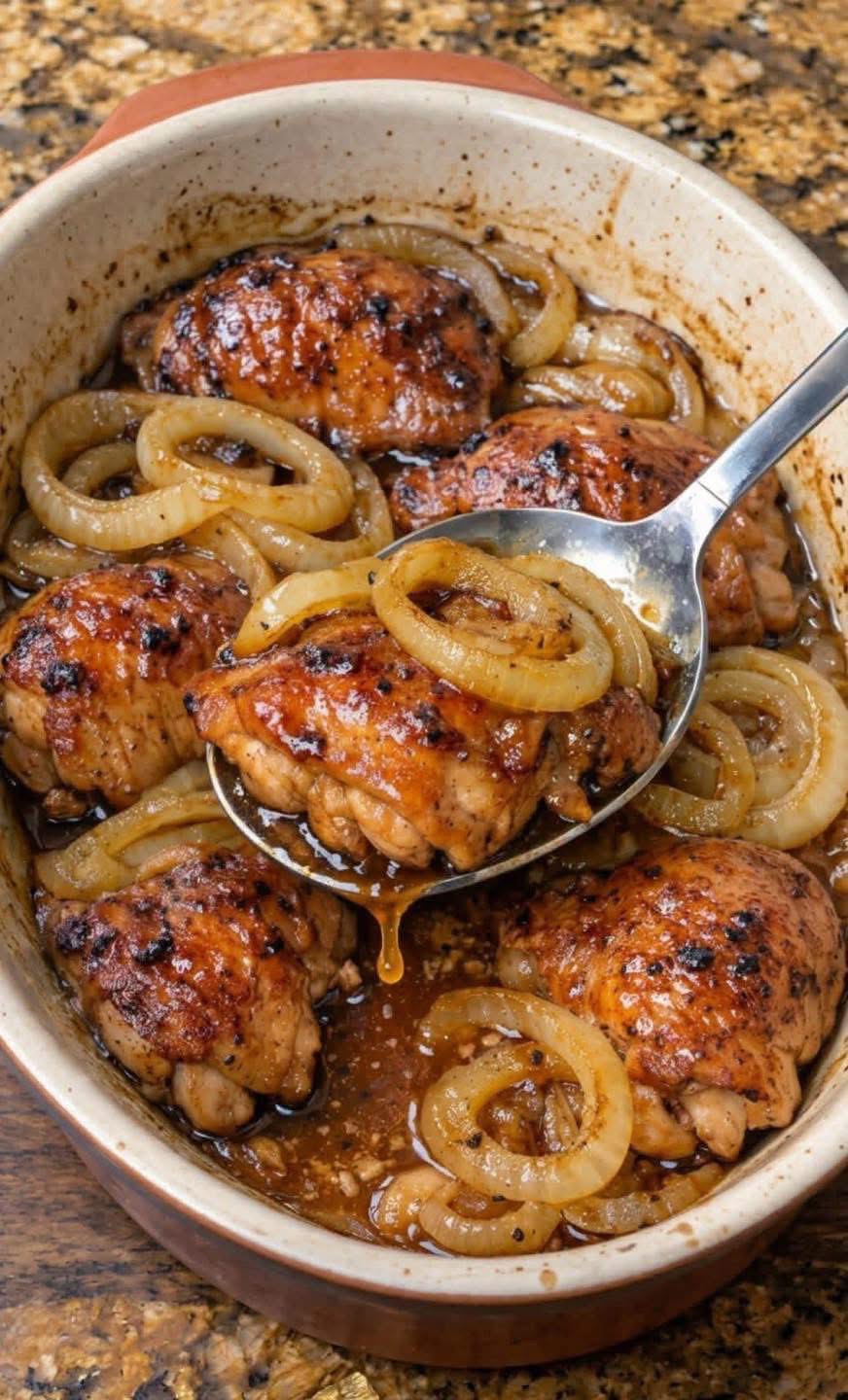
This step is more important than it might seem. Moisture on the surface of the chicken will create steam rather than browning, so drying the skin helps you get the dark, glossy, roasted appearance shown in the picture.
In a small bowl, combine:
- Salt
- Black pepper
- Smoked paprika
- Sweet paprika
- Garlic powder
- Onion powder
- Thyme
- Oregano
Rub the chicken thighs all over with the seasoning mixture.
If your thighs have skin, make sure some of the seasoning gets underneath the skin as well. Don’t completely separate the skin—just gently loosen it with your fingers and rub a little seasoning underneath.
2. Slice the onions
You want a lot of onions for this recipe.
Slice three large yellow onions into rings or half-moons about ¼ inch (6 mm) thick.
The onion rings in the photograph are quite thick and substantial, so don’t slice them paper-thin.
Yellow onions work particularly well because they become sweet and caramelized as they cook.
If you love onions, feel free to use four large onions. They shrink dramatically during cooking.
3. Brown the chicken
Heat a large oven-safe skillet, Dutch oven, or heavy baking pan over medium-high heat.
Add:
- 1 tablespoon olive oil
- 1 tablespoon butter
Once the butter is melted and beginning to foam, place the chicken thighs into the pan skin-side down.
Don’t overcrowd the pan. If necessary, brown the chicken in two batches.
Cook the thighs for approximately 5–7 minutes on the first side, without moving them around constantly.
You’re looking for a deep golden-brown crust.
Then flip the chicken and cook for another 3–4 minutes.
The chicken does not need to be cooked through at this stage. You’re primarily building color and flavor.
Transfer the chicken to a plate.
There should be delicious brown bits left on the bottom of the pan. Don’t clean the pan. Those browned bits are going to become part of the sauce.
4. Caramelize the onions
Reduce the heat to medium.
Add:
- 2 tablespoons butter
- 1 tablespoon olive oil
- Sliced onions
- ½ teaspoon salt
- ½ teaspoon black pepper
Stir everything together, scraping the bottom of the pan occasionally.
Cook the onions for approximately 12–18 minutes.
At first they’ll release quite a bit of water and become soft. Keep cooking until they become golden brown and start to caramelize.
If they begin sticking too aggressively, add a tablespoon or two of chicken stock or water and scrape the bottom of the pan.
For a slightly sweeter, darker sauce, you can add 1 teaspoon brown sugar during the final few minutes of onion cooking.
You don’t need a huge amount of sugar. The onions naturally become sweet as they caramelize.
5. Add the garlic
Once the onions are soft and golden, add the minced garlic.
Cook for approximately 30–60 seconds.
Don’t brown the garlic too much because burnt garlic can become bitter.
At this point, your kitchen should smell incredible.
6. Make the savory sauce
Sprinkle 1 tablespoon flour over the onions.
Stir well and cook for about 1 minute.
The flour will help thicken the sauce.
Slowly pour in the chicken stock while stirring and scraping the bottom of the pan.
Add:
- 1 tablespoon Worcestershire sauce
- 1 teaspoon Dijon mustard
- 1 teaspoon smoked paprika
- 1 teaspoon thyme
Stir everything together.
Let the sauce simmer for approximately 2–3 minutes.
Now add the heavy cream and stir.
If you prefer a darker, more intensely savory sauce, you can reduce the cream slightly or use only ¼ cup cream. If you want something richer and more luxurious, use the full ½ cup.
Taste the sauce.
Adjust the salt and pepper as necessary.
For a subtle sweet-and-savory flavor similar to the glossy sauce in the photograph, add 1 teaspoon honey.
7. Return the chicken to the pan
Nestle the browned chicken thighs back into the pan.
If they’re skin-on, arrange them skin-side up.
The liquid should come partway up the chicken but shouldn’t completely cover the tops.
This is important because you want the chicken to braise in the flavorful sauce while the exposed skin continues roasting and browning.
Spoon some onions and sauce around the chicken.
Don’t pour a lot of sauce directly over crispy chicken skin. Keeping the top relatively exposed will help it remain browned.
8. Bake
Preheat your oven to:
400°F (200°C)
Place the entire oven-safe skillet into the oven.
Bake uncovered for approximately 30–40 minutes, depending on the size of your chicken thighs.
The chicken is ready when the thickest part reaches at least 165°F (74°C) internally.
However, chicken thighs are generally even better when cooked beyond the minimum safe temperature because the additional cooking time allows the connective tissue to soften.
For especially tender thighs, aim for approximately 175–185°F (79–85°C).
The sauce should be bubbling around the chicken and the tops should be beautifully browned.
If you want a darker, more caramelized appearance like the chicken in the photo, switch the oven to broil/grill for 2–4 minutes at the end.
Watch it carefully during this step because the sugars and fat on the chicken can darken very quickly.
9. Finish the sauce
Remove the skillet from the oven and let the chicken rest for approximately 5–10 minutes.
This gives the juices time to redistribute and also allows the sauce to thicken slightly.
If the sauce looks too thin, remove the chicken and place the skillet over medium heat for a few minutes.
Simmer until the sauce reaches the consistency you like.
If it becomes too thick, add a splash of chicken stock.
For a little brightness, finish the sauce with 1–2 teaspoons of lemon juice.
This is optional, but a small amount of acid can balance the richness of the butter, cream, chicken, and caramelized onions.
10. Serve
Spoon plenty of the caramelized onions and sauce onto a serving plate.
Place the chicken thighs on top.
Spoon additional sauce around the chicken rather than completely covering the browned exterior.
Finish with chopped fresh parsley and a little fresh thyme.
You can also drizzle a small amount of the pan sauce over the chicken immediately before serving.
The result should be deeply browned chicken surrounded by soft golden onions and a rich, glossy brown sauce.
What to serve with it
This chicken is especially good with something that can absorb the sauce.
Creamy mashed potatoes
Probably the most comforting option.
Make mashed potatoes with butter and milk or cream, then spoon the onion gravy generously over the top.
White rice
Plain steamed rice works surprisingly well because it absorbs the savory sauce without competing with the chicken.
Buttered noodles
Egg noodles tossed with a little butter make an excellent side.
The sauce essentially becomes a rich onion gravy for the noodles.
Roasted potatoes
For a more rustic meal, roast baby potatoes with olive oil, salt, pepper, garlic, and rosemary.
Crusty bread
If you have a good loaf of bread, simply tear off pieces and use them to soak up the sauce.
Green vegetables
Because the chicken is rich, something green and fresh works nicely alongside it.
Try:
- Green beans
- Broccoli
- Asparagus
- Brussels sprouts
- Spinach
- A simple green salad
Tips for getting the chicken to look like the photo
1. Use bone-in chicken thighs
Bone-in thighs stay extremely juicy and have plenty of flavor.
Boneless thighs will work, but they will cook more quickly and won’t have quite the same appearance.
2. Don’t skip the initial browning
The oven will cook the chicken, but the skillet browning is what gives you that dark, caramelized exterior.
You want the chicken to already be deep golden brown before it goes into the oven.
3. Don’t rush the onions
If you only cook the onions for five minutes, they’ll be soft but won’t have the deep sweetness shown in the picture.
Give them at least 12–15 minutes.
For even more caramelization, cook them for 25–30 minutes over medium-low heat.
4. Use the same pan
The browned chicken leaves flavorful bits behind.
When you cook the onions in that same pan, they pick up those flavors. When the stock is added, those browned bits dissolve into the sauce.
That’s where a lot of the flavor comes from.
5. Don’t drown the chicken
Keep the chicken sitting above the sauce.
You want the bottom portion to braise while the top continues roasting.
This creates a wonderful contrast between tender meat and browned exterior.
Easy variation: French Onion Chicken
If you want to push this recipe toward a French onion-style chicken, make these changes:
Use 4 large onions instead of three.
Caramelize them for about 25–30 minutes.
Use beef stock instead of chicken stock, or use half beef stock and half chicken stock.
Add a splash of dry white wine after caramelizing the onions and let it reduce for 2–3 minutes.
Then finish the chicken with grated Gruyère or Swiss cheese.
Once the chicken is cooked, sprinkle the cheese over the top and broil until melted and bubbling.
That version becomes something closer to a French onion soup crossed with roasted chicken.
Storage and reheating
Store leftovers in an airtight container in the refrigerator for up to 3–4 days.
The sauce may thicken considerably when refrigerated. That’s normal.
For reheating, place the chicken and sauce in a covered skillet over medium-low heat.
Add a splash of chicken stock or water and gently warm until the chicken is hot throughout.
Avoid blasting it at high heat because that can make the chicken dry and cause the sauce to separate.
You can also reheat it in a covered oven-safe dish at 325°F (165°C) until hot.
Quick recipe card
Chicken:
6 bone-in, skin-on thighs
Seasoning:
Salt + pepper + smoked paprika + sweet paprika + garlic powder + onion powder + thyme + oregano
Onions:
3 large yellow onions
Sauce:
Chicken stock + cream + Worcestershire sauce + Dijon + garlic + thyme
Method:
- Season and dry chicken.
- Brown chicken in butter and oil.
- Remove chicken.
- Caramelize onions.
- Add garlic.
- Add flour and make the sauce.
- Return chicken to the pan.
- Bake at 400°F/200°C for 30–40 minutes.
- Broil briefly for extra browning if desired.
- Rest and serve with plenty of onion gravy.