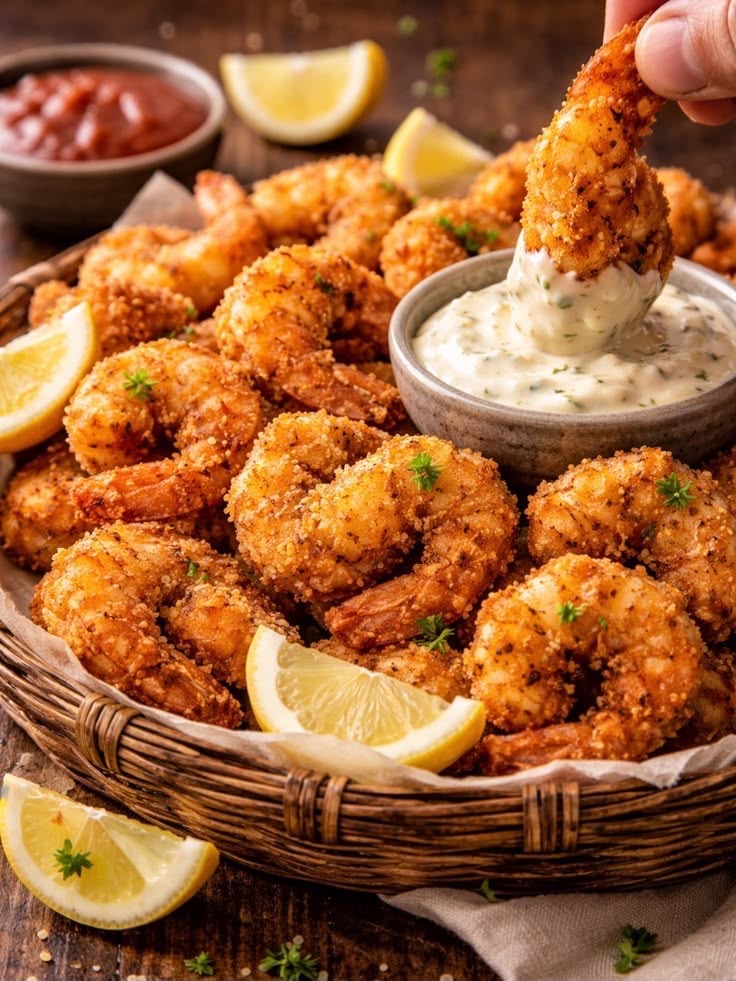
Crispy Breaded Shrimp
Crispy Breaded Shrimp is an irresistible appetizer or main dish featuring juicy shrimp covered in a golden, crunchy coating. Each bite combines tender, flavorful shrimp with a crisp exterior that makes this recipe perfect for family dinners, parties, game nights, or casual weekend meals.
The secret to great breaded shrimp is creating a coating that adheres well and becomes beautifully crisp without overcooking the shrimp. A simple combination of seasoned flour, egg, and breadcrumbs creates a delicious crust, while garlic, paprika, black pepper, and other seasonings add plenty of flavor.
Serve these golden shrimp with lemon wedges and your favorite dipping sauce for a restaurant-style meal that is surprisingly easy to prepare at home.
Ingredients
For 4 servings, you will need:
- 1 pound large shrimp, peeled and deveined
- 1 cup all-purpose flour
- 2 large eggs
- 1 tablespoon milk
- 1 1/2 cups panko breadcrumbs
- 1/2 teaspoon garlic powder
- 1 teaspoon paprika
- 1/2 teaspoon onion powder
- 1/2 teaspoon black pepper
- 1/2 teaspoon salt
- 1/4 teaspoon cayenne pepper, optional
- 1 tablespoon chopped fresh parsley
- Vegetable or canola oil, for frying
- Lemon wedges, for serving
For the creamy dipping sauce:
- 1/2 cup mayonnaise
- 2 tablespoons sour cream or Greek yogurt
- 1 tablespoon lemon juice
- 1 teaspoon Dijon mustard
- 1 small garlic clove, finely minced
- 1 tablespoon chopped fresh parsley
- 1 tablespoon finely chopped dill, optional
- Black pepper, to taste
Choosing the Shrimp
Large or jumbo shrimp are ideal for breading because they remain juicy while developing a crunchy coating.
If you’re using frozen shrimp, thaw them completely before cooking. Pat them very dry with paper towels. Excess moisture is one of the biggest reasons breading becomes soggy or falls off.
You can use shrimp with the tails left on if you want an attractive presentation and an easy handle for appetizers. Removing the tails is more convenient if you’re serving the shrimp as part of a complete meal.
Make sure the shrimp are peeled and deveined before beginning.
Preparing the Seasoned Flour
Place the flour in a shallow bowl.
Add the garlic powder, paprika, onion powder, black pepper, salt, and cayenne pepper if you’re using it.
Mix thoroughly.
The seasoned flour provides the first layer of flavor and helps the egg adhere to the shrimp.
If you enjoy a more strongly seasoned coating, you can add a little dried oregano, Italian seasoning, smoked paprika, or Cajun seasoning.
Preparing the Egg Mixture
In a second shallow bowl, whisk together the eggs and milk.
Whisk until the mixture is completely combined and smooth.
The egg mixture acts as the adhesive between the flour and breadcrumbs.
A little milk makes the egg mixture slightly thinner and easier to coat the shrimp evenly.
Preparing the Breadcrumbs
Place the panko breadcrumbs in a third shallow bowl.
Panko is particularly useful for this recipe because its larger, airy flakes create a lighter and crunchier crust than many traditional breadcrumbs.
Add a small pinch of paprika, garlic powder, salt, and black pepper to the breadcrumbs if desired.
Stir well.
For an even richer coating, you can add a tablespoon of finely grated Parmesan cheese.
Breading the Shrimp
Now it’s time to coat the shrimp.
Take one shrimp and dredge it through the seasoned flour. Shake gently to remove excess flour.
Dip it into the egg mixture, making sure the entire shrimp is coated.
Finally, place it into the seasoned breadcrumbs.
Press the breadcrumbs gently onto the shrimp so they adhere.
Transfer the breaded shrimp to a clean plate or baking sheet.
Repeat with the remaining shrimp.
Try not to stack the breaded shrimp on top of one another because the coating can become compressed and damp.
For especially crispy shrimp, you can place the breaded pieces on a wire rack while you finish coating the rest.
Let the Coating Set
Once all the shrimp are breaded, let them sit for about 5 to 10 minutes before frying.
This short resting period helps the coating adhere.
Meanwhile, prepare your frying oil.
Frying the Shrimp
Pour enough neutral cooking oil into a heavy-bottomed skillet or deep pan to create a shallow frying layer.
Heat the oil over medium-high heat.
The ideal frying temperature is around 350°F (175°C).
If you don’t have a thermometer, test the oil by dropping in a tiny piece of breadcrumb. It should immediately sizzle and rise to the surface without burning.
Carefully place several breaded shrimp into the hot oil.
Do not overcrowd the pan. Too many shrimp at once can lower the oil temperature, resulting in greasy rather than crispy shrimp.
Fry the shrimp for approximately 2 to 3 minutes per side, depending on their size.
They should become golden brown and crispy.
Shrimp cook quickly, so keep a close eye on them.
Once cooked, transfer the shrimp to a plate lined with paper towels or, even better, a wire rack placed over a baking sheet.
The wire rack allows excess oil to drain away while keeping the bottom of the shrimp crisp.
How to Know When Shrimp Are Cooked
Shrimp should become opaque and firm when cooked.
The flesh should no longer look translucent.
Avoid cooking them for much longer than necessary because overcooked shrimp can become rubbery.
The exact cooking time depends on the size of the shrimp and the temperature of the oil.
For food safety, seafood should be cooked thoroughly, and using a food thermometer can provide additional reassurance.
Making the Creamy Dipping Sauce
While the shrimp are cooking, prepare the dipping sauce.
In a small bowl, combine mayonnaise, sour cream or Greek yogurt, lemon juice, Dijon mustard, minced garlic, parsley, dill if using, and black pepper.
Stir until smooth.
Taste and adjust the seasoning.
If you prefer more acidity, add another small squeeze of lemon juice.
For a spicier sauce, add a pinch of cayenne pepper or a few drops of hot sauce.
Refrigerate the sauce until you’re ready to serve.
The cool, creamy sauce provides a wonderful contrast to the hot, crunchy shrimp.
Oven-Baked Crispy Shrimp
If you prefer not to deep-fry, these shrimp can also be baked.
Preheat your oven to 425°F (220°C).
Arrange the breaded shrimp on a lightly greased wire rack placed over a baking sheet. Spray or brush the shrimp lightly with oil.
Bake for approximately 10 to 15 minutes, turning them halfway through cooking.
The coating should become golden and crisp while the shrimp become opaque and fully cooked.
Because oven temperatures vary, keep an eye on the shrimp toward the end of cooking.
Air Fryer Method
An air fryer is another excellent option.
Preheat the air fryer to approximately 400°F (200°C), depending on your appliance’s instructions.
Lightly spray the breaded shrimp with cooking oil.
Arrange them in a single layer without overcrowding.
Air fry for approximately 8 to 12 minutes, turning halfway through.
The shrimp should be golden and crisp on the outside and fully cooked inside.
You may need to work in batches.
The Importance of Dry Shrimp
One of the simplest tricks for achieving crispy breaded shrimp is making sure the shrimp are dry before breading.
After thawing or washing the shrimp, use paper towels to remove as much surface moisture as possible.
Wet shrimp can cause the flour to become pasty, which makes it harder for the breadcrumbs to form a crisp coating.
Dry shrimp also help the breading stay attached during frying.
Don’t Overcrowd the Pan
This is another important step.
When too many shrimp are added at once, the temperature of the oil drops.
The breading then absorbs more oil instead of quickly becoming crisp.
Work in small batches and allow the oil to return to temperature between batches.
This takes a little longer but produces significantly better results.
Delicious Ways to Serve Crispy Shrimp
Crispy breaded shrimp are incredibly versatile.
Serve them as an appetizer with creamy dipping sauce and lemon wedges.
For a complete dinner, pair them with french fries, roasted potatoes, coleslaw, or a fresh green salad.
They are also delicious with steamed rice and vegetables.
For a seafood platter, serve them alongside other favorites such as grilled fish, calamari, or crab cakes.
You can even turn them into shrimp sandwiches by placing several crispy shrimp inside a toasted roll with lettuce, tomato, pickles, and creamy sauce.
Make Crispy Shrimp Tacos
These shrimp are fantastic in tacos.
Warm small flour or corn tortillas and fill them with crispy shrimp.
Add shredded cabbage, avocado, fresh cilantro, and a squeeze of lime.
Drizzle with the creamy garlic sauce or a spicy mayonnaise.
The contrast between crunchy shrimp, fresh vegetables, and creamy sauce makes an excellent meal.
A Spicy Version
If you love heat, there are several ways to make these shrimp spicy.
Add cayenne pepper to the seasoned flour.
Mix chili powder into the breadcrumbs.
Add crushed red pepper flakes to the dipping sauce.
You can also serve the shrimp with hot sauce.
For a sweet-and-spicy combination, drizzle the finished shrimp with a little hot honey just before serving.
Tips for Extra-Crispy Shrimp
Use panko breadcrumbs rather than very fine breadcrumbs.
Make sure the shrimp are completely dry.
Season every layer of the coating.
Don’t overcrowd the frying pan.
Keep the oil at a consistent temperature.
Allow excess oil to drain on a wire rack.
Serve the shrimp soon after cooking.
If you are baking or air-frying, lightly spray the breading with oil before cooking.
For even more crunch, you can double-coat the shrimp by dipping them through the egg and breadcrumbs a second time.
Can You Prepare the Shrimp Ahead of Time?
You can bread the shrimp a short time before cooking.
Arrange them in a single layer on a lined baking sheet and refrigerate until you’re ready to cook.
Avoid leaving raw breaded seafood at room temperature for an extended period.
For the best texture, cook the shrimp relatively soon after breading.
Cooked leftovers can be refrigerated in a sealed container, although the coating will naturally lose some of its crispness.
To reheat them, use an oven or air fryer rather than a microwave. Reheating at approximately 375°F (190°C) until hot can help restore some of the crunch.
Frequently Asked Questions
Can I use frozen shrimp?
Yes. Frozen shrimp are perfectly suitable. Thaw them completely and pat them very dry before breading.
What size shrimp are best?
Large or jumbo shrimp work especially well because they remain juicy while the coating becomes crisp.
Can I use regular breadcrumbs?
Yes, but panko generally produces a lighter and crunchier texture.
Can I make these without frying?
Absolutely. The oven and air fryer methods both work very well.
Why does my breading fall off?
The shrimp may have been too wet, or the flour, egg, and breadcrumbs may not have adhered properly. Pat the shrimp dry, shake off excess flour, and gently press the breadcrumbs onto the shrimp.
Why are my shrimp greasy?
The oil may not have been hot enough, or the pan may have been overcrowded. Maintaining the correct oil temperature is essential for crisp results.
Final Thoughts
Crispy Breaded Shrimp are one of those recipes that can turn a simple package of shrimp into an impressive meal. The combination of juicy seafood and golden, crunchy breading is hard to resist, especially when served with fresh lemon wedges and a creamy homemade dipping sauce.
The recipe is flexible enough to suit different cooking methods. Frying gives the shrimp an especially deep golden crust, while baking and air frying offer convenient alternatives with less oil.
The most important details are simple: use dry shrimp, season the coating well, don’t overcrowd the pan, and avoid overcooking the seafood.
Serve the finished shrimp immediately while they’re hot and crispy. Whether you’re preparing them for a family dinner, a party appetizer, tacos, sandwiches, or a casual weekend meal, these golden shrimp are sure to disappear quickly.