Ingredients
For approximately 2 to 3 cups of preserves, you will need:
- 1 fresh pineapple, peeled, cored, and cut into small chunks
- 1 to 1 1/2 cups granulated sugar
- 1/4 cup fresh lemon juice
- 1 fresh jalapeño, thinly sliced
- 1 to 2 teaspoons crushed red pepper flakes
- 1 teaspoon finely grated fresh ginger, optional
- 1 teaspoon vanilla extract, optional
- 1/4 teaspoon salt
- 1/2 cup water
For a slightly thicker preserve, you can also use a small amount of pectin according to the instructions on the package.
Choosing the Pineapple
Fresh pineapple gives this recipe the best flavor.
Look for a pineapple that feels heavy for its size and has a pleasant sweet aroma near the base. The skin should have some golden color, although it does not need to be completely yellow.
The pineapple should be firm but yield slightly when pressed.
If fresh pineapple isn’t available, canned pineapple can be used. Drain it thoroughly before cooking and reduce the sugar because canned pineapple is often packed in syrup or sweetened juice.
Frozen pineapple can also work, although the final texture may be softer.
Preparing the Pineapple
Begin by cutting away the top and bottom of the pineapple.
Stand the pineapple upright and carefully remove the outer skin with a sharp knife. Cut the fruit into quarters and remove the tough central core.
Cut the pineapple into small, bite-sized chunks.
Try to keep the pieces relatively similar in size. This helps them cook evenly and gives the finished preserve a more attractive texture.
You don’t want the pineapple pieces to be extremely tiny because they will break down during cooking. Small chunks around 1/2 inch are ideal.
Preparing the Jalapeño
Wash the jalapeño thoroughly and remove the stem.
For a milder preserve, slice the jalapeño lengthwise and remove the seeds and inner membranes. Then slice it thinly.
If you enjoy more heat, leave some or all of the seeds and membranes intact.
Remember that the heat level of jalapeños can vary considerably from one pepper to another, so it is better to start with a modest amount and add more heat later if necessary.
When handling fresh peppers, avoid touching your eyes or face and wash your hands and cutting board thoroughly afterward.
Making the Pineapple Mixture
Place the pineapple chunks into a large saucepan.
Add the sugar, lemon juice, water, sliced jalapeño, crushed red pepper flakes, and salt.
If you are using ginger, add it now as well.
Stir everything together and allow the mixture to sit for about 10 minutes.
This short resting period gives the sugar time to begin drawing moisture from the pineapple.
Place the saucepan over medium heat.
As the pineapple begins to warm, the sugar will dissolve and the fruit will release additional juice. Stir occasionally to prevent anything from sticking to the bottom.
Cooking the Preserves
Bring the mixture to a gentle simmer.
Once bubbling, reduce the heat slightly and allow the pineapple to cook uncovered.
Stir every few minutes.
As it cooks, the pineapple will become tender and the liquid will gradually reduce into a thicker syrup.
This usually takes approximately 25 to 40 minutes, depending on how juicy the pineapple is and how thick you want the preserve.
Avoid using extremely high heat. A rapid boil can cause the syrup to reduce too quickly while the pineapple remains firm.
A gentle simmer gives the fruit enough time to soften while allowing the flavors to develop.
Getting the Perfect Consistency
The preserve will appear thinner while it is hot than it will after cooling.
This is important.
Don’t continue cooking simply because the mixture looks slightly loose in the saucepan. Once cooled, the syrup will become noticeably thicker.
A simple way to test the consistency is to place a small spoonful on a chilled plate.
Let it cool for a minute and then tilt the plate slightly.
If the mixture moves very quickly like a thin syrup, continue cooking for a few more minutes.
If it moves slowly and looks glossy and jam-like, it is ready.
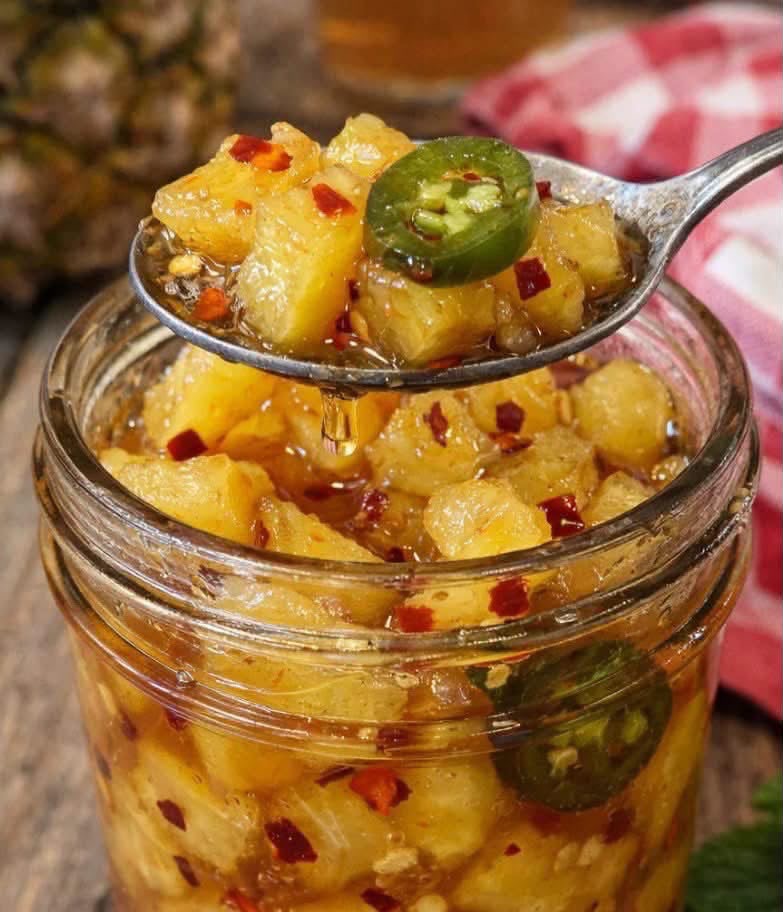
The pineapple pieces should be tender but still recognizable.
Adding the Final Flavor
Once the preserve has reached the desired consistency, remove the saucepan from the heat.
If using vanilla extract, stir it in now.
Taste carefully.
If you want more heat, add another small pinch of crushed red pepper flakes. If you prefer a brighter flavor, add a small splash of lemon juice.
Be careful when tasting hot preserves because the sugar mixture can be extremely hot.
Allow the mixture to cool for several minutes before transferring it to containers.
How to Store Pineapple Preserves
For a simple refrigerator preserve, transfer the cooled mixture into clean, airtight glass jars.
Refrigerate promptly.
Because this recipe is not automatically processed as a shelf-stable canned product, it should be treated as a refrigerated preserve unless you follow a tested canning recipe and proper water-bath processing procedure.
Always use clean utensils when serving and keep the jar refrigerated.
If you notice mold, fermentation, an unusual smell, or other signs of spoilage, discard the preserve.
How Spicy Should It Be?
One of the best things about this recipe is that you control the heat.
For a mild version, use one small jalapeño with the seeds removed and skip the red pepper flakes or use only a pinch.
For medium heat, use one jalapeño and about one teaspoon of crushed red pepper flakes.
For a hot version, use a larger jalapeño with some seeds and two teaspoons of red pepper flakes.
You can even use a hotter pepper if you enjoy serious heat, but remember that the sweetness of the pineapple will balance some of the pepper’s intensity.
Delicious Ways to Serve It
There are countless ways to use Spicy Pineapple Jalapeño Preserves.
One of the easiest is to spoon it over softened cream cheese and serve it with crackers. The creamy cheese provides a rich, mild contrast to the sweet and spicy pineapple.
It is also excellent with baked brie. Place a spoonful of the preserve over warm brie and serve with toasted bread.
For dinner, spoon it over grilled chicken or pork.
The sweetness caramelizes beautifully when paired with grilled meats, while the peppers provide a pleasant contrast.
You can also use it as a glaze.
Brush a thin layer over chicken during the final few minutes of grilling or roasting. Be careful not to apply it too early because the sugar can burn.
Use It on Sandwiches
This preserve can transform an ordinary sandwich.
Spread a thin layer onto a grilled cheese sandwich for a sweet-and-spicy twist.
It is also delicious with turkey, ham, roasted chicken, or pulled pork.
Try pairing it with sharp cheddar cheese. The strong savory flavor of the cheese works particularly well with sweet pineapple and spicy jalapeño.
Serve It With Breakfast
Don’t limit this preserve to savory meals.
A spoonful can be served over pancakes, waffles, French toast, or biscuits.
For a quick breakfast, add a little to Greek yogurt with granola and fresh fruit.
You can even swirl a small amount into oatmeal.
The spicy element might sound unusual for breakfast, but the combination of fruit, sweetness, and gentle heat can be surprisingly delicious.
Tips for the Best Results
Use ripe pineapple whenever possible. A naturally sweet pineapple creates a much better preserve than underripe fruit.
Cut the pineapple into evenly sized pieces so they cook at the same rate.
Keep the heat moderate. Sugar can burn quickly, especially as the liquid reduces.
Stir frequently toward the end of cooking because the syrup becomes thicker and can stick to the bottom of the saucepan.
Remember that the preserve thickens as it cools.
Don’t add too much red pepper at the beginning. You can always increase the heat later, but it is difficult to remove excessive spice.
For a smoother preserve, cook the pineapple longer and gently crush some of the pieces with the back of a spoon.
For a chunkier version, cook just until the pineapple is tender and the syrup has thickened.
Optional Flavor Variations
This recipe is easy to customize.
For a tropical version, add a little finely grated lime zest.
For extra citrus flavor, replace some of the lemon juice with fresh lime juice.
Fresh ginger adds warmth and works beautifully with pineapple and jalapeño.
You can also add a small amount of cinnamon for a warmer, more complex flavor.
For an even more savory version, add a tiny pinch of smoked paprika.
If you prefer a very mild preserve, omit the red pepper flakes and use only a small amount of jalapeño.
Frequently Asked Questions
Can I use canned pineapple?
Yes. Drain canned pineapple thoroughly and use pineapple packed in juice rather than heavy syrup when possible. You may need to reduce the amount of added sugar.
Can I use frozen pineapple?
Yes. Frozen pineapple works well, although it may produce a softer texture. Allow it to thaw slightly and drain excess liquid if necessary.
Can I make this without jalapeño?
Absolutely. Simply omit the jalapeño and red pepper flakes for a sweet pineapple preserve.
Can I make it hotter?
Yes. Add more jalapeño, leave some seeds and membranes intact, or increase the crushed red pepper flakes.
Why is my preserve too thin?
Continue simmering it uncovered for a few additional minutes. Remember that it will thicken as it cools, so don’t reduce it excessively while hot.
Why did my pineapple become too soft?
The pineapple may have been cut too small or cooked for too long. For distinct fruit pieces, use larger chunks and stop cooking as soon as they become tender.
Final Thoughts
Spicy Pineapple Jalapeño Preserves are a wonderful combination of sweet, fruity, tangy, and spicy flavors. Fresh pineapple creates the foundation, while jalapeño and crushed red pepper add just enough heat to make every bite interesting.
The glossy syrup makes this preserve especially beautiful when served in a glass jar, and the golden pineapple pieces create an irresistible presentation.
Whether you spoon it over cream cheese for an appetizer, serve it alongside grilled pork, glaze chicken with it, spread it on sandwiches, or add it to breakfast, this homemade preserve is remarkably versatile.
The key is to cook the pineapple gently, allow the syrup to reduce gradually, and remember that the mixture will continue to thicken as it cools. Adjust the sweetness and heat to your preference, and you’ll have a homemade condiment that can add an exciting sweet-and-spicy flavor to countless meals.