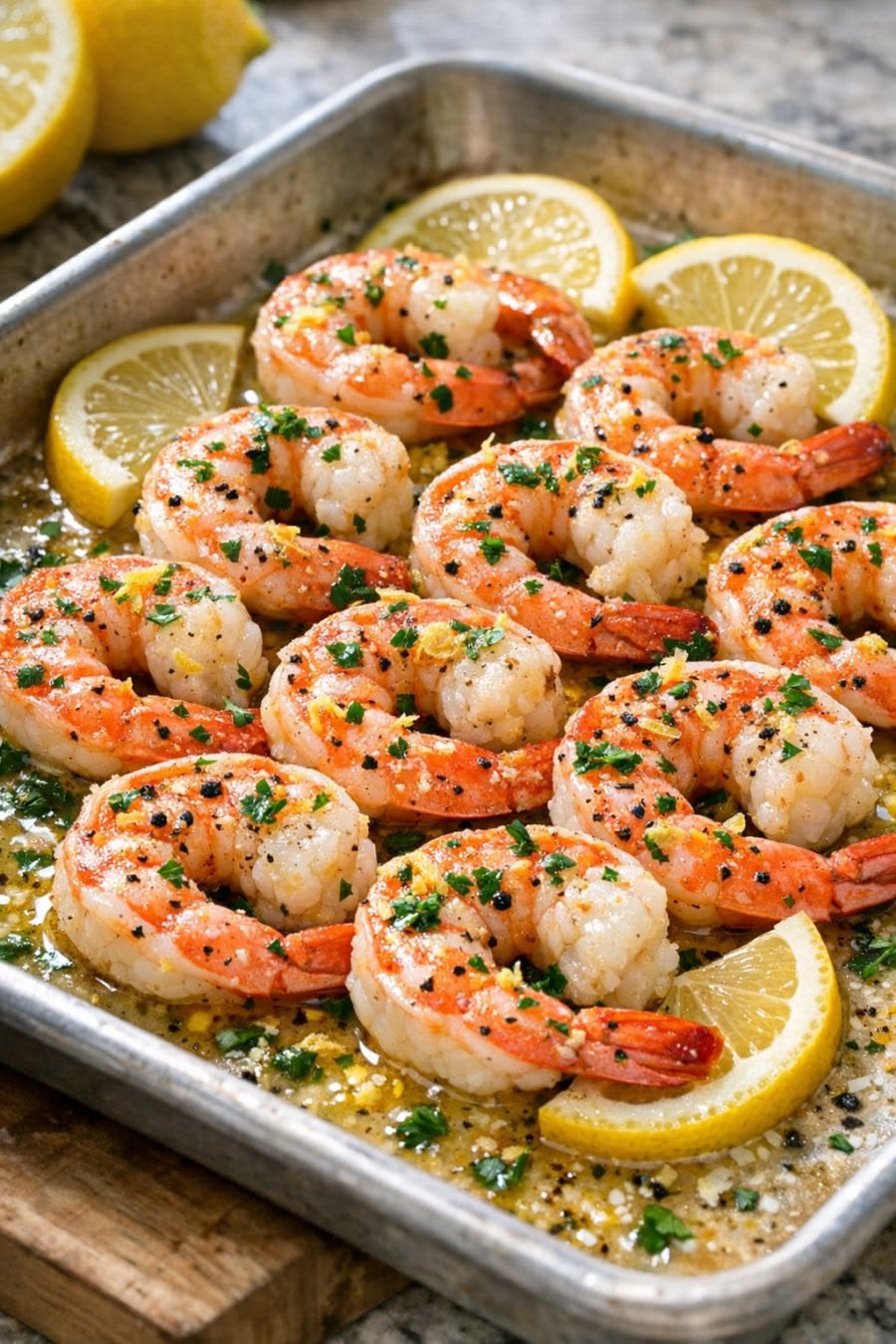
When you want a dinner that feels like a splurge from a high-end coastal bistro without spending hours in the kitchen, sheet pan shrimp is your ultimate secret weapon. Tender, sweet, juicy jumbo shrimp roasted in a pool of golden garlic butter, brightened with fresh lemon, and finished with fragrant herbs delivers maximum flavor with minimal effort.
The sheet pan technique is a game-changer for seafood lovers. Cooking shrimp on a wide metal sheet pan allows heat to circulate evenly, gently roasting the shrimp while creating a concentrated, flavorful pan sauce from the rendered butter, garlic, and citrus. Whether you are serving this over a bed of al dente pasta, alongside crusty sourdough bread for dipping, or over a light keto-friendly cauliflower mash, this complete recipe guide covers everything you need to master sheet pan shrimp.
The Culinary Science Behind Perfect Sheet Pan Shrimp
Shrimp is one of the most delicate proteins in the kitchen. Because shrimp muscle fibers are short and contain very little connective tissue, they cook extraordinarily fast. Understanding the basic science of cooking shrimp ensures you achieve a succulent, snap-to-the-bite texture every single time rather than rubbery seafood.
1. High Heat vs. Cook Time
Shrimp thrives on quick, dry-heat cooking. Baking at 400°F (200°C) creates enough heat to melt the butter, brown the garlic aromatics, and gently cook the shrimp through in just 8 to 10 minutes. The wide surface area of a sheet pan prevents steam from getting trapped around the shrimp, ensuring they roast rather than boil in their own moisture.
2. Moisture Reduction Is Key
The biggest enemy of a rich, emulsified garlic butter sauce is excess water. Raw frozen shrimp are often processed with a salt-water glaze or solution to prevent freezer burn. If you do not dry the shrimp thoroughly before adding the butter sauce, that water will release into the baking pan, diluting your sauce into a thin, watery liquid. Patting the shrimp bone-dry with paper towels ensures the garlic butter coats the shrimp evenly and clings to every bite.
3. The Role of Emulsion & Acidity
Butter provides fat and richness, while white wine and fresh lemon juice provide crucial acidity. The natural milk solids in melted butter combine with the wine and lemon under oven heat to create a silky, pan-sauce emulsion. The acidity of the lemon cuts through the rich fat of the butter, balancing the naturally sweet flavor profile of the shrimp.
Structured Recipe Overview
- Prep Time: 10 minutes
- Cook Time: 8 to 10 minutes
- Total Time: 20 minutes
- Yield: 4 generous servings
- Category: Main Course / Seafood / Quick Dinner
- Cuisine: American / Mediterranean-Inspired
- Cooking Method: High-Heat Oven Baking (400°F / 200°C)
Ingredients & Flavor Architecture
To build a deep, layered garlic butter sauce, each ingredient serves a specific purpose in the pan.
The Seafood
- Raw Jumbo Shrimp (1.5 to 2 pounds): Look for 16/20 or 21/25 count per pound. Larger shrimp are much harder to overcook and remain juicy inside. Ensure they are peeled and deveined, leaving the tails on for visual appeal and extra flavor.
The Garlic Butter Pan Sauce
- Unsalted Butter (1/2 cup / 1 stick): Melted. Unsalted butter gives you full control over the salt levels of your dish.
- Fresh Garlic (6 to 8 cloves): Finely minced or grated. Avoid pre-minced jarred garlic, as it lacks the pungent, spicy bite of fresh garlic cloves.
- Dry White Wine (2 tablespoons): Pinot Grigio, Sauvignon Blanc, or Dry Vermouth. Adds depth and acidity to the butter sauce. (Substitution: Sub with low-sodium chicken broth or extra lemon juice).
- Fresh Lemon Juice (2 tablespoons) & Zest (1 teaspoon): Freshly squeezed lemon juice brightens the rich butter, while the aromatic oils in the zest provide a burst of citrus aroma.
- Kosher Salt (1 teaspoon) & Freshly Cracked Black Pepper (1/2 teaspoon)
- Crushed Red Pepper Flakes (1/4 teaspoon): Adds a subtle, warm background heat without making the dish overly spicy.
Garnishes & Extras
- Fresh Lemon (1 whole): Sliced into thin wheels to nestle among the shrimp on the sheet pan.
- Fresh Italian Flat-Leaf Parsley (1/4 cup): Finely chopped for vibrant color and fresh, grassy flavor.
Step-by-Step Detailed Instructions
1
Preheat oven and prepare the sheet pan
Timing: 3 minutes
1.Preheat oven and prepare the sheet pan:Timing: 3 minutes.
Preheat your oven to 400°F (200°C). Lightly spray a half-sheet pan (18×13 inches) or rimmed quarter-sheet pan with non-stick cooking spray, or line it with parchment paper for effortless cleanup.
2
Dry the shrimp thoroughly
Timing: 3 minutes
2.Dry the shrimp thoroughly:Timing: 3 minutes.
Rinse peeled and deveined raw shrimp under cold water. Transfer shrimp to a clean cutting board lined with double layers of paper towels. Press another paper towel over the top and pat them completely dry. Removing surface moisture is essential for a rich pan sauce.
3
Whisk the garlic butter glaze
Timing: 2 minutes
3.Whisk the garlic butter glaze:Timing: 2 minutes.
In a medium bowl or glass measuring cup, whisk together the melted unsalted butter, minced garlic, dry white wine (or broth), fresh lemon juice, lemon zest, kosher salt, black pepper, and crushed red pepper flakes until well combined.
4
Arrange shrimp and pour sauce
Timing: 2 minutes
4.Arrange shrimp and pour sauce:Timing: 2 minutes.
Spread the dried shrimp across the prepared sheet pan in a single, uncrowded layer. Nestle thin slices of fresh lemon among the shrimp. Pour the garlic butter mixture evenly over all the shrimp, making sure every piece is nicely coated.
5
Bake to perfection
Timing: 8 to 10 minutes
5.Bake to perfection:Timing: 8 to 10 minutes.
Transfer the sheet pan to the middle rack of the preheated oven. Bake for 8 to 10 minutes. Watch closely: the shrimp are done when they turn opaque pink, white, and curl into a loose “C” shape. (If they form a tight “O” shape, they are overcooked).
6
Garnish and serve hot
Timing: 1 minute
6.Garnish and serve hot:Timing: 1 minute.
Remove the sheet pan carefully from the oven. Immediately sprinkle the fresh chopped parsley evenly over the hot shrimp and buttery pan juices. Serve hot straight from the pan with crusty warm bread, over pasta, or alongside steamed rice!
Common Mistakes & How to Avoid Them
Even though sheet pan shrimp is simple, a few common culinary slip-ups can affect your results. Keep these tips in mind for success every time:
| Common Mistake | What Happens | The Easy Fix |
|---|---|---|
| Using Pre-Cooked Shrimp | Pre-cooked shrimp double-cook in the oven, becoming dry, rubbery, and tough. | Always buy raw frozen or raw fresh shrimp. |
| Skipping the Paper Towel Step | Excess water dilutes the garlic butter sauce into a bland, watery liquid. | Thoroughly pat shrimp dry with paper towels before seasoning. |
| Overcrowding the Pan | Overlapping shrimp trap steam and boil instead of quick-roasting. | Arrange shrimp in a single, spaced-out layer on a rimmed sheet pan. |
| Overbaking Past 10 Minutes | High heat dries out the delicate shrimp proteins quickly. | Pull shrimp out as soon as they turn pink, opaque, and form a loose “C” shape. |
Delicious Serving Ideas & Pairings
Garlic butter sheet pan shrimp is an incredibly versatile protein base that pairs well with many side dishes:
- Classic Pasta Dish: Boil 8 ounces of linguine, angel hair, or fettuccine while the shrimp bakes. Toss the cooked pasta directly into the hot sheet pan juices, then top with the roasted shrimp for an instant Garlic Shrimp Scampi.
- Low-Carb / Keto Option: Serve the shrimp and pan juices over a bed of buttery cauliflower rice, steamed zoodles (zucchini noodles), or alongside roasted asparagus spears.
- Seafood Dinner with Bread: Serve the shrimp in shallow warm bowls with thick, warm slices of toasted sourdough bread or French baguette to soak up every drop of the garlic butter sauce.
- Surf & Turf Combo: Pair this sheet pan shrimp alongside grilled ribeye steaks or roasted beef tenderloin for a restaurant-worthy home feast.
Storage & Reheating Guidelines
- Refrigeration: Store cooled leftover shrimp along with all the garlic butter pan juices in an airtight glass container in the refrigerator for up to 2 days.
- Reheating on the Stovetop (Recommended): Transfer the leftover shrimp and solidified butter sauce into a small skillet over medium-low heat. Warm gently for 2 to 3 minutes just until the sauce melts and the shrimp is heated through. Avoid boiling, as this will overcook the shrimp.
- Avoid High Microwave Heat: Microwaving shrimp at full power makes the protein tough and rubbery. If using a microwave, use 50% power in 30-second intervals until just warm.
Garlic Butter Sheet Pan Shrimp
- Prep Time: 10 minutes
- Cook Time: 9 minutes
- Total Time: 19 minutes
- Yield: 4 servings
- Category: Main Course / Seafood
- Cuisine: American / Mediterranean
Ingredients
- 1.5 to 2 lbs raw jumbo shrimp (peeled & deveined, tails on)
- 1/2 cup unsalted butter, melted
- 6-8 cloves fresh garlic, finely minced
- 2 tbsp dry white wine (or low-sodium chicken broth)
- 2 tbsp fresh lemon juice
- 1 tsp fresh lemon zest
- 1 lemon, sliced into thin wheels
- 1 tsp kosher salt
- 1/2 tsp freshly cracked black pepper
- 1/4 tsp red pepper flakes
- 1/4 cup fresh Italian flat-leaf parsley, finely chopped
Instructions
- Preheat oven to 400°F (200°C). Spray a large rimmed sheet pan with non-stick spray.
- Pat raw shrimp thoroughly dry with paper towels to remove all surface moisture.
- In a bowl, whisk melted butter, minced garlic, white wine, lemon juice, lemon zest, salt, black pepper, and red pepper flakes.
- Spread dried shrimp in a single layer on the sheet pan. Scatter lemon wheels around the shrimp.
- Pour garlic butter glaze evenly over the shrimp, coating every piece.
- Bake for 8 to 10 minutes until shrimp turn pink, opaque, and form a loose “C” shape.
- Garnish with chopped fresh parsley and serve hot with crusty bread, rice, or pasta!