🌿 Aloe Vera + Oil Glow Treatment
Ingredients
- 1 tablespoon pure aloe vera gel
- 2–3 drops of squalane or jojoba oil
- Optional: 1 drop of fragrance-free mineral oil if that’s what you already have
That’s it—just two main ingredients.
For facial use, I would choose squalane or jojoba oil over fragranced baby oil, especially if your skin is sensitive.
Why These Two Ingredients?
🌱 Aloe vera gel
Aloe vera has a light, cooling texture and can make the skin feel hydrated and refreshed.
It works particularly well for people who dislike heavy creams because it spreads easily and absorbs relatively quickly.
Choose a facial aloe gel with as few unnecessary ingredients as possible and preferably without added fragrance or alcohol.
💧 Squalane
Squalane is a lightweight emollient that can help soften the skin and reduce moisture loss.
It generally feels much lighter than heavier oils, making it convenient for a simple nighttime routine.
What about baby oil?
Baby oil is usually primarily mineral oil. Mineral oil is an effective occlusive ingredient—it forms a layer that helps reduce water loss from the skin.
However, it doesn’t add water to dehydrated skin by itself.
That’s why pairing a hydrating product such as aloe gel with an occlusive/emollient ingredient makes more sense than applying a large amount of oil alone.
🥣 How to Make It
You don’t need to prepare a large jar.
For one application, place:
1 tablespoon aloe vera gel + 2–3 drops squalane
in the palm of your clean hand or in a small clean bowl.
Mix them together gently.
The result should be a lightweight, slippery gel that spreads easily over the face.
Don’t add large amounts of oil. More oil doesn’t necessarily mean better results.
Step 1: Clean Your Face
Begin with a gentle cleanser.
Use lukewarm water rather than very hot water.
Avoid aggressive scrubbing, especially if your skin is dry, mature, sensitive, or prone to pigmentation.
Pat your face dry gently, leaving the skin slightly damp.
Step 2: Apply the Aloe
Take a small amount of the aloe vera gel and spread a thin layer over your face.
Avoid the eyelids and immediate eye area.
You don’t need to massage aggressively.
A gentle application is enough.
Step 3: Seal in Moisture
While the aloe is still slightly damp on your skin, apply the 2–3 drops of squalane.
Warm the oil between your fingertips and gently press it over your face.
Pay particular attention to areas that tend to feel dry:
- Cheeks
- Around the mouth
- Forehead
- Jawline
You don’t need to cover your face with a thick layer.
A few drops are generally enough.
🌙 Best Time to Use It
This combination is particularly convenient as a nighttime skincare step.
Evening routine:
- Cleanse your face.
- Apply aloe vera gel.
- Apply 2–3 drops of squalane.
- Leave it overnight.
- Wash normally the next morning.
You can use your regular moisturizer instead of, or in addition to, the oil depending on how dry your skin is.
✨ What Results Can You Realistically Expect?
After applying a hydrating product and an occlusive ingredient, your skin may look:
- More hydrated
- Softer
- Smoother
- More supple
- Less dull
- More dewy
When skin is well hydrated, fine dehydration lines can temporarily look less noticeable.
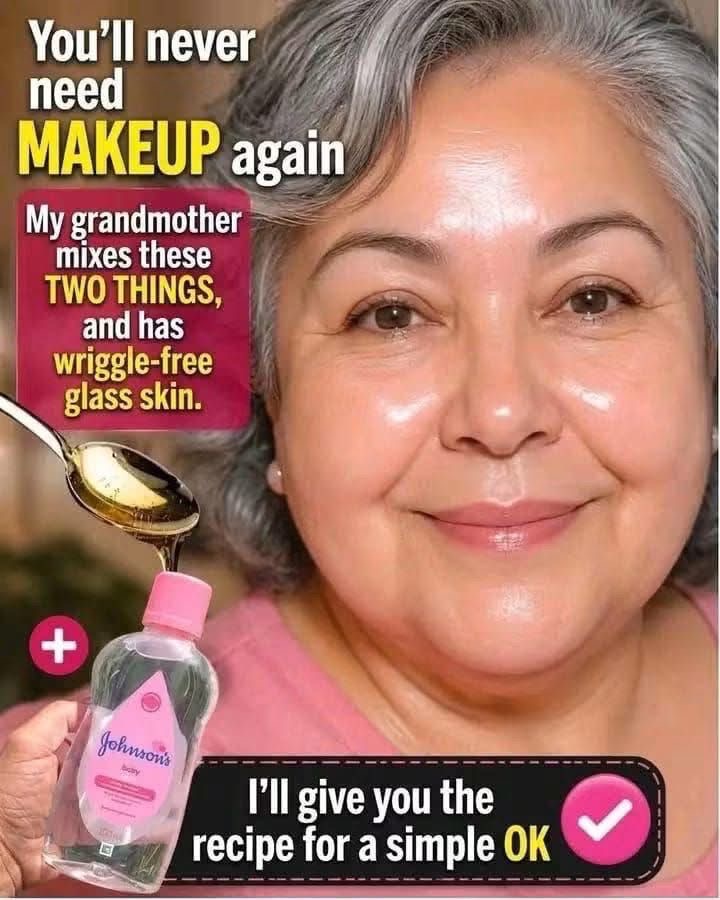
This may create the “glass skin” appearance shown in social-media images.
But there is an important difference between temporarily improving the appearance of fine lines and actually removing wrinkles.
This recipe does not erase wrinkles.
It also cannot permanently tighten sagging skin or replace professional treatments.
👵 What About Mature Skin?
Mature skin often becomes drier and more susceptible to moisture loss.
A simple hydrating-and-sealing routine can therefore be particularly comfortable.
However, mature skin doesn’t need harsh DIY treatments.
Avoid trying to “tighten” the face with irritating ingredients such as baking soda, lemon juice, undiluted vinegar, or strong essential oils.
Irritation can damage the skin barrier and sometimes make the skin appear worse rather than better.
🚫 Should You Use the Baby Oil Shown in the Image?
This depends on the exact formulation.
If the product contains fragrance, I would not make it my first choice for facial skincare, particularly if you have sensitive skin.
If you want to use mineral oil on your face, a plain, fragrance-free cosmetic mineral oil is a simpler option.
Mineral oil itself isn’t inherently a bad ingredient. In fact, it is widely used in skincare as an occlusive ingredient.
The issue is that a product formulated for babies isn’t automatically the best product for every adult’s face.
🌿 If You Only Have Baby Oil
If you already have a plain baby oil and your skin tolerates it, you can use a very small amount over your regular moisturizer at night.
I would not recommend mixing a large batch with aloe and storing it.
Instead:
- Apply your normal moisturizer or aloe gel.
- Wait briefly.
- Put 1–2 drops of baby oil into your palms.
- Gently press it onto the dry areas of your face.
Avoid the immediate eye area.
If the product is strongly fragranced or causes redness, itching, burning, or bumps, discontinue it.
🧴 Why Moisturizer Is Still Important
Aloe vera alone may feel refreshing, but it isn’t necessarily enough to provide lasting moisturization for everyone.
A properly formulated facial moisturizer usually contains a combination of ingredients designed to:
- Add hydration
- Soften the skin
- Reduce water loss
- Support the skin barrier
That’s why a simple DIY mixture should be viewed as an optional addition rather than a replacement for a good moisturizer.
☀️ The Real Secret to Younger-Looking Skin
If the goal is to reduce visible signs of aging, one step is far more important than a viral two-ingredient recipe:
Sunscreen.
Daily broad-spectrum SPF 30 or higher helps protect skin from UV radiation, one of the major contributors to premature skin aging and pigmentation.
A beautiful nighttime routine won’t compensate for regular, unprotected sun exposure.
A simple routine could therefore be:
Morning
1. Gentle cleanser
↓
2. Moisturizer
↓
3. SPF 30+ sunscreen
Evening
1. Gentle cleanser
↓
2. Hydrating product such as aloe
↓
3. Moisturizer
↓
4. A few drops of squalane if needed
This is much more realistic than promising “wrinkle-free glass skin.”
🌸 Optional Honey Version
If you want to create a different DIY mask, you can use aloe and honey.
Ingredients
- 1 tablespoon aloe vera gel
- ½ teaspoon honey
Mix and apply a thin layer for approximately 10 minutes.
Then rinse and moisturize.
Honey can make the skin feel softer, but again, it isn’t a wrinkle remover.
Do not use this recipe if you know you’re allergic to honey or bee products.
⚠️ Patch Test First
Even ingredients considered gentle can cause reactions.
Before using a new aloe product or oil on your entire face, test a small amount on an inconspicuous area.
Stop if you experience:
- Burning
- Itching
- Swelling
- Persistent redness
- Rash
- Significant irritation
Also remember that “natural” doesn’t automatically mean safer.
🥄 Easy Recipe Card
Aloe Vera + Squalane Glow Treatment
Ingredients
- 1 tbsp pure aloe vera gel
- 2–3 drops squalane
Directions
- Cleanse your face gently.
- Pat dry, leaving the skin slightly damp.
- Apply a thin layer of aloe vera gel.
- Add 2–3 drops of squalane.
- Gently press the oil into the skin.
- Leave overnight.
- Cleanse normally in the morning.
- Use sunscreen during the day.
Frequency: Start with 2–3 nights per week and adjust according to your skin’s tolerance.
💕 Final Thoughts
The viral image is right about one thing: a simple skincare routine can sometimes make a big difference in how the skin looks and feels.
But the claim that two ingredients will give you permanently wrinkle-free skin or mean you’ll never need makeup again isn’t realistic.
Instead, think of this recipe as a simple way to support a soft, hydrated, dewy-looking complexion.