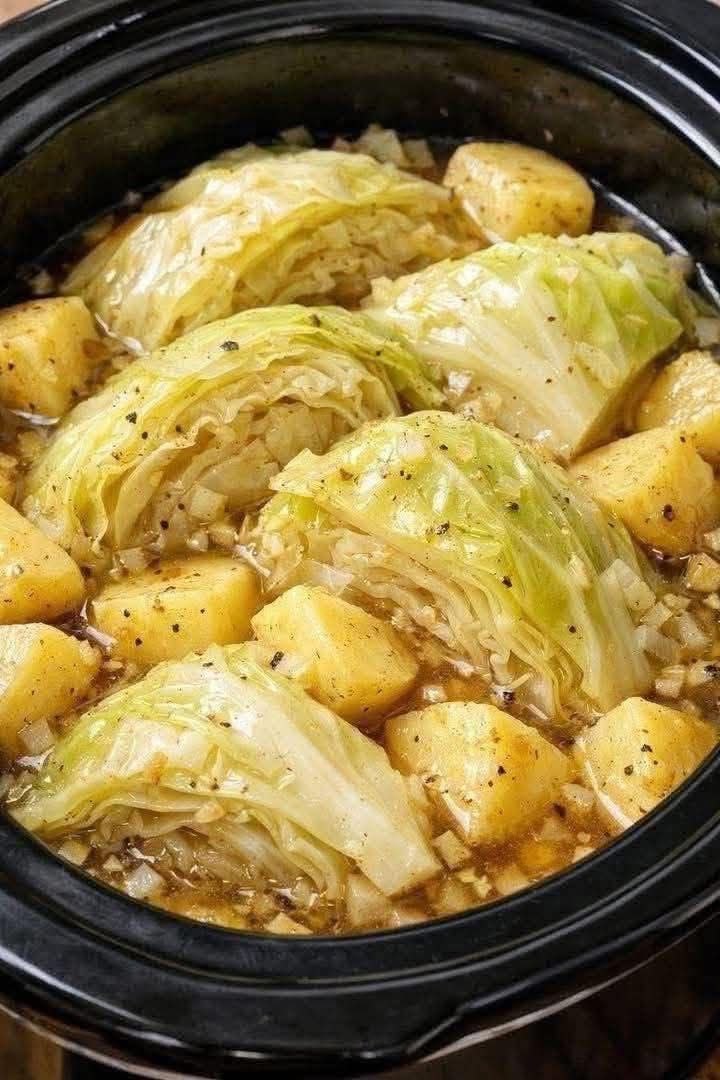
Some of the best recipes in the world don’t come from fancy cookbooks or professional kitchens — they come from grandmothers who knew how to turn a handful of humble ingredients into something that could feed a whole family and warm them from the inside out. This slow cooker cabbage and potatoes dish is exactly that kind of recipe. Just cabbage, potatoes, and butter, simmered low and slow until everything turns meltingly tender and soaked through with rich, savory flavor. It’s the kind of dish that was born out of necessity during hard times, when a family had to stretch a small amount of money into a filling, satisfying dinner, and yet it has endured for generations because it’s genuinely, unpretentiously delicious.
There’s a certain kind of magic in recipes like this one. They remind us that comfort food doesn’t need to be complicated or expensive to be deeply satisfying. A head of cabbage, a few pounds of potatoes, and a stick of butter might not sound like much on paper, but after hours in a slow cooker, they transform into something soft, buttery, and deeply savory — the kind of meal that makes a house smell like it’s being taken care of.
A Dish Born From Hard Times
Cabbage and potatoes have long been staples of frugal, working-class cooking around the world, from Irish and German kitchens to the American South and Appalachia. Both vegetables are inexpensive, store well without refrigeration, and stretch a long way, which made them dinner-table staples during times when money was tight and every ingredient had to count. Families who survived the Great Depression, wartime rationing, or simply lean years often built entire meals around dishes like this one — humble, filling, and made with whatever was on hand.
What’s remarkable is how these dishes have outlived their origins as “hard times” food and become beloved comfort classics in their own right. There’s something almost meditative about a recipe this simple: no fancy techniques, no hard-to-find ingredients, just time and a slow cooker doing the work of turning basic vegetables into something a family gathers around the table for.
Why the Slow Cooker Works So Well Here
Cabbage and potatoes both benefit enormously from long, slow cooking. Potatoes need time to become fully tender without falling apart into mush, and a gentle, steady low heat achieves that far better than a quick boil. Cabbage, meanwhile, starts out crisp and slightly sharp in flavor, but hours of slow cooking mellow it into something soft, sweet, and almost silky, especially once it’s had time to soak up the buttery, savory broth surrounding it.
The slow cooker is also wonderfully hands-off. Once everything is layered in, there’s no need to babysit the pot, stir constantly, or worry about scorching. You simply set it and let time do the work, which is part of why this recipe has stayed a weeknight staple for busy families across generations — it requires effort up front and then nothing but patience.
Ingredients You’ll Need
- 1 large head green cabbage, cut into thick wedges
- 2 pounds russet or yellow potatoes, cut into large chunks
- 4 tablespoons unsalted butter, cut into small pieces
- 1½ cups chicken or vegetable broth
- 1 small onion, diced
- 2 garlic cloves, minced (optional, for extra depth)
- 1 teaspoon salt
- ½ teaspoon black pepper
While the classic version of this recipe truly is built on just cabbage, potatoes, and butter, a small amount of broth, onion, and garlic take it from good to exceptional without straying far from its simple roots.
Step-by-Step Instructions
Step 1: Prepare the cabbage. Remove any tough or discolored outer leaves from the cabbage head. Cut the cabbage into thick wedges, roughly 1½ to 2 inches wide, keeping the core mostly intact on each wedge so the leaves hold together during the long cooking time rather than falling apart into loose pieces.
Step 2: Prepare the potatoes. Wash and peel the potatoes if desired (leaving the skin on adds texture and nutrients, and is a common preference in more rustic versions of this dish). Cut them into large chunks, roughly 1½ to 2 inches, similar in size to the cabbage wedges so everything cooks evenly.
Step 3: Layer the base. Scatter the diced onion and minced garlic, if using, across the bottom of the slow cooker. This creates a flavorful foundation that the potatoes and cabbage will sit on top of and slowly absorb flavor from as everything cooks.
Step 4: Add the potatoes. Distribute the potato chunks around the bottom of the slow cooker, on top of the onion and garlic. Potatoes take a bit longer to become tender than cabbage, so placing them toward the bottom, closer to the heat source, helps them cook through fully.
Step 5: Nestle in the cabbage wedges. Arrange the cabbage wedges on top of the potatoes, fitting them in snugly. It’s fine if they’re a bit crowded — they’ll shrink down considerably as they cook and soften.
Step 6: Season generously. Sprinkle the salt and pepper evenly over the entire dish, making sure to get seasoning down into the layers and not just on top.
Step 7: Add the butter. Dot the butter pieces evenly over the top of the cabbage and potatoes. As the dish cooks, the butter will melt down through the layers, coating everything in rich, savory flavor.
Step 8: Pour in the broth. Carefully pour the broth around the edges of the slow cooker, trying not to wash the seasoning and butter off the top of the vegetables. The broth doesn’t need to submerge everything — much of the cooking liquid will be created naturally as the cabbage and potatoes release their own moisture during cooking.
Step 9: Cover and cook low and slow. Place the lid on the slow cooker and cook on low for 6 to 7 hours, or on high for 3 to 4 hours, until the potatoes are completely fork-tender and the cabbage has softened into tender, buttery wedges. Resist the urge to lift the lid too often, since this lets heat escape and can extend the cooking time.
Step 10: Serve warm. Once everything is tender, ladle the cabbage and potatoes into bowls, making sure to spoon plenty of that buttery, savory broth from the bottom of the slow cooker over each serving. This broth is full of flavor and shouldn’t be left behind in the pot.
Tips for the Best Results
- Cut everything to a similar size. Uniform pieces of potato and cabbage ensure even cooking, so nothing turns to mush while other pieces remain underdone.
- Keep the cabbage core intact. Trimming wedges so the core holds the leaves together prevents the cabbage from falling apart into loose leaves during the long cook time.
- Don’t skip the broth. Even a small amount of broth adds flavor and helps create that irresistible savory liquid at the bottom of the pot, which is arguably the best part of the dish.
- Layer by cook time. Potatoes generally need slightly longer to become tender than cabbage, so placing them lower in the slow cooker, closer to the heat, helps everything finish at the same time.
- Let it rest for a few minutes before serving. This allows the flavors to settle and makes for easier, less messy serving.
Variations Worth Trying
- Add smoked sausage or bacon for a heartier, meatier version of the dish — a classic pairing with cabbage and potatoes.
- Use vegetable broth and skip the butter substitution needs for a fully plant-based version.
- Add carrots alongside the potatoes for extra sweetness and color.
- Finish with a splash of apple cider vinegar for a bright, tangy contrast to the richness of the butter.
- Sprinkle with fresh parsley or chives just before serving for a pop of color and freshness.
Serving Suggestions
This dish is hearty enough to stand on its own as a simple, comforting dinner, but it also pairs beautifully with roasted or pan-seared meats like pork chops, sausage, or a simple roast chicken. A slice of crusty bread on the side is perfect for soaking up the buttery broth left in the bowl. For a true old-fashioned spread, serve alongside cornbread or a simple green salad.
Storage and Reheating
Leftovers keep well in the refrigerator for up to 4 days in an airtight container. The flavors often deepen overnight, making this one of those dishes that’s just as good, if not better, the next day. Reheat gently on the stovetop over low heat or in the microwave, adding a small splash of broth if needed to loosen things up. This dish also freezes reasonably well for up to 2 months, though the texture of the potatoes may soften slightly further upon thawing and reheating.
There’s a reason recipes like this one get passed down through generations. It isn’t flashy, and it doesn’t need to be. It’s the kind of meal that reminds you good food doesn’t require excess — just time, care, and a few honest ingredients simmered together until they become something greater than the sum of their parts.