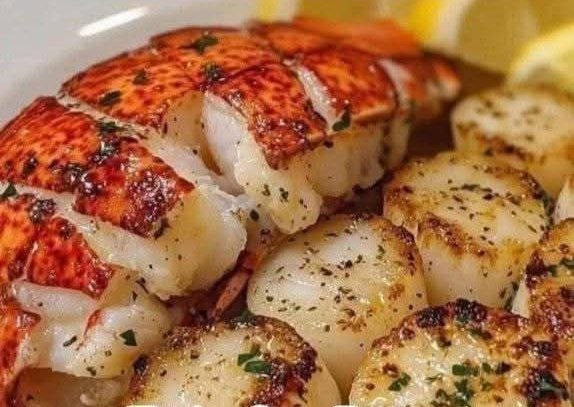
There’s a reason garlic butter lobster and scallops shows up on so many “date night at home” and “impress your guests” recipe lists — it looks like something plucked straight off a white-tablecloth restaurant menu, yet it comes together in well under 30 minutes with just a handful of ingredients. Sweet, tender lobster tail meat brushed with rich garlic butter and broiled until lightly charred, paired with golden, perfectly seared scallops finished in the same buttery sauce — this is a dish that proves elegant cooking doesn’t have to mean complicated cooking.
What makes this recipe so appealing is the contrast it delivers on a single plate. Lobster tails have a firm, slightly sweet, almost lobster-forward richness, while scallops bring a delicate, buttery tenderness with that irresistible caramelized crust from a proper sear. Bring them together under a blanket of garlic butter, bright lemon, and fresh parsley, and you get a dish that feels indulgent without requiring hours of preparation or professional technique.
Why This Combination Works So Well
Lobster and scallops are both shellfish, but they behave quite differently in the kitchen, and understanding those differences is the key to nailing this dish. Lobster tail meat is denser and holds up well to direct heat like broiling, developing a beautiful char on top while staying tender and juicy underneath, especially when butterflied so more surface area is exposed to heat and butter. Scallops, on the other hand, are delicate and cook incredibly fast — often in just a few minutes total — and depend entirely on high, dry heat in a hot pan to develop that coveted golden-brown crust without turning rubbery.
Cooking them separately, using the technique best suited to each, and then bringing them together on the plate under a unifying garlic butter sauce is what makes this dish work so beautifully. It’s a lesson that applies to a lot of seafood cooking: different proteins often need different methods, even when they’re headed for the same plate.
Understanding the Key Ingredients
Lobster tails are the star of this dish and are typically sold frozen, which is completely fine — in fact, most lobster tails, even in seafood markets, have been previously frozen for freshness and safety. Thaw them in the refrigerator overnight, or in a bowl of cold water for about 30 minutes if you’re short on time. Look for tails that are firm, with shells that are a deep, even color, and avoid any that smell overly fishy or ammonia-like, which is a sign of age.
Sea scallops, sometimes labeled “dry-packed” or “diver” scallops, are large, tender, and ideal for searing. Avoid “wet-packed” scallops if possible, since they’re treated with a solution that causes them to release excess water when cooking, making it nearly impossible to achieve a proper sear. If dry-packed isn’t available, patting wet-packed scallops extremely dry with paper towels before cooking can help.
Garlic butter is the connective thread of the dish, made simply from melted butter, fresh minced garlic, and in this version, a touch of smoked paprika for warmth and color. It’s brushed onto the lobster before broiling and used again to baste the scallops, tying both proteins together with the same rich, aromatic flavor.
Fresh lemon and parsley provide the brightness that keeps this rich, buttery dish from feeling heavy. A squeeze of lemon juice and a scattering of fresh herbs at the end lifts everything and adds a welcome contrast to the richness of the butter.
Ingredients You’ll Need
- 4 lobster tails
- 1 pound large sea scallops, patted very dry
- 8 tablespoons unsalted butter, divided
- 5 garlic cloves, minced
- 1 lemon, juiced and zested
- 2 tablespoons fresh parsley, chopped
- 1 teaspoon salt
- ½ teaspoon black pepper
- ¼ teaspoon smoked paprika (optional)
- 1 tablespoon olive oil
Step-by-Step Instructions
Step 1: Butterfly the lobster tails. Using sharp kitchen shears, cut through the top of each lobster shell lengthwise, stopping just before the tail fin. Gently pull the shell apart and lift the meat up and out slightly, resting it on top of the split shell so it stands above the shell while still attached at the base. This technique, called butterflying, not only makes for a beautiful presentation but also allows the meat to cook more evenly and absorb more of the garlic butter flavor.
Step 2: Make the garlic butter. In a small saucepan or skillet, melt half of the butter over low heat. Add half of the minced garlic and cook gently for 1 to 2 minutes, just until fragrant — be careful not to let the garlic brown or burn, which can turn it bitter. Stir in the smoked paprika if using.
Step 3: Broil the lobster tails. Preheat your broiler to high and position an oven rack about 6 inches from the heat source. Arrange the butterflied lobster tails on a baking sheet. Brush generously with the garlic butter, then season with salt and pepper. Broil for 8 to 10 minutes, until the meat turns opaque, firms up, and develops light golden-brown char marks on top. Keep a close eye during the final minutes, since broilers can go from perfectly charred to burnt quickly.
Step 4: Sear the scallops. While the lobster broils, heat the olive oil in a large skillet over high heat until it’s shimmering and just beginning to smoke. Make sure the scallops are completely dry — any residual moisture will cause steaming instead of searing. Place the scallops in the hot pan in a single layer, without overcrowding, and let them cook undisturbed for 2 to 3 minutes per side, until a deep golden crust forms. Resist the urge to move them around too early; a proper sear needs uninterrupted contact with the hot pan.
Step 5: Finish the scallops in butter. Once both sides are beautifully seared, reduce the heat to low and add the remaining butter and garlic directly to the scallop skillet. As the butter melts, tilt the pan slightly and spoon the melted garlic butter over the scallops for about a minute, basting them in all that rich flavor.
Step 6: Plate and garnish. Arrange the broiled lobster tails and seared scallops together on a serving platter or individual plates. Drizzle everything with fresh lemon juice and a bit of lemon zest, then scatter the chopped parsley generously over the top. Serve immediately while everything is hot and the butter is still glossy.
Tips for the Best Results
- Dry scallops are essential. Moisture is the number one enemy of a good sear. Pat them thoroughly with paper towels, and even let them sit uncovered in the refrigerator for 15 minutes beforehand if you have time, to help draw out extra surface moisture.
- Don’t overcrowd the pan. Searing scallops in batches if necessary keeps the pan hot enough to properly caramelize the surface instead of steaming them.
- Watch the broiler closely. Lobster can go from perfectly charred to overcooked and tough in a matter of moments under high broiler heat. Check frequently in the final few minutes.
- Don’t skip basting. Spooning the garlic butter over the scallops in the final minute of cooking adds richness and helps carry the garlic flavor throughout, rather than leaving it only on the surface.
- Serve immediately. Both lobster and scallops are best enjoyed piping hot, straight from the pan and broiler, before the butter has a chance to cool and set.
Variations Worth Trying
- Add a splash of white wine to the garlic butter for a slightly more complex, restaurant-style pan sauce.
- Swap smoked paprika for Old Bay seasoning for a more traditional East Coast seafood flavor profile.
- Finish with a touch of heavy cream stirred into the garlic butter for a richer, more decadent sauce to spoon over both proteins.
- Add shrimp to the mix for an even more indulgent surf trio.
- Use compound herb butter, blending in fresh thyme or tarragon along with the garlic, for a more herbaceous finish.
Serving Suggestions
This dish pairs beautifully with simple, classic sides that let the seafood remain the star: garlic mashed potatoes, a light risotto, roasted asparagus, or a crisp green salad with a citrus vinaigrette. Crusty bread on the side is perfect for soaking up any remaining garlic butter on the plate. For a truly special occasion, serve alongside a chilled glass of white wine, such as a Sauvignon Blanc or a crisp Chardonnay, which complements the sweetness of the shellfish beautifully.
Storage and Reheating
Leftover lobster and scallops are best enjoyed fresh, as both proteins can become tough and rubbery when reheated. If you do have leftovers, store them in an airtight container in the refrigerator for up to 2 days. Reheat gently over low heat, just until warmed through, avoiding high heat or extended reheating time, which will overcook the delicate proteins further. For best results, consider repurposing leftovers into a seafood salad or folding them gently into a warm pasta dish rather than reheating them directly.
This garlic butter lobster and scallops recipe proves that a restaurant-quality seafood dinner doesn’t require a special occasion, a long ingredient list, or advanced culinary training — just good technique, fresh ingredients, and a little bit of butter.