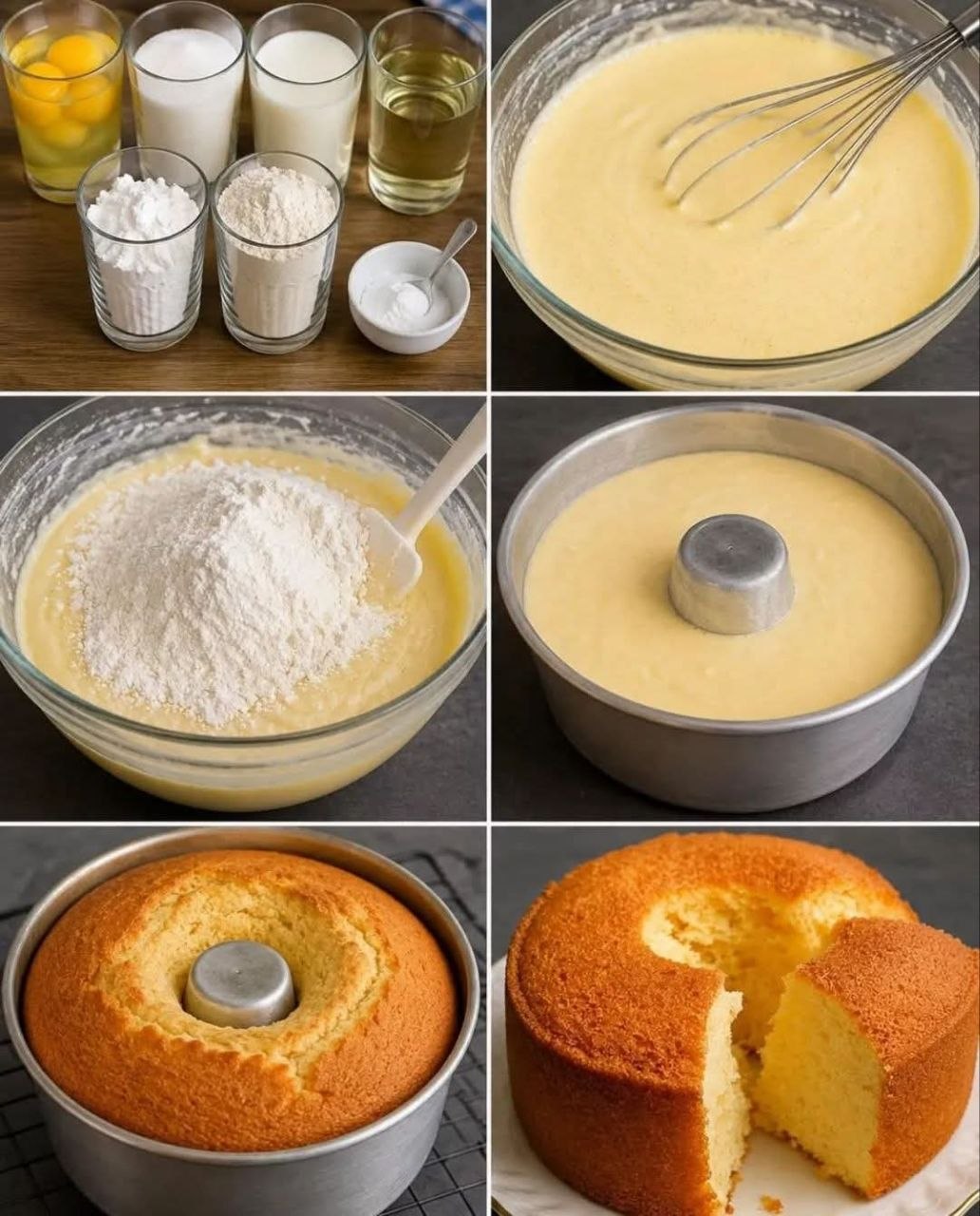
Few desserts are as universally loved as sponge cake. Light, airy, and versatile, it’s the foundation of countless pastries and celebrations. Whether enjoyed plain with tea, layered with cream and fruit, or dressed up for birthdays, sponge cake is a recipe every home baker should master.
This article will guide you through making a simple homemade sponge cake with pantry ingredients, while exploring its history, variations, and tips to achieve that perfect rise.
🌿 Why This Recipe Works
- Eggs provide structure and lift.
- Flour creates the base and texture.
- Sugar sweetens and stabilizes the batter.
- Oil keeps the cake moist.
- Milk adds tenderness.
- Baking powder ensures a fluffy rise.
🛒 Ingredients
For one medium sponge cake:
- 4 large eggs
- 1 cup sugar
- 1 cup milk
- ½ cup vegetable oil
- 1 cup all-purpose flour
- ¼ cup cornstarch
- 1 tsp baking powder
- 1 tsp vanilla extract
- Pinch of salt
Optional add-ins:
- Lemon zest for brightness
- Cocoa powder for chocolate sponge
- Almond extract for nutty depth
🥣 Step-by-Step Instructions
- Whisk eggs & sugar Beat eggs and sugar until pale and fluffy. This step incorporates air, crucial for sponge texture.
- Add liquids Stir in milk, oil, and vanilla extract.
- Mix dry ingredients Sift flour, cornstarch, baking powder, and salt. Gradually fold into wet mixture.
- Prepare the pan Grease a round tube pan or line with parchment.
- Bake Pour batter into pan. Bake at 180°C (350°F) for 30–35 minutes until golden and springy.
- Cool & serve Let cake cool before slicing. Enjoy plain or decorate with cream and fruit.
🍴 Serving Suggestions
- Dust with powdered sugar for a simple finish.
- Layer with whipped cream and strawberries for a classic shortcake.
- Spread with jam and buttercream for a Victoria sponge.
- Serve with coffee or Moroccan mint tea for an everyday treat.
🌟 Variations
- Chocolate sponge: Replace ¼ cup flour with cocoa powder.
- Citrus sponge: Add lemon or orange zest.
- Nut sponge: Fold in ground almonds or hazelnuts.
- Layered sponge: Bake thinner layers and stack with cream.
🧾 Nutritional Snapshot (per slice)
- Calories: ~180
- Protein: 4g
- Fat: 6g
- Carbs: 28g
- Fiber: 0.5g
🌍 A Bit of History
Sponge cake dates back to the Renaissance, with early versions appearing in Italy and Spain. By the 18th century, it became popular in England, where bakers perfected the technique of whisking eggs to create lift without yeast. Today, sponge cake is a global staple, adapted into countless forms — from Japanese castella to French génoise.
🧑🍳 Chef’s Tips
- Whisk eggs thoroughly — air is the secret to fluffiness.
- Don’t overmix once flour is added; it can deflate the batter.
- Test doneness with a toothpick; it should come out clean.
- Cool upside down in the pan for extra height (common in chiffon cakes).
✨ Final Thoughts
Homemade sponge cake is proof that simplicity can be extraordinary. With just eggs, flour, sugar, and a few pantry staples, you create a dessert that’s light, golden, and endlessly versatile. Whether served plain or dressed up, it’s a recipe that belongs in every baker’s repertoire.