Ultra-Soft Japanese Milk Bread (Shokupan-Style) Recipe
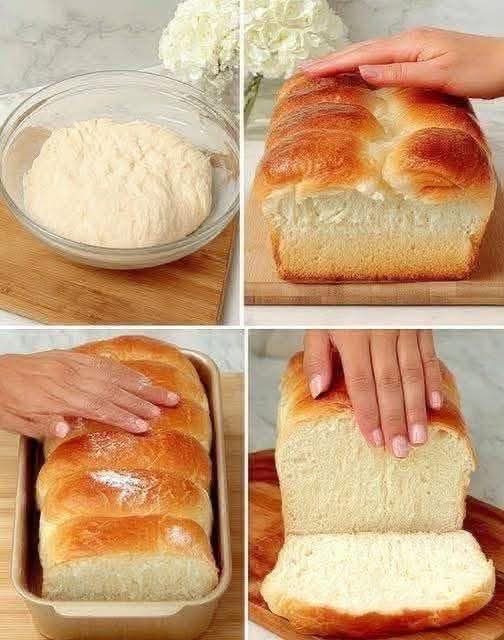
If you’re looking for a loaf that is incredibly soft, fluffy, and pillowy—just like the one shown in the image—this Japanese-style milk bread is the perfect recipe. The bread has a delicate golden crust, a feather-light crumb, and a rich buttery flavor. It stays soft for several days, making it ideal for breakfast, sandwiches, French toast, or simply enjoying warm with butter and jam.
The secret to this bread’s extraordinary texture is the combination of milk, butter, eggs, and careful kneading. The result is a bakery-quality loaf that pulls apart into silky strands and melts in your mouth.
Preparation Time
- Prep Time: 30 minutes
- Rising Time: 2–3 hours
- Baking Time: 30–35 minutes
- Total Time: About 4 hours
Yield: 1 large loaf (10–12 slices)
Ingredients
For the Dough
- 500 g (4 cups) bread flour
- 250 ml (1 cup + 2 tablespoons) warm whole milk
- 60 g (¼ cup) granulated sugar
- 7 g (2¼ teaspoons) instant yeast
- 1 large egg
- 60 g (¼ cup) unsalted butter, softened
- 8 g (1½ teaspoons) salt
- 1 tablespoon milk powder (optional but recommended)
- 1 teaspoon vanilla extract (optional for a sweeter aroma)
For Brushing
- 1 egg
- 1 tablespoon milk
Equipment
- Large mixing bowl
- Stand mixer (optional)
- Dough scraper
- 9×5-inch loaf pan
- Plastic wrap or kitchen towel
- Pastry brush
- Cooling rack
Step 1: Activate the Yeast
Although instant yeast can be mixed directly into the flour, activating it first ensures the best rise.
Warm the milk until it reaches about 38°C (100°F). It should feel warm but not hot.
Mix the warm milk with the sugar.
Sprinkle the yeast over the milk.
Allow it to sit for 5–10 minutes until frothy.
If bubbles form, the yeast is active and ready.
Step 2: Mix the Dough
In a large bowl combine:
- Bread flour
- Salt
- Milk powder
Stir everything together.
Pour in:
- Yeast mixture
- Egg
- Vanilla (optional)
Mix until a shaggy dough forms.
Step 3: Knead
Add the softened butter gradually.
Continue kneading for 12–15 minutes.
At first the dough will seem sticky.
Keep kneading.
Eventually it becomes:
- Smooth
- Elastic
- Soft
- Slightly tacky
Perform the windowpane test.
Stretch a small piece of dough.
If you can stretch it thin enough to see light through it without tearing, it is ready.
Step 4: First Rise
Shape the dough into a ball.
Place it into a lightly greased bowl.
Cover with plastic wrap or a towel.
Allow it to rise in a warm place for 60–90 minutes.
It should double in size.
Step 5: Divide the Dough
Punch down the risen dough gently.
Transfer it to a lightly floured surface.
Divide it into three equal portions.
Roll each piece into a smooth ball.
Cover them and let them rest for 15 minutes.
This resting period relaxes the gluten.
Step 6: Shape
Roll one dough ball into a rectangle.
Fold the sides inward.
Roll tightly into a log.
Repeat with the remaining dough.
Arrange the three logs side by side inside the greased loaf pan.
Step 7: Second Rise
Cover the loaf pan.
Allow the dough to rise for another 45–60 minutes.
The dough should expand until it reaches just above the rim of the pan.
Do not overproof.
Otherwise the bread may collapse while baking.
Step 8: Egg Wash
Whisk together:
- 1 egg
- 1 tablespoon milk
Brush gently over the top.
This creates the beautiful shiny golden crust.
Step 9: Bake
Preheat the oven to 175°C (350°F).
Bake for 30–35 minutes.
The bread is done when:
- Deep golden brown
- Internal temperature reaches about 93°C (200°F)
- Sounds hollow when tapped
If the top browns too quickly, cover loosely with foil during the final 10 minutes.
Step 10: Cool
Remove from the oven.
Let the loaf cool in the pan for 10 minutes.
Transfer to a wire rack.
Allow it to cool completely before slicing.
Although it’s tempting to cut into it while hot, waiting helps preserve the bread’s soft structure.
Why This Bread Is So Soft
Several factors contribute to its signature texture:
- Bread flour provides strong gluten development.
- Milk enriches the dough and softens the crumb.
- Butter keeps the bread tender.
- Sugar feeds the yeast and adds moisture.
- Egg improves richness and color.
- Thorough kneading creates long gluten strands that give the loaf its pull-apart texture.
The combination produces the cotton-soft interior seen in the image.
Tips for Success
- Measure ingredients accurately using a kitchen scale.
- Use fresh yeast for the best rise.
- Avoid adding too much flour during kneading.
- Knead until the dough is smooth and elastic.
- Proof in a warm, draft-free place.
- Do not overbake, as this can dry out the loaf.
- Cool completely before slicing with a serrated bread knife.
Storage
At room temperature:
- Store in an airtight container for up to 4 days.
Refrigerator:
- Not recommended, as refrigeration dries out bread.
Freezer:
- Slice the loaf before freezing.
- Wrap slices individually.
- Freeze for up to 2 months.
- Thaw at room temperature or toast directly from frozen.
Delicious Serving Ideas
This bread is wonderfully versatile:
- Toasted with butter and honey
- Peanut butter and banana sandwiches
- Strawberry jam and cream cheese
- Ham and Swiss cheese sandwiches
- Grilled cheese
- French toast
- Bread pudding
- Cinnamon toast
- Avocado toast
- Garlic butter toast
- Breakfast sandwiches with eggs and bacon
Its mild sweetness complements both sweet and savory toppings.
Common Mistakes to Avoid
- Using milk that is too hot, which can kill the yeast.
- Adding excessive flour, resulting in a dense loaf.
- Under-kneading, leading to poor gluten development.
- Skipping the second rise.
- Overproofing, which may cause the loaf to collapse.
- Slicing the bread while it’s still hot.
Flavor Variations
You can easily customize this recipe:
- Add chocolate chips for a sweet loaf.
- Swirl in cinnamon sugar before rolling.
- Mix in raisins or dried cranberries.
- Add shredded cheddar for a savory version.
- Sprinkle sesame seeds or oats on top.
- Incorporate herbs such as rosemary or thyme.
- Fill with Nutella for a decadent treat.
Nutritional Information (Per Slice, Approximate)
- Calories: 210
- Protein: 6 g
- Carbohydrates: 33 g
- Fat: 6 g
- Saturated Fat: 3 g
- Sugar: 5 g
- Fiber: 1 g
- Sodium: 170 mg
Final Thoughts
This ultra-soft Japanese-style milk bread is a true bakery favorite that combines a light, airy crumb with a rich, buttery flavor. With proper kneading, patient proofing, and gentle handling, you’ll achieve a loaf that is beautifully golden on the outside and irresistibly fluffy on the inside. Whether enjoyed fresh from the oven, toasted for breakfast, or used to make gourmet sandwiches, this homemade bread is sure to become a staple in your kitchen. Once you’ve experienced its pillowy texture and delicate taste, you’ll find yourself baking it again and again.