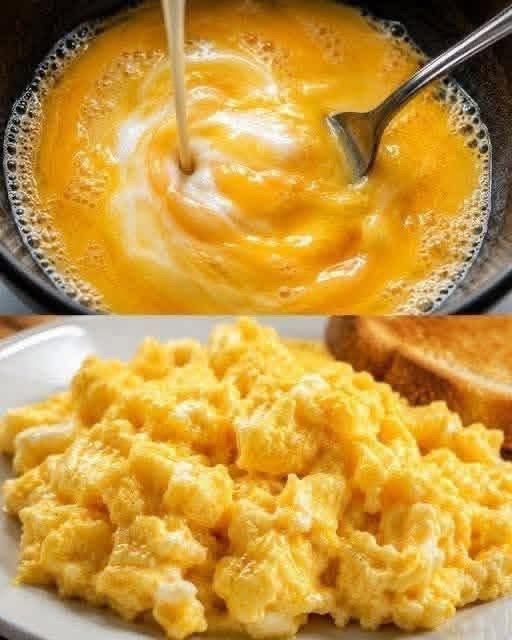
Why You’ll Love This Recipe
- Ready in just 10 minutes
- Rich, creamy, and fluffy texture
- Perfect for breakfast or brunch
- Beginner-friendly
- Uses simple pantry ingredients
- Easily customizable
- High in protein
- Delicious with toast, avocado, or breakfast meats
Ingredients
For the Eggs
- 6 large eggs
- 2 tablespoons heavy cream or whole milk
- 2 tablespoons unsalted butter
- ½ teaspoon fine salt
- ¼ teaspoon freshly ground black pepper
Optional Additions
- 2 tablespoons cream cheese
- 2 tablespoons grated Parmesan
- 1 tablespoon chopped chives
- Fresh parsley
- Fresh dill
- Shredded cheddar cheese
- Smoked paprika
- Red pepper flakes
Equipment
- Medium non-stick skillet
- Silicone spatula
- Mixing bowl
- Whisk or fork
- Measuring spoons
Step 1: Crack the Eggs
Crack the eggs into a medium mixing bowl.
Inspect for shell fragments and remove them if necessary.
Fresh eggs produce the best flavor and texture.
Step 2: Whisk Thoroughly
Add:
- Heavy cream
- Salt
- Black pepper
Whisk vigorously for about 1 minute.
The mixture should become smooth, pale yellow, and slightly frothy.
Proper whisking incorporates air, helping create lighter scrambled eggs.
Step 3: Heat the Pan
Place a non-stick skillet over low heat.
Add the butter.
Allow it to melt slowly without browning.
Low heat is the key to creamy scrambled eggs.
Step 4: Add the Egg Mixture
Pour the whisked eggs into the skillet.
Let them sit undisturbed for about 20–30 seconds.
The edges will begin to set while the center remains liquid.
Step 5: Stir Gently
Using a silicone spatula, slowly push the eggs from the edges toward the center.
Continue making gentle sweeping motions.
Avoid stirring constantly or aggressively.
The eggs should form soft, creamy curds.
Step 6: Cook Slowly
Continue cooking over low heat for about 4–6 minutes.
The eggs should remain glossy and slightly loose.
Remember that they will continue cooking after being removed from the heat.
Step 7: Remove from Heat
Take the skillet off the heat while the eggs still look slightly underdone.
Residual heat finishes the cooking process, keeping the eggs moist and creamy instead of dry.
Step 8: Optional Mix-Ins
While the eggs are still hot, gently fold in:
- Cream cheese for extra richness
- Parmesan for a savory flavor
- Cheddar for a melty finish
- Fresh herbs for brightness
These additions melt beautifully into the warm eggs.
Step 9: Serve Immediately
Transfer the scrambled eggs to warm plates.
Serve while hot and creamy.
Serving Suggestions
Creamy scrambled eggs pair wonderfully with:
- Buttered sourdough toast
- English muffins
- Croissants
- Avocado toast
- Hash browns
- Roasted potatoes
- Crispy bacon
- Breakfast sausage
- Smoked salmon
- Grilled tomatoes
- Sautéed mushrooms
- Fresh fruit
- Mixed greens
Delicious Variations
Cheesy Scrambled Eggs
Add:
- ½ cup shredded cheddar
- Mozzarella
- Gruyère
- Swiss cheese
Fold the cheese in during the last minute of cooking.
Herb Scrambled Eggs
Mix in:
- Chives
- Parsley
- Dill
- Basil
- Tarragon
Fresh herbs add vibrant flavor and color.
Garlic Butter Eggs
Cook a minced garlic clove briefly in the butter before adding the eggs for a savory twist.
Spicy Eggs
Season with:
- Crushed red pepper flakes
- Cayenne pepper
- Hot sauce
- Jalapeños
Perfect for those who enjoy a little heat.
Mediterranean Style
Add:
- Crumbled feta
- Spinach
- Cherry tomatoes
- Kalamata olives
Serve with warm pita bread.
Bacon and Cheese
Stir in:
- Crispy bacon bits
- Sharp cheddar cheese
A classic combination that’s always a crowd-pleaser.
Storage
Although scrambled eggs are best enjoyed fresh, leftovers can be stored in an airtight container in the refrigerator for up to 2 days.
Reheating
Reheat gently in a skillet over low heat, stirring constantly.
You can also microwave them in short 15-second intervals, stirring between each interval to prevent overcooking.
Tips for Perfect Scrambled Eggs
- Use fresh, high-quality eggs.
- Cook over low heat for the creamiest texture.
- Whisk thoroughly to incorporate air.
- Use butter instead of oil for richer flavor.
- Remove the eggs from the heat before they look fully cooked.
- Avoid over-stirring, which can make the curds too small and dense.
- Serve immediately for the best texture.
- Warm your serving plates so the eggs stay hot longer.
Nutritional Information (Approximate)
Per serving (based on 3 servings):
- Calories: 220
- Protein: 13 g
- Carbohydrates: 2 g
- Fat: 18 g
- Saturated Fat: 9 g
- Cholesterol: 390 mg
- Sodium: 300 mg
- Sugar: 1 g
Frequently Asked Questions
Why are my scrambled eggs rubbery?
This usually happens when they are cooked over high heat or left on the stove for too long. Low, gentle heat keeps them soft and creamy.
Can I use milk instead of cream?
Yes. Whole milk works well, though heavy cream produces a richer, silkier texture.
Should I season the eggs before cooking?
Yes. A small amount of salt mixed into the eggs before cooking helps distribute the seasoning evenly and enhances the flavor.
Can I make these dairy-free?
Absolutely. Replace the butter with olive oil or a dairy-free butter alternative, and use unsweetened oat or almond milk instead of cream.
What’s the best pan to use?
A non-stick skillet is ideal because it prevents sticking and allows the eggs to cook gently with minimal fat.
Final Thoughts
Creamy Soft Scrambled Eggs are a timeless breakfast classic that proves simple ingredients can create extraordinary results. By combining fresh eggs with a splash of cream, quality butter, and gentle heat, you can achieve the luxurious, custard-like texture seen in your image. The slow-cooking method ensures tender, fluffy curds that remain moist and flavorful rather than dry or overcooked.