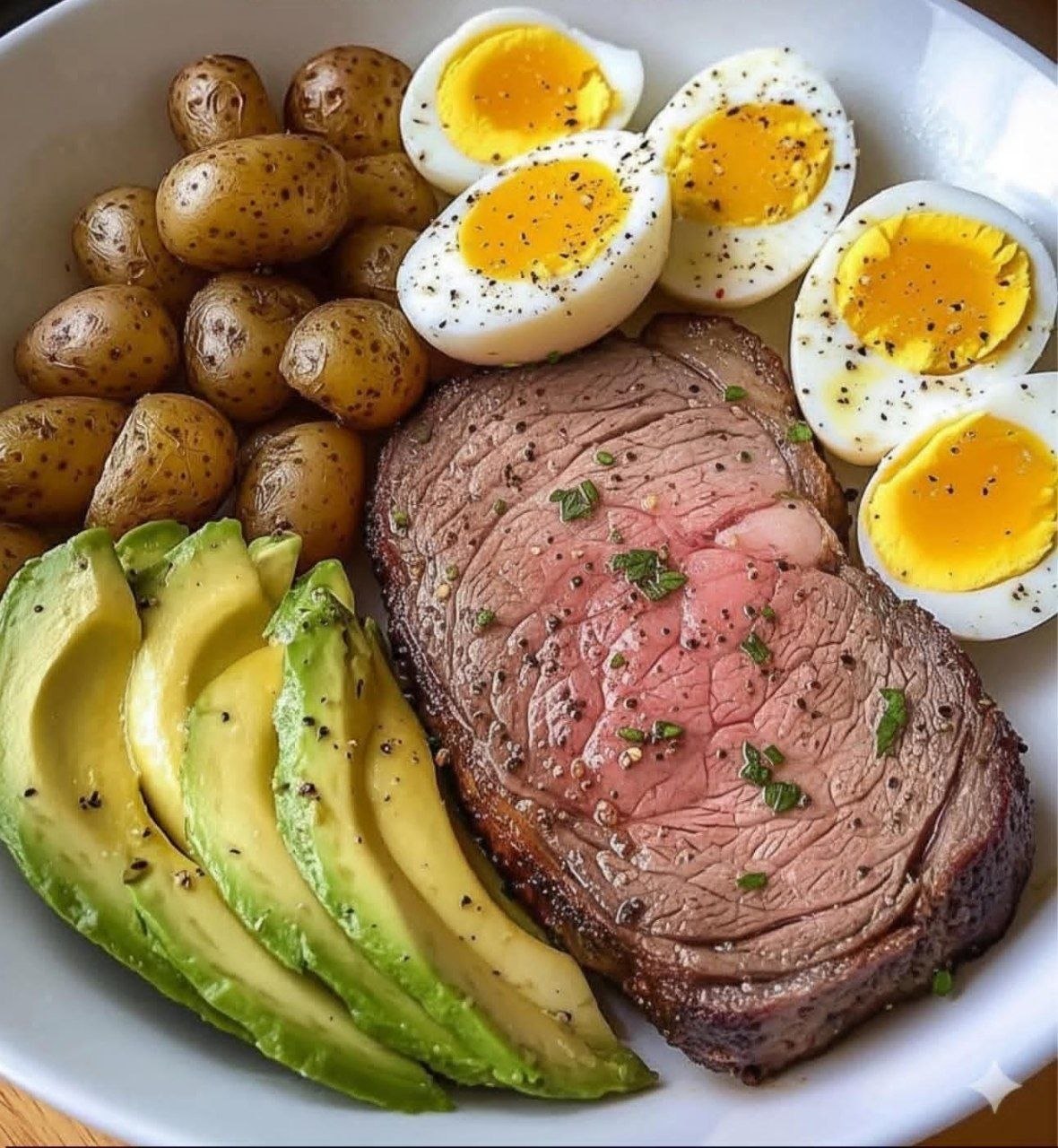
We’ve all been there: you want to enjoy a luxurious, celebratory meal like a perfectly roasted prime rib, but you are also focused on your fitness goals and avoiding heavy, carb-loaded sides that leave you feeling sluggish. It is incredibly easy to relegate prime rib to a once-a-year holiday indulgence surrounded by heavy creams and cheeses. The real challenge is transforming this premium, juicy cut of beef into an everyday power plate—one that balances high-quality protein and rich healthy fats with a vibrant, nutrient-dense accompaniment that keeps your energy levels soaring.
The perfect solution relies on a modern, wellness-focused approach to luxury dining. This balanced prime rib power plate is the definitive answer to high-protein meal fatigue. By pairing a perfectly seared, garlic-crusted prime rib slice with crisp-tender, garlic-roasted green beans and a refreshing, citrus-kissed avocado salad, you achieve an incomparably satisfying texture. This meal delivers pure premium comfort while supporting a low-carbohydrate, high-protein lifestyle.
The Culinary Science of the Reverse Sear
The secret to a flawless prime rib slice comes down to precision temperature management. Many home cooks make the mistake of roasting a prime rib at high heat from the start, which creates a thick, overcooked “gray band” around the edges while leaving the center raw. Instead, the ultimate choice is the reverse-sear method.
By roasting the meat slowly at a low temperature first, you allow the heat to distribute evenly from the edge to the center. This slow warming window gently breaks down the connective tissues and allows the fat cap to render beautifully, keeping the beef remarkably succulent. A final, high-heat sear in a cast-iron skillet creates a deeply caramelized, savory herb crust without overcooking the interior, ensuring a perfect medium-rare result every time.
Structured Recipe Overview
Before you begin cooking, here is a quick overview of what it takes to bring this high-protein, vibrant power plate to life.
- Prep Time: 20 minutes
- Cook Time: 2 hours (varies by roast size)
- Total Time: 2 hours 20 minutes
- Yield: 4 to 6 generous power plates
- Cost Per Serving: Premium (varies by butcher cut)
- Primary Equipment: Roasting pan with rack, meat thermometer, heavy cast-iron skillet, large baking sheet
The Nutrient-Dense Ingredient List
Every item in this recipe is selected to maximize clean energy, high-quality proteins, and bright, refreshing textures.
For the Garlic-Crusted Prime Rib:
- 3 to 4-pound Boneless Prime Rib Roast: Well-marbled, trimmed of excess outer fat.
- 4 cloves Garlic: Minced into a paste.
- 2 tablespoons Fresh Rosemary: Finely chopped.
- 2 tablespoons Fresh Thyme: Finely chopped.
- 2 tablespoons Olive Oil: To bind the herb rub.
- 1 tablespoon Coarse Sea Salt: Essential for dry-brining.
- 1 tablespoon Coarse Black Pepper: For a bold, rustic crust.
For the Garlic-Roasted Green Beans:
- 1 pound Fresh Green Beans: Trimmed.
- 1 tablespoon Olive Oil: For roasting.
- 2 cloves Garlic: Sliced thin.
- Salt and Freshly Cracked Black Pepper: To taste.
For the Citrus Avocado Salad:
- 4 cups Fresh Baby Arugula or Spinach: Providing a peppery, leafy base.
- 2 Ripe Avocados: Diced, for excellent healthy fats.
- 1 cup Cherry Tomatoes: Halved for a juicy pop.
- 1 tablespoon Fresh Lime Juice: To prevent browning and add a bright tang.
- 1 tablespoon Extra Virgin Olive Oil: For a clean dressing finish.
Step-by-Step Instructions
Follow these straightforward steps to execute a flawless, restaurant-quality power plate.
Step 1: Dry-Brine and Season the Roast
At least 2 hours before cooking (or up to 24 hours for best results), rub the entire prime rib roast generously with the coarse sea salt. Place it uncovered on a wire rack in the fridge. This draws out moisture, concentrates the beef flavor, and ensures a spectacular crust. When ready to cook, mix the minced garlic, rosemary, thyme, olive oil, and black pepper into a paste, and slather it evenly over the roast.
Step 2: The Low-and-Slow Roast
Preheat your oven to 225°F. Place the seasoned prime rib roast on a rack inside a roasting pan. Insert a digital meat thermometer into the thickest part of the meat. Roast undisturbed until the internal temperature reads exactly 120°F for medium-rare (roughly 30 to 40 minutes per pound). Remove the roast from the oven, tent it loosely with aluminum foil, and let it rest for 20 minutes.
Step 3: Prep and Roast the Green Beans
While the beef finishes its slow roast, turn the oven heat up to 425°F. On a large baking sheet, toss the trimmed green beans with olive oil, sliced garlic, salt, and black pepper. Spread them out in a single layer and roast for 12 to 15 minutes until the edges are slightly blistered and tender-crisp.
Step 4: Assemble the Citrus Avocado Salad
In a medium bowl, combine the fresh baby arugula, halved cherry tomatoes, and diced avocados. Drizzle the fresh lime juice and extra virgin olive oil over the top. Toss gently to combine, ensuring the lime juice coats the avocado to keep it bright green and fresh. Season with a tiny pinch of sea salt.
Step 5: The Flash Cast-Iron Sear
Heat a heavy cast-iron skillet over high heat until it is smoking hot. Add a tablespoon of high-smoke-point oil to the pan. Sear the rested prime rib roast for 1 to 2 minutes per side, just until a magnificent, deep golden-brown herb crust forms. Transfer to a cutting board, carve into thick slices, and assemble your power plate with a portion of beef, a heap of garlic green beans, and a refreshing side of avocado salad.
Common Mistakes & How to Avoid Them
- Searing Before Roasting: Traditional searing before roasting creates a massive gray overcooked band under the surface. Sticking strictly to the reverse-sear method guarantees an even, edge-to-edge pink interior.
- Skipping the Internal Thermometer: Prime rib is too premium of a cut to guess the cooking time. Oven temperatures vary wildly, so always rely on an accurate digital probe thermometer rather than the clock.
- Dressing the Salad Too Early: If you toss the arugula with oil and lime juice hours in advance, the greens will wilt and turn soggy. Keep the elements separate and dress the salad right before slicing the beef.
Ingredient Substitutions & Variations
- The Root Alternative: If your nutrition plan allows for more complex carbohydrates, swap out the roasted green beans for roasted sweet potato wedges seasoned with smoked paprika.
- The Dairy Upgrade: Add a sprinkle of crumbled goat cheese or feta over the citrus avocado salad to introduce a creamy, tangy contrast that cuts through the richness of the prime rib.
- The Nutty Crunch: Scatter a handful of toasted pumpkin seeds or slivered almonds over the green beans during the last 3 minutes of roasting for an extra layer of healthy fats and texture.
Pro Tips for Blog Success
- The Carving Direction: Always slice your prime rib across the grain using a sharp, non-serrated slicing knife. This ensures the shortest muscle fibers in each bite, maximizing the meltingly tender texture.
- The Ultimate Potluck Plate: This plate transitions perfectly into an elegant meal-prep option. The roasted green beans and carved prime rib reheat beautifully in a hot skillet for 2 minutes, while the salad can be assembled fresh on the side.
Frequently Asked Questions
Can I make this recipe with individual ribeye steaks? Yes! If you don’t want to cook a whole roast, buy thick-cut, boneless ribeye steaks (at least 1.5 inches thick). Follow the exact same reverse-sear method: bake at 225°F until they hit 115°F internally, then flash-sear in a scorching hot cast-iron skillet for 1 minute per side.
How do I store and reheat leftover prime rib without overcooking it? Store leftovers in an airtight container in the fridge for up to 3 days. To reheat without losing that perfect pink center, place the slice in a baking dish with a splash of broth, cover tightly with foil, and warm in a 250°F oven for 10 to 12 minutes until just heated through.
Is prime rib a good choice for a clean eating or keto lifestyle? Absolutely. Prime rib is an exceptional source of bioavailable protein, iron, and essential B vitamins. Paired with low-carb greens, healthy fats from the avocado, and fiber-rich green beans, it forms a perfectly balanced, nutrient-dense power plate.
Conclusion
This balanced prime rib power plate is proof that mindful eating can still look and taste absolutely spectacular. With its perfect harmony of garlic-crusted savory beef, snappy blistered green beans, and a bright, zesty avocado salad, it is a foolproof way to indulge in luxury while fueling your body with clean, high-quality nutrition. Fire up your oven this weekend, and leave a comment below sharing your favorite high-protein dinner creations!