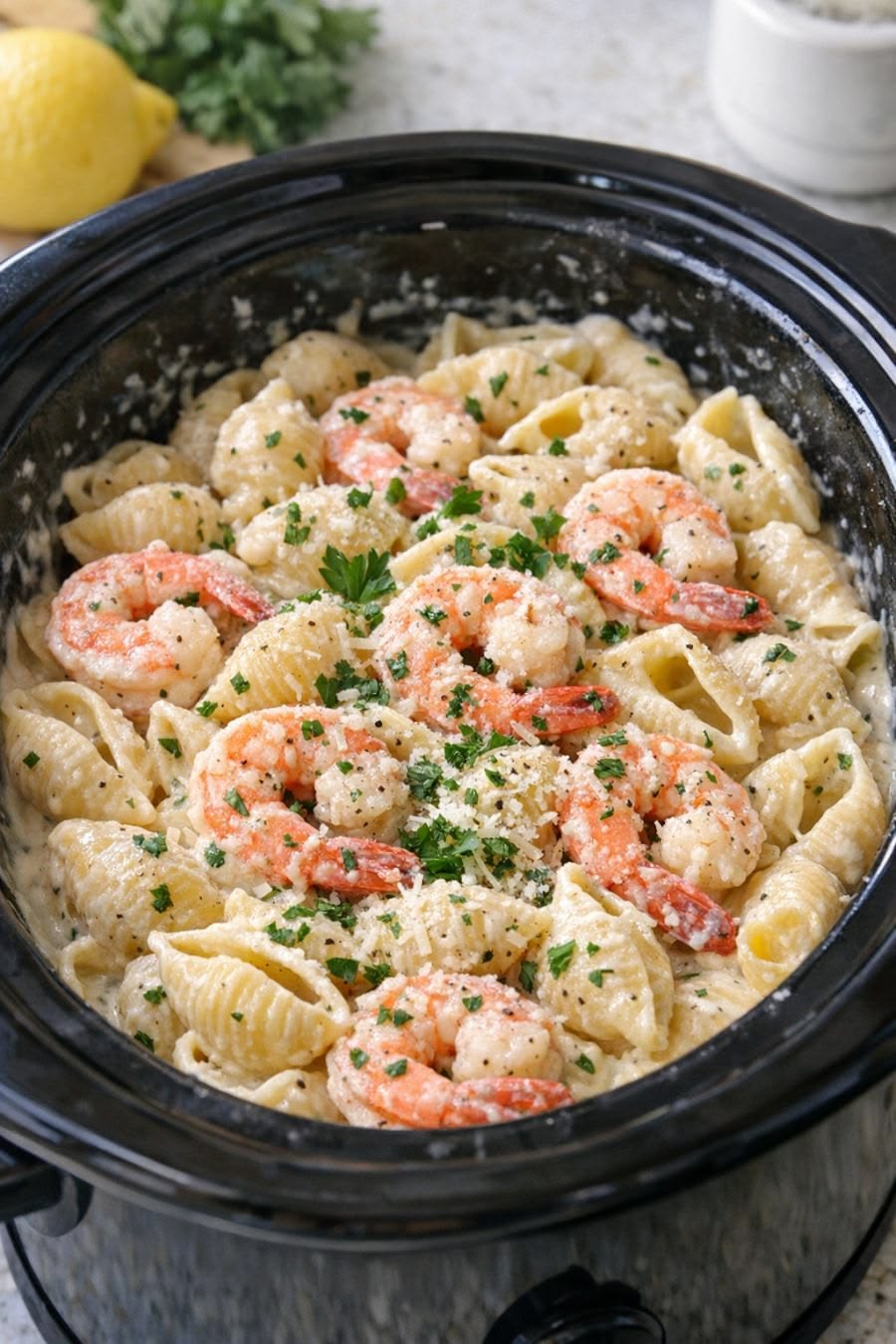
Creating a rich, restaurant-worthy seafood pasta directly in your crockpot can feel like a culinary tightrope walk. Cook the pasta too long, and it turns mushy; add the seafood too early, and the shrimp transforms into tough, rubbery bites.
By applying a simple two-phase cooking method, your slow cooker becomes the ultimate tool for this dish. First, we cook sturdy pasta directly in a seasoned broth and cream base until tender. Then, we add raw shrimp and a velvety garlic butter mixture during the final 20 minutes. The trapped steam cooks the seafood to sweet, plump perfection while building a glossy, garlic-infused cream sauce that clings to every bite.
Why the Two-Phase Method Is Essential
Seafood and dried pasta require completely different environments to thrive:
PHASE 1: THE PASTA BASE (1.5 to 2 Hours on HIGH)
┌────────────────────────────────────────────────────────┐
│ Dry Penne Pasta + Chicken Broth + Heavy Cream          │
│ ➔ Pasta slowly hydrates & starches thicken the sauce   │
└────────────────────────────────────────────────────────┘
                           │
                           ▼
PHASE 2: THE VELVETY FINISH (15 to 20 Minutes on HIGH)
┌────────────────────────────────────────────────────────┐
│ Layer Raw Shrimp + Drizzle Creamy Garlic Butter Sauce   │
│ ➔ Gentle steam cooks shrimp to tender, sweet perfection│
└────────────────────────────────────────────────────────┘
- Hydrating the Starches: Cooking dried noodles directly in a combination of rich broth and heavy cream allows the released pasta starches to thicken the liquid, creating a velvety foundation without needing a roux.
- Gentle Steam Finish: Raw shrimp need gentle, rapid heat to retain their juicy snap. Nesting raw shrimp over hot, pre-cooked pasta and drizzling a seasoned garlic-butter emulsion over top during the last 20 minutes cooks the seafood gently without overworking the proteins.
Structured Recipe Overview
- Prep Time: 10 minutes
- Cook Time: 2 hours 15 minutes
- Total Time: 2 hours 25 minutes
- Servings: 6 generous portions
- Category: Main Course
- Cuisine: Italian-American / Comfort Food
Ingredients & Flavor Architecture
For the Pasta Base
- Dry Penne or Cavatappi Pasta (12 ounces): Short, tubular, or spiral pasta shapes hold up best under slow-cooker conditions. Avoid thin, long noodles like angel hair or spaghetti, which collapse and become mushy.
- Low-Sodium Chicken or Vegetable Broth (3.5 cups): Hydrates the pasta while building a deeply savory flavor base.
- Heavy Cream (3/4 cup, divided): Adds a rich, velvety mouthfeel. 1/2 cup goes into the initial pasta base, and 1/4 cup is whisked into the finishing garlic drizzle.
For the Seafood Layer
- Raw Shrimp (1.5 to 2 pounds): Use large or jumbo raw shrimp (21/25 count), peeled and deveined. (Fresh or completely thawed raw shrimp work best for this method).
For the Creamy Garlic Butter Drizzle
- Unsalted Butter (1/2 cup / 1 stick): Melted. Forms the rich carrier for aromatics and seasonings.
- Fresh Minced Garlic (2 tablespoons / approx. 6 cloves): Essential for that robust, scampi-style aromatic backbone.
- Cream Cheese (2 ounces, softened): The secret ingredient that stabilizes the dairy, preventing the sauce from separating while making it extra creamy.
- Grated Parmesan Cheese (1/2 cup): Adds a salty, nutty umami layer that melts smoothly into the warm butter mixture.
- Italian Seasoning (1 tablespoon): A fragrant blend of dried oregano, basil, thyme, and rosemary.
- Fresh Lemon Juice (2 tablespoons): Cuts through heavy dairy fat, brightening the entire dish right before serving.
- Kosher Salt & Black Pepper: 1/2 teaspoon each (or to taste).
For Finishing & Garnish
- Fresh Italian Parsley (1/4 cup, finely chopped): Brings a fresh, clean herbal finish and a bright pop of green color.
- Red Pepper Flakes (optional): For a subtle background warmth.
Step-by-Step Instructions
Step 1: Combine and Cook the Pasta Base
- Add 12 ounces of uncooked penne pasta, 3.5 cups of chicken broth, and 1/2 cup of heavy cream directly into a 5- to 6-quart slow cooker insert.
- Stir well with a wooden spoon to ensure all noodles are submerged as much as possible in the liquid.
- Cover with the lid and cook on HIGH for 1.5 to 2 hours (or LOW for 3 hours).
- Check for doneness: At the 1.5-hour mark, test a noodle. It should be just shy of al dente—slightly firm in the center—and most of the liquid should be absorbed into a silky, starch-thickened sauce base.
Step 2: Prepare the Creamy Garlic Butter Drizzle
- While the pasta finishes its initial cook time, prepare your pour-over sauce in a liquid glass measuring cup or bowl.
- Whisk together 1 stick (1/2 cup) melted butter, 2 ounces softened cream cheese, the remaining 1/4 cup heavy cream, 2 tablespoons minced garlic, 1 tablespoon Italian seasoning, 2 tablespoons fresh lemon juice, 1/2 cup grated Parmesan cheese, 1/2 teaspoon kosher salt, and 1/2 teaspoon black pepper until smooth.
Step 3: Add Shrimp and Drizzle
- Remove the slow cooker lid. Arrange 1.5 to 2 pounds of raw, peeled, and deveined shrimp evenly across the top of the hot pasta.
- Pour the warm creamy garlic butter mixture evenly over the layer of shrimp and pasta.
- Using silicone tongs or a large spoon, toss everything gently so that every piece of shrimp and every noodle is coated in the fragrant sauce.
Step 4: Quick Steam Finish
- Cover tightly with the lid and continue cooking on HIGH for an additional 15 to 20 minutes.
- Micro-Explanation: Do not lift the lid during this step! Shrimp cook remarkably fast in trapped steam. Check them at the 15-minute mark: as soon as they turn opaque white, blush pink on the outside, and curl into a loose “C” shape, turn off the slow cooker immediately.
Step 5: Garnish and Serve Hot
Stir in chopped fresh parsley. Serve immediately in warm bowls with extra grated Parmesan, fresh lemon wedges, and a pinch of crushed red pepper flakes if desired.
Common Mistakes & How to Avoid Them
| Mistake | Consequence | How to Avoid It |
|---|---|---|
| Adding Raw Shrimp at the Start | Cooking shrimp for 2 hours turns them into rubbery, chewy, unappetizing bites. | Strictly follow the two-phase method: add shrimp only during the final 15–20 minutes. |
| Using Delicate Pasta Shapes | Thin noodles like angel hair or spaghetti break apart and turn mushy in a slow cooker. | Stick to sturdy, short pasta shapes like penne, rotini, cavatappi, or rigatoni. |
| Lifting the Lid Constantly | Escaping steam drops internal temperatures, prolonging pasta hydration and undercooking shrimp. | Keep the lid closed tightly, especially during the final 15-minute shrimp steam phase. |
| Skipping Cream Cheese or Acid | Heavy butter and cream can separate or taste flat without balance. | Cream cheese stabilizes the emulsion; fresh lemon juice cuts through heavy dairy fat. |
Ingredient Substitutions & Variations
- Creamy Spinach & Garlic Shrimp Pasta: Fold 2 cups of fresh baby spinach into the hot pasta right along with the raw shrimp during Phase 2. The spinach will wilt perfectly in 15 minutes.
- Cajun Garlic Cream Style: Swap Italian seasoning for 2 tablespoons of Cajun or Creole seasoning blend, and add 1/2 cup of diced fire-roasted tomatoes to the pasta base.
- Gluten-Free Adaptation: Use a sturdy gluten-free corn-and-rice blend pasta (like penne). Check gluten-free pasta at the 1-hour mark on High, as GF pasta hydrates faster than traditional wheat pasta.
Storage and Reheating Guidelines
- Refrigeration: Store cooled leftovers in an airtight glass container in the refrigerator for up to 2 days.
- Reheating on the Stovetop (Best Method): Transfer leftovers to a skillet over low heat. Add 1 to 2 tablespoons of milk or broth to loosen the cream sauce. Warm gently for 4 to 5 minutes until heated through.
- Reheating in the Microwave: Heat on 50% power in 45-second intervals, stirring in between, to prevent the shrimp from turning rubbery.
SEO-Optimized FAQ Section
Can you cook raw pasta directly in a slow cooker?
Yes! Cooking raw pasta directly in a slow cooker works very well as long as you have enough liquid (broth/cream) for the noodles to absorb and use a sturdy, short pasta shape like penne or rotini.
Why did my shrimp turn out tough or rubbery?
Shrimp turn rubbery when cooked for too long or exposed to excessive heat after reaching doneness. Adding raw shrimp during the final 15 to 20 minutes of cooking ensures they stay tender, sweet, and succulent.
Can I use frozen raw shrimp for this recipe?
Yes! If using frozen raw shrimp, rinse them under cold water for 1 to 2 minutes to knock off surface ice crystals before adding them in Phase 2. Extend the final steam cook time by about 5 extra minutes (20 to 25 minutes total on High).
Slow Cooker Creamy Garlic Shrimp Pasta
- Prep Time: 10 minutes
- Cook Time: 2 hours 15 minutes
- Total Time: 2 hours 25 minutes
- Servings: 6 servings
- Category: Main Course
- Cuisine: Italian-American
Ingredients
- 12 oz uncooked penne or cavatappi pasta
- 3.5 cups low-sodium chicken broth
- 3/4 cup heavy cream (divided)
- 1.5 to 2 lbs raw shrimp (peeled and deveined, 21/25 count)
- 1/2 cup (1 stick) unsalted butter, melted
- 2 oz cream cheese, softened
- 2 tbsp fresh minced garlic
- 1/2 cup grated Parmesan cheese
- 1 tbsp Italian seasoning
- 2 tbsp fresh lemon juice
- 1/2 tsp kosher salt & black pepper
- 1/4 cup chopped fresh parsley for garnish
Instructions
- Combine uncooked pasta, chicken broth, and 1/2 cup heavy cream in a 5- or 6-quart slow cooker. Cover and cook on HIGH for 1.5 to 2 hours until pasta is almost al dente.
- In a measuring cup or bowl, whisk together melted butter, softened cream cheese, remaining 1/4 cup heavy cream, minced garlic, Parmesan cheese, Italian seasoning, lemon juice, salt, and pepper until smooth.
- Layer raw shrimp over the warm pasta, pour the creamy garlic butter mixture over everything, and toss gently to coat.
- Cover tightly and cook on HIGH for an additional 15 to 20 minutes until shrimp turn pink, opaque, and tender.
- Stir in fresh parsley and serve hot with extra Parmesan and fresh lemon wedges.