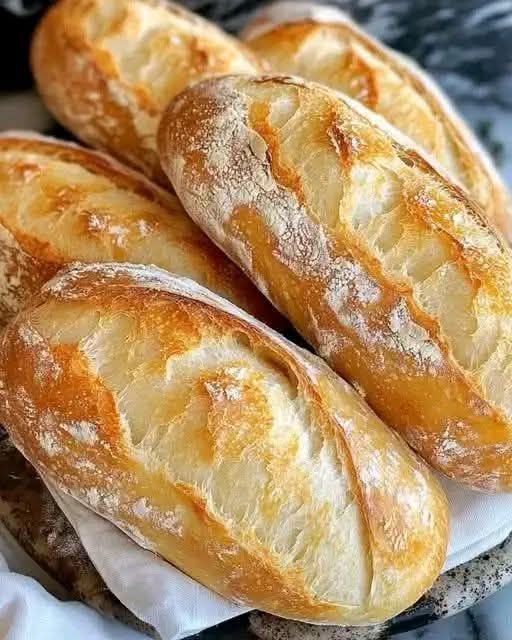
Crusty Mini Baguettes are a perfect way to bring the authentic taste of French bakeries into your home kitchen. These small, golden loaves feature a crisp, crackling crust and a soft, airy interior that melts in your mouth. While traditional French baguettes are long and slender, mini baguettes are more manageable, bake faster, and are perfect for sandwiches, dinner rolls, or simply enjoying with butter and jam.
Making baguettes at home might seem intimidating, but with patience, proper technique, and quality ingredients, you can achieve bakery-level results. This recipe provides a comprehensive guide, from mixing the dough to scoring and baking, so you can enjoy freshly baked mini baguettes with a perfectly crusty exterior and tender crumb inside.
Ingredients
For the Dough
500 grams (4 cups) all-purpose flour or bread flour
325 ml (1⅓ cups) lukewarm water (about 100°F/38°C)
2 teaspoons salt
1 teaspoon sugar
2 teaspoons active dry yeast or instant yeast
1 tablespoon olive oil (optional for softer crust)
For Dusting and Baking
Extra flour for dusting
Parchment paper or lightly greased baking sheet
A shallow pan with water (for steam)
Equipment Needed
Mixing bowl
Wooden spoon or stand mixer with dough hook
Kitchen scale (recommended for accuracy)
Bench scraper or spatula
Clean kitchen towel or plastic wrap
Sharp knife or lame for scoring
Baking stone or baking sheet
Oven with a steam tray or pan
Step 1: Activating the Yeast
If using active dry yeast, dissolve it in lukewarm water with sugar. Let it sit for 5–10 minutes until frothy. This step ensures the yeast is alive and ready to leaven the dough.
If using instant yeast, you can skip this activation step and mix it directly with the flour.
Step 2: Mixing the Dough
In a large mixing bowl, combine the flour and salt. Gradually add the yeast mixture (or instant yeast and water) while stirring.
Mix until a rough dough forms. You can use a wooden spoon, your hands, or a stand mixer with a dough hook.
Add olive oil if desired. This will make the crumb slightly softer without compromising crustiness.
Step 3: Kneading the Dough
Transfer the dough to a lightly floured surface. Knead for 8–10 minutes by hand, or 5–6 minutes in a stand mixer, until the dough is smooth, elastic, and slightly tacky.
Check for proper kneading by performing the windowpane test: Stretch a small piece of dough between your fingers. If it stretches thin without tearing, the gluten is well-developed.
Step 4: First Rise (Bulk Fermentation)
Place the kneaded dough in a lightly oiled bowl and cover with a damp towel or plastic wrap.
Allow it to rise at room temperature for 1–2 hours, or until doubled in size.
Bulk fermentation is crucial for developing flavor and creating the characteristic open crumb of baguettes.
Step 5: Shaping the Mini Baguettes
After the first rise, gently punch down the dough to release excess air.
Divide the dough into 6–8 equal pieces, depending on the desired size of mini baguettes.
Shape each piece into a rough rectangle, then roll it into a small loaf approximately 6–8 inches long. Taper the ends slightly to create the classic baguette shape.
Place the shaped loaves on a parchment-lined baking sheet, leaving space between each for expansion.
Step 6: Second Rise (Proofing)
Cover the shaped loaves loosely with a clean kitchen towel or plastic wrap.
Allow them to proof for 45–60 minutes, or until they have puffed up noticeably but not doubled.
Step 7: Preheating the Oven
Preheat your oven to 450°F (230°C).
Place a shallow pan of water on the bottom rack to create steam. Steam is essential for developing a crisp, glossy crust.
Optional: Place a baking stone on the middle rack for more even heat and professional-style crust.
Step 8: Scoring the Baguettes
Lightly dust the loaves with flour.
Use a sharp knife or lame to make 3–4 diagonal slashes along the top of each mini baguette. Scoring allows the dough to expand without bursting and creates the classic French look.
Step 9: Baking the Mini Baguettes
Place the baking sheet with loaves in the preheated oven.
Bake for 15–20 minutes, or until the loaves are golden brown with a crisp, crackling crust.
For extra crunch, spritz the oven walls with water 1–2 times during the first 5 minutes of baking to enhance steam.
Step 10: Cooling the Baguettes
Remove the mini baguettes from the oven and transfer them to a wire rack to cool for at least 20 minutes.
Cooling is essential for the crust to remain crisp and for the interior to set properly.
Flavor Profile and Texture
Crusty Mini Baguettes should have:
- Exterior: Deep golden brown, crisp, and crackly
- Interior (crumb): Soft, airy, with irregular holes and tender chew
- Flavor: Slightly sweet from the natural fermentation, with subtle nutty notes from the toasted crust
These baguettes are versatile and can be paired with savory toppings like cheese, ham, or roasted vegetables, or enjoyed with butter, jam, or olive oil.
Tips for Perfect Mini Baguettes
- Use bread flour for a higher protein content and better gluten development.
- Steam in the oven: Essential for a shiny, crisp crust.
- Do not rush fermentation: Proper rising develops flavor and texture.
- Score deeply but lightly: Avoid tearing the dough; ¼–½ inch deep slashes are sufficient.
- Cool completely: Cutting too early can make the crumb gummy.
Variations
Whole Wheat Mini Baguettes
Replace 50% of the white flour with whole wheat flour. Add an extra tablespoon of water for proper hydration.
Garlic Herb Mini Baguettes
Brush lightly with olive oil and sprinkle garlic powder, rosemary, or thyme on top before baking.
Cheese-Stuffed Mini Baguettes
Insert shredded cheese (cheddar, Gruyère, or mozzarella) into the dough before shaping.
Sweet Mini Baguettes
Add 1–2 tablespoons sugar to the dough and swirl with cinnamon or chocolate chips for a breakfast-friendly variation.
Serving Suggestions
- Serve with butter and jam for breakfast or brunch
- Slice and use for mini sandwiches or sliders
- Pair with soups or stews for a hearty meal
- Use for crostini with olive oil, tomatoes, and fresh herbs
Storage and Reheating
Storage
Store fully cooled mini baguettes in a paper bag at room temperature for 1–2 days. Plastic will soften the crust.
Freezing
Freeze cooled baguettes in airtight freezer bags for up to 1 month.
Reheating
Reheat in a 350°F (175°C) oven for 5–7 minutes. Spritz lightly with water for a crisp crust.
Troubleshooting Common Issues
- Dense crumb: Knead dough longer and ensure proper fermentation time.
- Flat loaves: Avoid over-proofing or shaping too tightly.
- Crust too soft: Bake on a preheated baking stone and use steam.
- Bread splits irregularly: Score evenly and deeply.
Nutritional Information (per mini baguette, approx.)
- Calories: 150–180 kcal
- Carbohydrates: 28–30 g
- Protein: 5–6 g
- Fat: 1–2 g
- Fiber: 1–2 g
Final Thoughts
Crusty Mini Baguettes offer a delightful taste of France in your kitchen, combining the satisfaction of a crunchy crust with a soft, airy interior. Perfect for sandwiches, dinners, or as a standalone snack, these baguettes are versatile and adaptable.
With this detailed guide, even home bakers can achieve bakery-level results with minimal stress. Mastering these mini baguettes opens the door to a variety of creative baking adventures, from garlic and cheese variations to sweet or whole-grain versions.
Once you experience the flavor and texture of freshly baked mini baguettes, you’ll understand why French bakers are revered worldwide.