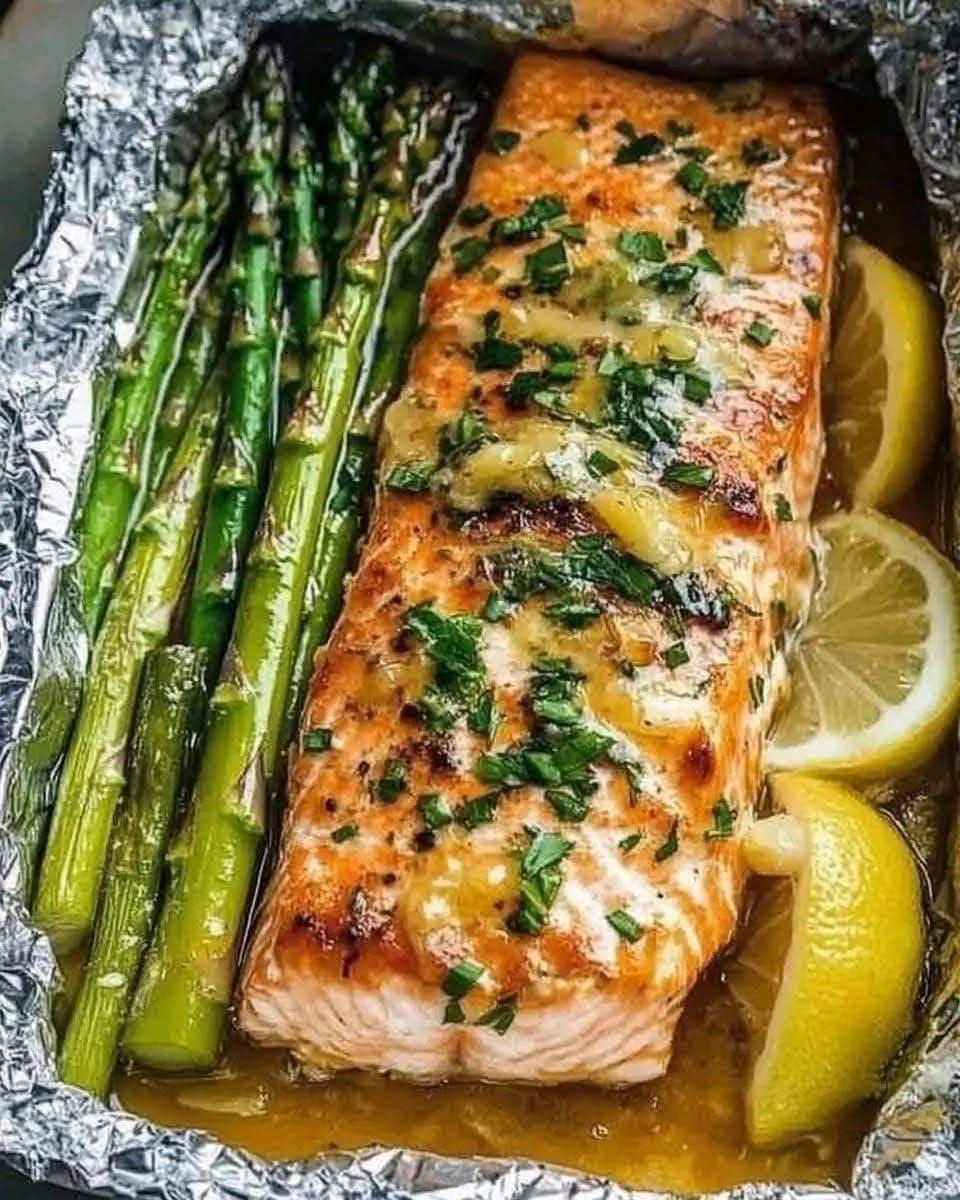
Why This Recipe Is So Popular
- Healthy and nutrient-rich
- Minimal cleanup (foil packet method)
- Moist, flaky salmon every time
- Naturally low-carb and gluten-free
- Elegant presentation with simple steps
This is the kind of recipe readers save, share, and return to again and again.
Ingredients List
Main Ingredients
- 2 salmon fillets (170–200 g each, skin-on or skinless)
- 1 bunch fresh asparagus, trimmed
- 1 lemon, sliced into rounds
- 3 tablespoons olive oil or melted butter
Flavor Base
- 3 cloves garlic, minced
- 1 teaspoon salt (adjust to taste)
- ½ teaspoon black pepper
- ½ teaspoon paprika
- ½ teaspoon dried oregano or thyme
Fresh Finish
- 2 tablespoons fresh parsley, chopped
- Optional: fresh dill or chives
Kitchen Tools You’ll Need
- Baking tray
- Heavy-duty aluminum foil
- Small mixing bowl
- Knife and cutting board
- Spoon or pastry brush
Choosing the Best Salmon
Quality salmon makes all the difference.
- Look for bright pink or orange flesh
- Avoid fish with a strong odor
- Wild-caught offers deeper flavor, but farmed works well too
- Thickness should be even for uniform cooking
Fresh salmon ensures a flaky, juicy result after baking.
Preparing the Asparagus
Asparagus cooks perfectly in foil alongside salmon.
- Wash asparagus thoroughly.
- Snap off woody ends.
- Toss lightly with olive oil and a pinch of salt.
This keeps them vibrant green and slightly crisp after baking.
Making the Lemon Garlic Butter Sauce
This simple sauce infuses the entire dish with flavor.
- In a small bowl, combine:
- Olive oil or melted butter
- Minced garlic
- Salt, pepper, paprika, and herbs
- Stir until well mixed.
This sauce will gently steam and baste the salmon inside the foil.
Assembling the Foil Packets
This method locks in moisture and flavor.
- Preheat oven to 190°C (375°F).
- Lay a large piece of foil on a baking tray.
- Place asparagus in the center.
- Lay salmon fillets on top.
- Brush generously with lemon garlic sauce.
- Top with lemon slices.
- Fold foil tightly to seal the packet.
Ensure no gaps so steam doesn’t escape.
Baking Instructions
- Place foil packets in the oven.
- Bake for 18–22 minutes, depending on thickness.
- Carefully open foil (steam will escape).
- Optional: broil for 2–3 minutes for a golden top.
Salmon should flake easily with a fork and appear opaque.
Resting and Garnishing
Let the salmon rest for 3–5 minutes before serving.
- Sprinkle with fresh parsley
- Add extra lemon juice if desired
- Finish with cracked black pepper
This final touch elevates the flavor and presentation.
Texture and Flavor Profile
- Salmon: Moist, flaky, buttery
- Asparagus: Tender with slight crunch
- Sauce: Bright, citrusy, garlicky
- Overall: Light yet satisfying
Each bite feels clean, fresh, and nourishing.
Serving Suggestions
Serve this dish with:
- Steamed rice or quinoa
- Roasted baby potatoes
- Fresh green salad
- Crusty bread for soaking juices
It also pairs beautifully with sparkling water or white wine.
Storage and Reheating
Storage
- Refrigerator: up to 3 days
- Store in an airtight container
Reheating
- Oven: 160°C (320°F), covered
- Avoid microwaving to prevent drying
Add a splash of lemon or olive oil before reheating.
Expert Tips for Perfect Results
- Don’t overcook—salmon dries quickly
- Seal foil tightly to trap steam
- Use fresh herbs at the end for brightness
- Adjust lemon to taste
These small details make a big difference.
Easy Recipe Variations
Honey Garlic Salmon
Add 1 tablespoon honey to the sauce.
Spicy Lemon Salmon
Add chili flakes or cayenne pepper.
Mediterranean Style
Add olives, cherry tomatoes, and oregano.
Asian-Inspired
Swap lemon for soy sauce and ginger.
Health Benefits
- High in omega-3 fatty acids
- Excellent protein source
- Rich in vitamins B12 and D
- Supports heart and brain health
Paired with asparagus, this meal is nutrient-dense and balanced.
Why Foil-Baked Salmon Works So Well
Foil cooking creates a sealed environment that:
- Prevents moisture loss
- Intensifies flavors
- Eliminates need for extra fat
- Guarantees tender fish
It’s one of the most foolproof salmon techniques.