Easy oven-baked chicken · Prep: 10 minutes · Cook: 40–50 minutes · Serves: 5
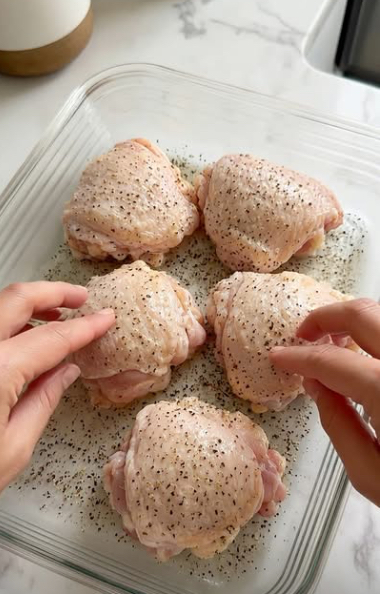
These juicy baked chicken thighs are a simple, flavorful dinner made with tender bone-in chicken, aromatic seasonings, and a beautifully roasted finish. The recipe is inspired by the chicken shown in the image, where the thighs are seasoned with black pepper before baking. With a few pantry staples and a hot oven, you can prepare a comforting meal that works just as well for busy weeknights as it does for a family gathering.
The secret to delicious baked chicken is combining the right seasoning with proper cooking temperature. Chicken thighs naturally contain more fat than chicken breast, which helps them stay moist and tender during roasting. As the chicken cooks, the skin becomes golden and flavorful while the meat absorbs the seasoning.
This recipe uses garlic, paprika, black pepper, herbs, and olive oil to build a savory flavor without making the preparation complicated. Serve the chicken with roasted potatoes, steamed vegetables, rice, or a fresh salad for a complete meal.
Ingredients
- 5 bone-in, skin-on chicken thighs
- 2 tablespoons olive oil
- 4 garlic cloves, minced
- 1 teaspoon freshly ground black pepper
- 1 teaspoon paprika
- 1 teaspoon dried oregano
- 1 teaspoon dried thyme
- 1 teaspoon onion powder
- 1 teaspoon salt, or to taste
- 1 tablespoon fresh lemon juice
- 1 tablespoon chopped fresh parsley, optional
- 1 small lemon, cut into wedges, optional
Kitchen Equipment
- A glass or ceramic baking dish
- A small mixing bowl
- Measuring spoons
- Kitchen tongs or clean hands for seasoning
- A meat thermometer for checking doneness
Instructions
Step 1: Preheat the Oven
Preheat your oven to 400°F (200°C).
Allow the oven to reach the correct temperature before putting the chicken inside. This helps the thighs cook evenly and encourages the skin to become golden and crisp.
Lightly grease a baking dish with a little olive oil. Choose a dish large enough to hold all five chicken thighs in a single layer without crowding them.
Step 2: Prepare the Chicken
Remove the chicken thighs from their packaging and pat them dry with paper towels.
Drying the skin is an important step because excess moisture can prevent it from browning properly. Avoid rinsing raw chicken, as splashing water can spread bacteria around your kitchen.
Place the chicken thighs in the prepared baking dish, with the skin facing upward.
If the thighs are very large, make sure there is enough space between them to allow the hot air to circulate.
Step 3: Prepare the Seasoning
In a small bowl, combine the olive oil, minced garlic, black pepper, paprika, oregano, thyme, onion powder, salt, and lemon juice.
Mix until the ingredients form a fragrant, lightly textured seasoning mixture.
The olive oil helps the seasonings adhere to the chicken, while the garlic and herbs provide a savory aroma. Paprika adds a warm color, and lemon juice brings a little brightness to the overall flavor.
Step 4: Season the Chicken Thighs
Rub the seasoning mixture over each chicken thigh, coating the surface evenly.
Use clean hands or a spoon to spread the mixture across the skin and exposed sides. If you can gently loosen the skin without tearing it, you may rub a little seasoning underneath as well.
Pay particular attention to the thicker parts of the chicken so that every bite has plenty of flavor.
Wash your hands and any utensils that have touched raw chicken before handling other ingredients.
Step 5: Arrange the Chicken in the Baking Dish
Arrange the thighs skin-side up in a single layer.
Avoid stacking the pieces because this can cause uneven cooking. Leaving a little room between them also helps the skin roast instead of steam.
If desired, arrange a few lemon wedges around the chicken. They will soften as they bake and release a subtle citrus aroma.
Step 6: Bake Until Tender
Place the dish in the preheated oven and bake for approximately 40–50 minutes, depending on the size of the thighs and your oven.
Avoid opening the oven door repeatedly, as this allows heat to escape.
As the chicken cooks, the garlic and herbs become fragrant, the skin begins to turn golden, and the juices collect in the bottom of the baking dish.
Cooking time is only an estimate. The safest way to determine doneness is to check the thickest part of each thigh with a food thermometer, avoiding the bone. Chicken must reach at least 165°F (74°C) to be safe to eat.
For especially tender thighs with a deeper roasted finish, some cooks prefer to cook dark meat to a higher temperature, around 175–185°F (79–85°C), provided it remains moist.
Step 7: Brown the Skin
If the chicken is fully cooked but the skin is not as golden as you would like, you can switch the oven to broil for a few minutes.
Watch it carefully because the skin and garlic can brown quickly under direct heat.
This step is optional. If the chicken is already golden and crisp, there is no need to broil it further.
Step 8: Rest Before Serving
Remove the baking dish from the oven and let the chicken rest for about 5–10 minutes.
Resting gives the juices time to settle and makes the chicken more pleasant to serve.
Sprinkle chopped fresh parsley over the top if desired. Spoon a little of the cooked pan juice over the chicken for extra flavor, and serve with fresh lemon wedges.
Tips for the Best Baked Chicken Thighs
Pat the Chicken Dry
Moisture on the skin can interfere with browning. Patting the thighs dry before seasoning is one of the simplest ways to improve their texture.
Use Fresh Garlic
Freshly minced garlic adds a strong, savory aroma. Garlic powder can be substituted if needed, but fresh garlic gives the seasoning a more pronounced flavor.
Don’t Skip the Thermometer
Chicken thighs vary in size, so relying on cooking time alone can lead to undercooked or overcooked meat. A thermometer provides a more reliable way to check that every piece is safe to eat.
Avoid Overcrowding the Pan
If the thighs are packed tightly together, they may release moisture and steam instead of roast. Use a larger dish or two separate dishes if necessary.
Adjust the Herbs
Oregano and thyme work particularly well with garlic and chicken. Rosemary, Italian seasoning, or a small amount of dried sage can also be used.
What to Serve with Baked Chicken Thighs
This chicken is versatile enough to pair with many side dishes.
- Roasted potatoes: Toss potato wedges with olive oil, salt, pepper, and rosemary, then roast until golden.
- Steamed vegetables: Broccoli, carrots, green beans, or cauliflower provide color and balance.
- Rice: Plain rice or lemon-herb rice absorbs the flavorful juices from the chicken.
- Fresh salad: Cucumber, tomatoes, leafy greens, and a light lemon dressing make a refreshing accompaniment.
- Mashed potatoes: Creamy mashed potatoes are ideal for a comforting family dinner.
- Roasted vegetables: Zucchini, onions, bell peppers, and carrots can be roasted separately or added to the baking dish if space permits.
Variations to Try
Garlic Butter Chicken Thighs
Replace part of the olive oil with melted butter for a richer flavor. Add a little extra garlic and finish with chopped parsley.
Lemon Herb Chicken
Increase the lemon juice slightly and add lemon zest to the seasoning mixture. Use thyme and rosemary for a fresh, aromatic flavor.
Spicy Paprika Chicken
Add a pinch of cayenne pepper or chili powder to the seasoning. Adjust the amount according to your preferred heat level.
Honey Garlic Chicken
For a sweeter finish, brush a small amount of honey mixed with garlic onto the chicken during the final 10 minutes of cooking. Apply it near the end to reduce the risk of burning.
Mediterranean-Style Chicken
Add dried oregano, lemon zest, and a few sliced onions to the dish. Serve with rice, salad, or roasted vegetables.
Storage and Reheating
Allow leftover chicken to cool slightly, then refrigerate it in a covered, airtight container within two hours of cooking. Store it in the refrigerator for up to 3–4 days.
To reheat, place the chicken in an oven-safe dish with a spoonful of water or broth. Cover loosely and heat at 325°F (165°C) until the center reaches 165°F (74°C). Remove the cover toward the end if you want to restore some crispness to the skin.
You can also reheat individual portions in the microwave, although the skin will not remain as crisp.
For longer storage, freeze the cooked chicken in suitable airtight containers. For best quality, use within about 2–3 months and thaw in the refrigerator before reheating.
Keep raw chicken separate from cooked food, and never reuse a marinade or seasoning mixture that has contacted raw chicken unless it is thoroughly cooked.
Frequently Asked Questions
Can I use boneless chicken thighs?
Yes. Boneless thighs cook faster than bone-in thighs, so begin checking them after approximately 25–35 minutes at 400°F (200°C). Always verify doneness with a thermometer.
Can I prepare the chicken ahead of time?
Yes. You can season the chicken and refrigerate it in a covered container for several hours before cooking. Keep it refrigerated, and clean any surfaces that come into contact with raw chicken.
Why is my chicken skin not crispy?
Excess moisture, overcrowding, or insufficient browning can contribute to soft skin. Pat the chicken dry, arrange it skin-side up, and avoid covering the dish during roasting. If necessary, finish briefly under the broiler.
Can I bake the chicken with potatoes?
Yes. Add small potato chunks tossed with oil and seasoning around the chicken, making sure the dish is not overcrowded. Depending on their size, the potatoes may need extra cooking time. Check that both the potatoes and chicken are fully cooked before serving.
How do I know when the chicken is ready?
The most reliable method is to measure the internal temperature in the thickest part of each thigh, without touching the bone. The minimum safe temperature is 165°F (74°C).
Final Thoughts
These garlic and herb baked chicken thighs are an easy, satisfying recipe that combines simple ingredients with dependable cooking techniques. The black pepper seasoning shown in the image provides a savory starting point, while garlic, paprika, herbs, olive oil, and lemon add extra depth and flavor.