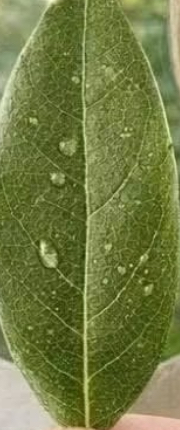
🌿 Bay Leaf Facial Infusion
Ingredients
- 3–4 dried culinary bay leaves
- 250 ml filtered water
- 1 teaspoon pure aloe vera gel, optional
- 1 teaspoon glycerin, optional
- A clean glass jar or bottle
Important: Do not use bay-leaf essential oil in this recipe. Essential oils are highly concentrated and can irritate facial skin.
🥣 How to Prepare the Bay Leaf Water
Step 1: Choose your bay leaves
Use ordinary culinary bay leaves intended for cooking. Make sure they are clean and free from visible mold, dirt, or other contamination.
You don’t need a large quantity. Three or four leaves are enough for one cup of infusion.
Step 2: Heat the water
Pour approximately 250 ml of water into a small saucepan and bring it to a boil.
Once boiling, add the bay leaves.
Step 3: Simmer gently
Reduce the heat and allow the leaves to simmer for approximately 5 minutes.
This creates a light herbal infusion without requiring an excessive concentration of plant material.
Step 4: Let it cool
Remove the saucepan from the heat and allow the mixture to cool completely.
Strain the liquid through a clean strainer to remove the leaves and small pieces.
You should now have a pale herbal liquid.
🌱 Optional Hydrating Version
Once the bay-leaf infusion has completely cooled, you can add:
- 1 teaspoon aloe vera gel, and/or
- 1 teaspoon glycerin
Mix thoroughly.
Aloe vera can provide a soothing, moisturizing feel, while glycerin is a humectant that helps attract water to the outer layers of the skin.
However, adding more ingredients isn’t necessarily better. If your skin is sensitive, use plain cooled bay-leaf infusion first.
✨ How to Use It on Your Face
Before applying anything new to your face, perform a patch test on a small area of skin.
If there is no irritation, begin with a clean face.
Step 1
Wash your face with a gentle cleanser and lukewarm water.
Step 2
Pat your skin dry without rubbing.
Step 3
Apply a small amount of the cooled bay-leaf infusion using clean fingertips or a clean cotton pad.
Avoid getting it into your eyes.
Step 4
Leave it on for approximately 5–10 minutes the first time.
If your skin feels comfortable, rinse with lukewarm water.
Step 5
Apply your normal moisturizer.
If you’re doing this during the daytime, finish with sunscreen.
🧴 How Often Can You Use It?
Because homemade botanical preparations haven’t been standardized for facial use, there is no scientifically established “perfect” frequency.
A cautious approach is once or twice a week.
You should stop using it if you experience:
- Burning
- Itching
- Persistent redness
- Swelling
- Rash
- Increased dryness
Do not assume that a burning or tingling sensation means the recipe is “working.” Irritation is not an anti-aging benefit.
Can Bay Leaves Really Remove Wrinkles?
This is where it is important to separate a viral beauty claim from what we actually know.
Wrinkles develop as the skin changes with age. Sun exposure, collagen loss, reduced elasticity, genetics, facial movement, and other factors all contribute.
A bay-leaf infusion cannot reverse these changes.
When skin becomes temporarily better hydrated, however, its surface can look smoother and fine dehydration lines may appear less noticeable. That can create a modest cosmetic effect—but it is not the same as removing wrinkles.
Botox works through a completely different mechanism. It temporarily reduces the activity of specific muscles by interfering with nerve signaling. A bay-leaf infusion does not have an equivalent effect.
So the statement that bay leaves are “100,000 times stronger than Botox” should not be used as a factual claim.
🌿 Why Are Bay Leaves Interesting for Skincare?
Bay leaves contain naturally occurring plant compounds, including various aromatic substances and antioxidants.
These compounds are one reason bay leaves have attracted interest in traditional preparations and laboratory research.
But laboratory findings about individual plant compounds should not automatically be interpreted as proof that applying homemade bay-leaf water to the face will produce a dramatic anti-aging effect.
Concentration, absorption, preparation method, skin type, and many other factors matter.
That’s why it’s better to enjoy bay leaf as a culinary herb and optional botanical skincare ingredient, rather than relying on it as a treatment for wrinkles.
🍯 A Simple Bay Leaf + Aloe Mask
If you prefer a thicker mask rather than a liquid infusion, you can try this gentler variation.
Ingredients
- 1 tablespoon cooled bay-leaf infusion
- 1 tablespoon pure aloe vera gel
Preparation
Combine the ingredients in a clean bowl and mix until smooth.
Apply a thin layer to clean skin.
Leave it on for approximately 5–10 minutes, then rinse thoroughly.
Follow with moisturizer.
This recipe is deliberately simple. You don’t need lemon juice, baking soda, toothpaste, vinegar, or essential oils to make a homemade facial mask.
⚠️ Ingredients to Avoid Mixing With Bay Leaf
Many viral skincare recipes combine numerous strong ingredients. More ingredients don’t necessarily mean better results.
I would avoid adding:
Lemon juice
Lemon juice can irritate facial skin and may increase the risk of unwanted pigmentation after sun exposure.
Baking soda
Baking soda is not formulated for facial skin and can interfere with the skin’s normal barrier.
Undiluted essential oils
Essential oils are concentrated substances and can cause irritation or allergic reactions.
Strong vinegar
Vinegar can be irritating, particularly if used undiluted or on sensitive or damaged skin.
A simple recipe is safer than a complicated one.
🧊 How to Store the Infusion
Because this is a homemade water-based preparation without a preservative system, it can spoil.
Don’t leave it sitting at room temperature for several days.
Place any unused infusion in a clean, sealed container in the refrigerator and preferably make a fresh batch frequently rather than storing it for a long time.
If it develops an unusual smell, appearance, or texture, discard it.
For the aloe version, making a fresh small batch each time is preferable.
☀️ The Most Important Anti-Wrinkle Step
If your goal is genuinely to slow visible skin aging, one of the most useful daily habits is sun protection.
UV exposure contributes significantly to premature skin aging.
A practical routine is:
Morning
- Gentle cleanser
- Moisturizer
- Broad-spectrum sunscreen, SPF 30 or higher
Evening
- Gentle cleanser
- Moisturizer
- An evidence-based anti-aging product if appropriate for your skin
Ingredients such as retinoids have substantially more evidence for improving the appearance of fine lines than homemade herbal masks, although they can cause irritation and should be introduced carefully.
🌿 Bay Leaf Facial Recipe Card
Ingredients
- 3–4 dried bay leaves
- 250 ml water
- 1 tsp aloe vera gel, optional
- 1 tsp glycerin, optional
Instructions
- Bring 250 ml water to a boil.
- Add 3–4 bay leaves.
- Simmer for 5 minutes.
- Remove from heat.
- Allow to cool completely.
- Strain the leaves.
- Add aloe vera and/or glycerin if desired.
- Patch test first.
- Apply a thin layer to clean skin.
- Leave for 5–10 minutes.
- Rinse and moisturize.
Frequency
Once or twice a week is a reasonable cautious starting point.
🌸 Final Thoughts
Bay leaves can make an interesting homemade facial infusion, but they are not “100,000 times stronger than Botox” and cannot erase wrinkles.
The realistic benefit of this recipe is much more modest: it can provide a refreshing botanical treatment and, depending on the other ingredients used, leave the skin feeling softer and more hydrated.