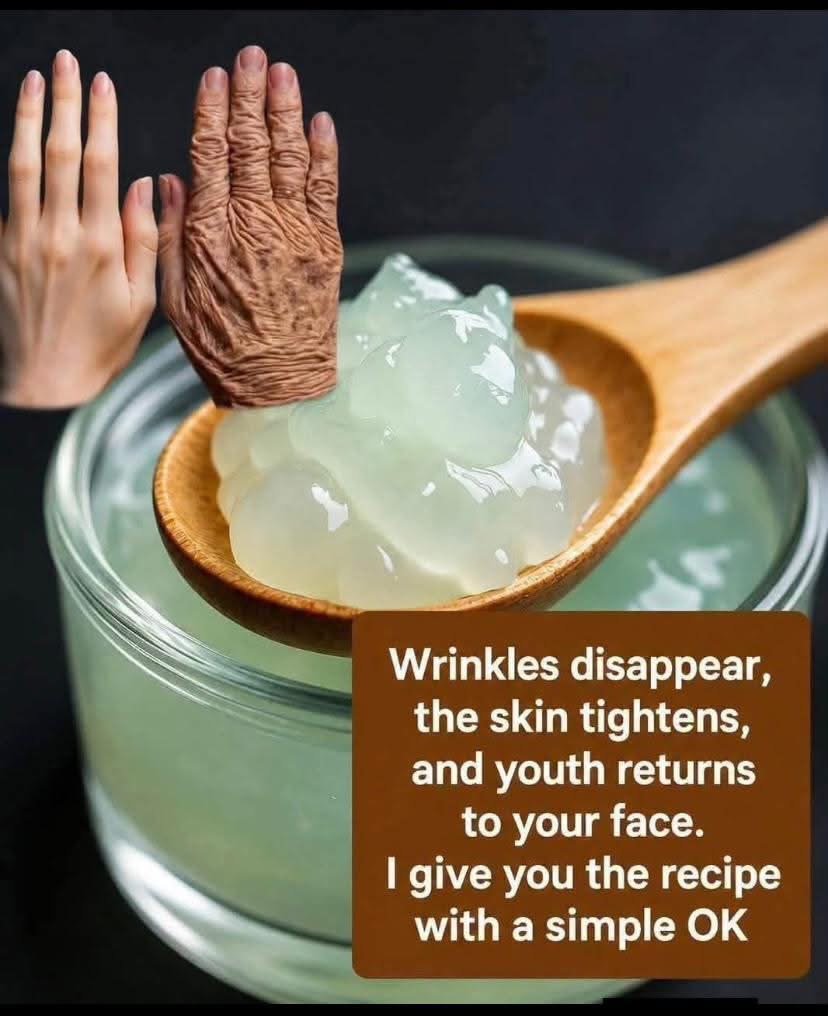
Aloe Vera Face Gel Mask for Hydrated, Softer-Looking Skin
The image suggests that aloe vera can make wrinkles disappear and restore youth to the face. While aloe vera can be a soothing and hydrating ingredient for the skin, there is no simple homemade recipe proven to erase wrinkles or permanently tighten aging skin. However, a gentle aloe vera mask can temporarily make the skin feel softer, calmer, and more hydrated, which may make fine lines look less noticeable.
Here is a simple recipe inspired by the ingredient shown in the image.
🌿 Simple Aloe Vera Hydrating Face Mask
Ingredients
- 2 tablespoons pure aloe vera gel
- 1 teaspoon plain, unsweetened yogurt — optional
- ½ teaspoon honey — optional
- 2–3 drops of jojoba oil or squalane — optional, especially for dry skin
For sensitive or reactive skin, I recommend starting with plain aloe vera gel alone rather than combining several ingredients.
What you need
- A clean small bowl
- A clean spoon
- A clean cosmetic brush or your fingertips
- A clean towel
- A moisturizer
Step 1: Choose the right aloe vera
If you are using commercial aloe vera gel, choose one that is fragrance-free and formulated for facial use, preferably with a short ingredient list.
If you are using fresh aloe vera from an aloe plant, be careful. Fresh aloe leaves contain a yellowish latex called aloin, which can irritate the skin. Cut the leaf and allow the yellow sap to drain completely. Then rinse the leaf thoroughly before removing the clear inner gel.
Do not simply scoop gel from a freshly cut leaf and immediately put it on your face.
Step 2: Prepare the mixture
Place 2 tablespoons of aloe vera gel into a clean bowl.
For extra moisturizing benefits, you can add ½ teaspoon of honey and mix well.
If your skin tolerates dairy products in skincare, you can add 1 teaspoon of plain unsweetened yogurt. Yogurt contains lactic acid, which may gently exfoliate the skin, but it can also irritate sensitive skin.
For very dry skin, add 2–3 drops of jojoba oil or squalane.
Mix everything until you have a smooth gel-like consistency.
A simpler version
If you want the gentlest possible recipe:
2 tablespoons aloe vera gel + nothing else.
This is actually my preferred version for beginners because every additional ingredient creates another opportunity for irritation.
Step 3: Patch test first
Before applying the mask to your entire face, perform a small patch test.
Apply a tiny amount to an inconspicuous area, such as the inside of your forearm or another small area of skin. Leave it for a short period and monitor your skin.
If you experience significant burning, itching, swelling, redness, or irritation, wash it off and don’t use the mixture on your face.
Natural does not automatically mean non-irritating. Aloe vera, honey, yogurt, essential oils, and other botanical ingredients can cause reactions in some people.
Step 4: Clean your face
Wash your face with a gentle cleanser and lukewarm water.
Avoid using very hot water because it can leave the skin feeling dry and irritated.
Pat your face dry with a clean towel rather than rubbing aggressively.
Your skin should be clean before applying the mask.
Step 5: Apply the aloe vera mask
Using clean fingertips or a clean cosmetic brush, spread a thin layer over your face.
Avoid:
- The eyelids
- The immediate eye area
- The lips
- Broken or irritated skin
- Areas with cuts or wounds
You don’t need a thick layer. A thin, even coating is enough.
Once applied, leave it on for approximately 10–15 minutes.
You may notice a cooling or soothing sensation from the aloe vera. However, if you feel strong burning or discomfort, remove it immediately.
Step 6: Rinse gently
After 10–15 minutes, rinse your face with lukewarm water.
Do not scrub your skin to remove the mask.
Pat your face dry gently with a clean towel.
Follow with your normal fragrance-free moisturizer.
If you are doing this during the daytime, finish with a broad-spectrum sunscreen of SPF 30 or higher. Sun protection is one of the most important steps for preventing premature skin aging and helping protect existing collagen.
How often can you use it?
For most people, 1–2 times per week is plenty.
You don’t need to use a face mask every day to get hydrated-looking skin. Using too many products or frequently exfoliating can actually cause dryness and irritation.
If you are using the aloe vera gel alone and your skin tolerates it well, you can adjust the frequency according to your skin’s needs, but there is no evidence that applying aloe vera more frequently will make wrinkles disappear.
What can aloe vera actually do?
Aloe vera is best thought of as a soothing and hydrating skincare ingredient, rather than a miracle anti-wrinkle treatment.
When skin becomes better hydrated, it can temporarily look smoother and more plump. This can make tiny dehydration lines appear less prominent.
That is very different from permanently removing wrinkles.
Wrinkles develop through a combination of factors including natural aging, cumulative sun exposure, changes in collagen and elastin, genetics, and repeated facial movement. A homemade mask cannot reverse all of these processes.
So rather than promising that this recipe will “erase wrinkles,” a more realistic goal is:
softer + more comfortable + temporarily more hydrated-looking skin.
⚠️ Ingredients I would NOT add
You may find viral recipes recommending lemon juice, baking soda, toothpaste, undiluted apple cider vinegar, or essential oils for tightening or brightening the face.
I would avoid these ingredients in a homemade anti-aging mask.
❌ Lemon juice
Lemon juice is acidic and can irritate the skin. It can also increase sensitivity to sunlight and potentially cause discoloration.
❌ Baking soda
Baking soda is relatively alkaline and can disrupt the skin’s natural barrier, leading to dryness or irritation.
❌ Essential oils
Essential oils are highly concentrated and are not necessary for an aloe vera face mask. Some can cause irritation or allergic reactions, particularly on facial skin.
❌ Toothpaste
Toothpaste is designed for teeth, not facial skin. It can contain ingredients that cause significant irritation.
A better anti-aging routine
If your main goal is reducing the appearance of fine lines and protecting your skin as you age, the aloe mask should be considered an optional hydrating treatment, not the main anti-aging strategy.
A simple routine can be much more useful:
Morning
1. Gentle cleanser
Clean your skin without excessive scrubbing.
2. Moisturizer
Choose one suited to your skin type.
3. Sunscreen SPF 30+
Apply generously and reapply when appropriate, especially during prolonged outdoor exposure.
Evening
1. Gentle cleanser
2. Moisturizer
3. Optional proven anti-aging ingredient
Depending on your skin and tolerance, products containing ingredients such as retinoids can have much stronger evidence for improving the appearance of fine lines than homemade masks. They can also cause irritation, so introduce them gradually and follow product directions.
Final recipe card 🌿
Aloe Vera Hydrating Face Mask
Ingredients:
- 2 tbsp pure aloe vera gel
- ½ tsp honey, optional
- 1 tsp plain yogurt, optional
- 2–3 drops jojoba oil or squalane, optional
Instructions:
- Mix the ingredients in a clean bowl.
- Patch test before facial application.
- Cleanse your face gently.
- Apply a thin layer.
- Leave on for 10–15 minutes.
- Rinse with lukewarm water.
- Pat dry.
- Apply moisturizer.
- Use 1–2 times weekly.
Important: This mask may help temporarily hydrate and soothe the skin, but it cannot guarantee that wrinkles will disappear or that skin will permanently tighten. For long-term wrinkle prevention, daily sun protection and evidence-based skincare are much more important.