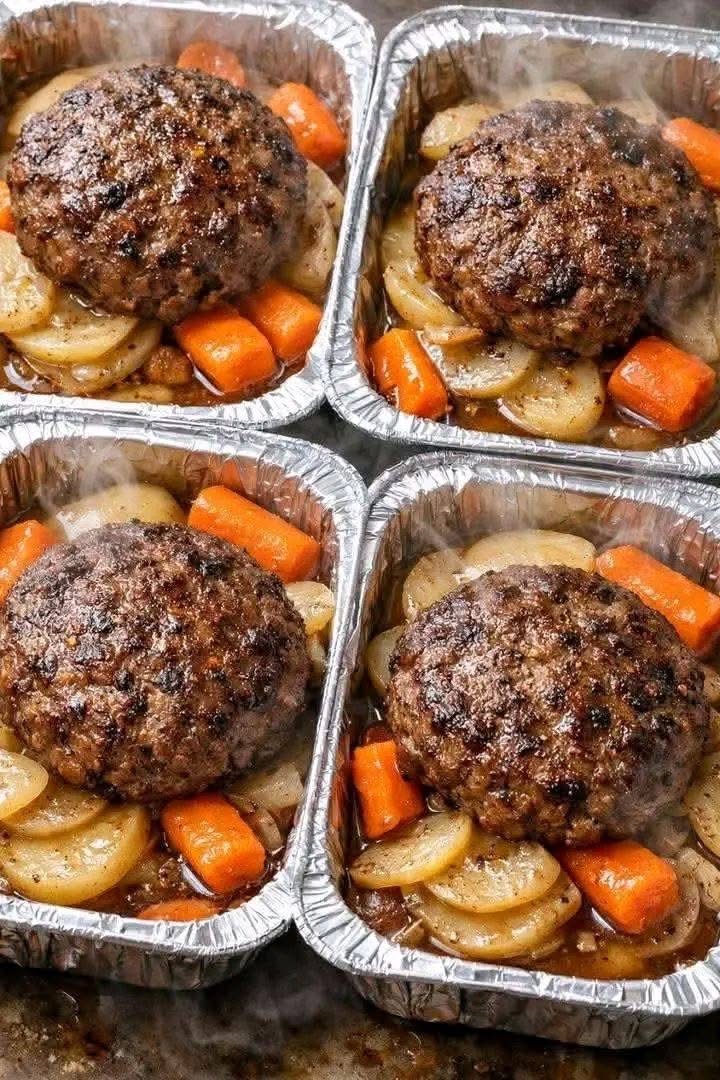
The dish in your photo looks like a comforting classic homemade meatloaf served with tender potatoes and carrots, all baked together in individual foil trays. The meatloaf develops a beautifully browned, slightly crisp exterior while staying juicy and flavorful inside. Meanwhile, the potatoes and carrots cook underneath and around the meat, soaking up the savory juices as they roast.
This is an excellent recipe for a family dinner, Sunday meal, meal prep, or freezer-friendly portions. Preparing the meatloaf in individual foil pans also makes it especially convenient if you want to prepare several portions at once.
The recipe below makes 4 generous individual meatloaves, similar to the portions shown in the photograph.
🥩 Individual Homestyle Meatloaf with Potatoes & Carrots
Prep Time
25 minutes
Cook Time
About 60–75 minutes
Total Time
Approximately 1 hour 30 minutes
Servings
4 large portions
Difficulty
Easy to moderate
Ingredients
For the Meatloaf
- 2 pounds (900 g) ground beef
- 1 small onion, finely diced
- 3 cloves garlic, minced
- 1 large egg
- ¾ cup breadcrumbs
- ½ cup milk
- 2 tablespoons ketchup
- 1 tablespoon Worcestershire sauce
- 1 tablespoon Dijon mustard
- 1 teaspoon salt
- ½ teaspoon black pepper
- 1 teaspoon smoked paprika
- 1 teaspoon dried Italian seasoning
- ½ teaspoon onion powder
- ½ teaspoon garlic powder
- 2 tablespoons chopped fresh parsley
For the Glaze
- ½ cup ketchup
- 2 tablespoons brown sugar
- 1 tablespoon Worcestershire sauce
- 1 tablespoon Dijon mustard
- 1 teaspoon apple cider vinegar
- ¼ teaspoon black pepper
For the Vegetables
- 1½ pounds potatoes
- 4–5 large carrots
- 1 medium onion
- 2 tablespoons olive oil
- 1 teaspoon salt
- ½ teaspoon black pepper
- 1 teaspoon garlic powder
- 1 teaspoon dried thyme
- ½ teaspoon paprika
- ½ cup beef broth
Optional
- 1 tablespoon butter
- Fresh parsley for garnish
- Extra Worcestershire sauce
- A pinch of red pepper flakes
Step 1: Prepare the Vegetables
Start by preparing the potatoes and carrots.
Wash and peel the potatoes if desired. You can leave the skins on if you prefer a more rustic dish.
Cut the potatoes into medium-sized wedges or chunks. Try to keep the pieces relatively similar in size so they cook evenly.
Peel the carrots and cut them into large chunks.
The carrots in the photograph are cut into fairly substantial pieces, which works well because they become tender without completely falling apart during the longer cooking time.
Slice the onion into thick pieces.
Place the potatoes, carrots, and onion into a large bowl.
Add the olive oil, salt, black pepper, garlic powder, thyme, and paprika.
Toss everything thoroughly until the vegetables are evenly coated.
Step 2: Make the Meatloaf Mixture
Place the ground beef in a large mixing bowl.
Add the finely diced onion and minced garlic.
Then add:
- Egg
- Breadcrumbs
- Milk
- Ketchup
- Worcestershire sauce
- Dijon mustard
- Salt
- Black pepper
- Smoked paprika
- Italian seasoning
- Onion powder
- Garlic powder
- Fresh parsley
Using clean hands or a large spoon, gently mix everything together.
The key word here is gently.
Don’t knead the meat mixture aggressively for several minutes. Overmixing ground beef can produce a dense, tough meatloaf.
Mix only until all the ingredients are evenly distributed.
If the mixture seems extremely wet, add another tablespoon or two of breadcrumbs.
If it seems unusually dry, add a tablespoon of milk.
The finished mixture should be moist enough to hold its shape but not so wet that it falls apart.
Step 3: Shape the Meatloaves
Divide the meat mixture into four equal portions.
Shape each portion into a thick oval or rounded loaf.
The meatloaves should be relatively thick rather than flat. This helps them remain juicy during baking.
Don’t pack the meat too tightly.
A loosely formed meatloaf generally has a softer, more tender texture.
Place each meatloaf on a tray while you prepare the vegetables.
Step 4: Prepare the Glaze
The glaze is what gives the meatloaf its beautiful dark, glossy appearance.
In a small bowl, combine:
- ½ cup ketchup
- 2 tablespoons brown sugar
- 1 tablespoon Worcestershire sauce
- 1 tablespoon Dijon mustard
- 1 teaspoon apple cider vinegar
- Black pepper
Mix until smooth.
Taste the glaze.
If you like a sweeter meatloaf, add a little more brown sugar.
If you prefer something tangier, add another teaspoon of vinegar or Dijon mustard.
The glaze should have a balance of sweet, tangy, savory, and slightly smoky flavors.
Step 5: Arrange the Individual Trays
This is where the recipe begins to look like the dish in your photograph.
Use four small disposable aluminum baking trays or four small oven-safe baking dishes.
Divide the potatoes, carrots, and onion among the four trays.
Arrange them around the edges, leaving enough space in the center for the meatloaf.
Place one shaped meatloaf in the center of each tray.
Pour approximately 2 tablespoons of beef broth into each tray.
The broth should sit underneath the vegetables rather than completely covering them.
As everything cooks, the broth combines with the juices from the meat and creates a delicious savory liquid around the potatoes and carrots.
Step 6: Add the Glaze
Brush each meatloaf generously with the prepared glaze.
Don’t worry if some of the glaze runs down the sides.
That’s actually a good thing.
As it cooks, the glaze caramelizes on the surface and mixes with the beef juices.
For an especially attractive finish, reserve a little glaze for later.
This allows you to add another fresh layer during the final stage of baking.
Step 7: Bake
Preheat your oven to 375°F (190°C).
Place the four trays on a large baking sheet. This makes them easier and safer to move in and out of the oven.
Bake uncovered for approximately 50–60 minutes.
The exact cooking time will depend on the size and thickness of your meatloaves.
After about 35–40 minutes, check the vegetables.
If the potatoes or carrots are browning too quickly, loosely cover the trays with aluminum foil.
Continue baking until the meatloaves are fully cooked and the vegetables are tender.
For ground beef, the safest approach is to check the center of the thickest meatloaf with an instant-read thermometer. It should reach 160°F (71°C).
Step 8: Create That Beautiful Browned Top
Once the meatloaves are nearly cooked, brush them with another thin layer of glaze.
Increase the oven temperature to 400°F (205°C) for approximately 5–10 minutes, or use the broiler briefly if appropriate for your oven.
Watch carefully during this stage.
The sugar in the glaze can caramelize quickly.
You want a deeply browned, glossy surface without burning it.
This final step creates the dark, roasted appearance seen in the photograph.
Step 9: Rest the Meatloaf
When the meatloaves are finished, remove the trays from the oven.
Allow them to rest for approximately 10 minutes before serving.
This is an important step.
Resting allows the juices inside the meat to redistribute, which helps keep the meatloaf moist when you cut into it.
It also gives the vegetables a few extra minutes to absorb the flavorful juices in the bottom of the tray.
Why This Recipe Works
There are several things that make this version especially delicious.
The milk and breadcrumbs
The combination of breadcrumbs and milk creates a soft mixture sometimes called a panade. It helps retain moisture and keeps the meatloaf from becoming overly dense.
The egg
The egg helps bind the ingredients together so the meatloaf holds its shape.
Worcestershire sauce
Worcestershire sauce adds deep savory flavor without making the meatloaf taste obviously like Worcestershire sauce.
Dijon mustard
A little mustard adds acidity and complexity.
Brown sugar glaze
The glaze creates the caramelized exterior that makes meatloaf so appealing.
Beef broth
Adding broth to the bottom of the trays helps prevent the vegetables from drying out and creates a flavorful cooking liquid.
Tips for Perfect Meatloaf
Don’t overmix
This is one of the most common mistakes when making meatloaf.
Mixing the beef too aggressively develops the proteins and can make the finished loaf firm and rubbery.
Combine everything just until incorporated.
Use ground beef with some fat
Very lean ground beef can produce dry meatloaf.
A ground beef blend around 80–85% lean generally works beautifully because the fat contributes moisture and flavor.
If you’re using very lean beef, adding a little extra milk or a tablespoon of olive oil can help.
Chop the onion finely
Large chunks of onion can make the meatloaf difficult to slice.
Finely diced onion distributes its flavor throughout the mixture.
You can also sauté the onion for 4–5 minutes before adding it to the meat mixture if you prefer a sweeter, softer onion flavor.
Allow the onion to cool before mixing it with the beef.
Getting Tender Potatoes and Carrots
The size of your vegetables matters.
If you cut the potatoes and carrots too large, they may still be firm when the meatloaf reaches its target temperature.
If you cut them too small, they may become mushy.
Medium-sized chunks are ideal.
If your potatoes are particularly large or dense, you can parboil them for approximately 5 minutes before assembling the trays.
Drain them well and allow them to steam dry before seasoning.
This is especially helpful when you want very soft, tender potatoes.
Variations
Cheesy Meatloaf
For an extra-rich version, place a small amount of shredded mozzarella or cheddar in the center of each meat portion before shaping it.
When you slice into the meatloaf, you’ll get a melted cheese center.
Bacon-Wrapped Meatloaf
Wrap each small meatloaf with 2–3 strips of bacon before adding the glaze.
The bacon becomes beautifully browned and adds additional flavor.
If using bacon, you may want to reduce the added salt slightly.
Turkey Meatloaf
Ground turkey can replace ground beef.
Because turkey is generally leaner, add a little extra moisture through milk, olive oil, or additional vegetables.
Cook until the center reaches 165°F (74°C).
Mushroom Gravy
Instead of the ketchup glaze, you can serve the meatloaf with mushroom gravy.
Sauté sliced mushrooms with butter and onion, then add beef broth and a little flour or cornstarch to create a rich sauce.
Pour it over the finished meatloaf and potatoes.
Make-Ahead Instructions
This recipe is excellent for meal preparation.
You can assemble the meatloaves and vegetables in the individual trays several hours before baking.
Cover the trays and refrigerate them until you’re ready to cook.
Remove them from the refrigerator while the oven preheats.
You may need to add several additional minutes to the cooking time because the ingredients start cold.
Always verify the internal temperature of the meatloaf rather than relying solely on cooking time.
Freezer-Friendly Version
You can also prepare the meatloaf mixture in advance and freeze it.
Shape the raw meatloaves and wrap them individually in freezer-safe packaging.
Freeze for up to a few months for best quality.
Thaw overnight in the refrigerator before assembling and baking.
For the vegetables, fresh preparation generally gives the best texture, so I recommend preparing the potatoes and carrots on the day you bake the meatloaf.
Serving Suggestions
This meal is already quite complete because it contains protein and vegetables.
For a larger dinner, serve it with:
- Creamy green beans
- Garden salad
- Corn on the cob
- Dinner rolls
- Garlic bread
- Steamed broccoli
- Homemade coleslaw
A simple green salad with a tangy vinaigrette is especially good because the acidity balances the richness of the meatloaf.
You can also serve extra glaze or gravy on the side for dipping.
Storage
Allow leftovers to cool before refrigerating.
Store the meatloaf and vegetables in airtight containers in the refrigerator.
For best quality, consume within 3–4 days.
To reheat, place an individual portion in a covered oven-safe dish and heat at approximately 325°F (165°C) until thoroughly hot.
You can also microwave individual portions, but reheating gently helps prevent the meatloaf from becoming dry.
If the meatloaf seems dry during reheating, add a tablespoon or two of beef broth or gravy.
Final Recipe Card
🥩 Individual Meatloaf with Potatoes & Carrots
Ingredients
Meatloaf:
- 2 lb ground beef
- 1 small onion
- 3 garlic cloves
- 1 egg
- ¾ cup breadcrumbs
- ½ cup milk
- 2 tbsp ketchup
- 1 tbsp Worcestershire sauce
- 1 tbsp Dijon mustard
- 1 tsp salt
- ½ tsp black pepper
- 1 tsp smoked paprika
- 1 tsp Italian seasoning
- ½ tsp onion powder
- ½ tsp garlic powder
- 2 tbsp parsley
Glaze:
- ½ cup ketchup
- 2 tbsp brown sugar
- 1 tbsp Worcestershire sauce
- 1 tbsp Dijon mustard
- 1 tsp apple cider vinegar
Vegetables:
- 1½ lb potatoes
- 4–5 carrots
- 1 onion
- 2 tbsp olive oil
- 1 tsp salt
- ½ tsp pepper
- 1 tsp garlic powder
- 1 tsp thyme
- ½ tsp paprika
- ½ cup beef broth
Directions
- Preheat oven to 375°F (190°C).
- Chop potatoes, carrots, and onion.
- Toss vegetables with olive oil and seasonings.
- Mix ground beef with onion, garlic, egg, breadcrumbs, milk, ketchup, Worcestershire sauce, mustard, and seasonings.
- Divide the mixture into four portions.
- Shape each portion into a thick oval meatloaf.
- Divide vegetables between four individual baking trays.
- Place one meatloaf in the center of each tray.
- Add about 2 tablespoons beef broth to each tray.
- Mix the glaze ingredients.
- Brush each meatloaf generously with glaze.
- Bake for 50–60 minutes, checking the vegetables and meatloaf as they cook.
- Brush with additional glaze during the final 10 minutes.
- Cook until the center reaches 160°F (71°C) for ground beef.
- Rest for 10 minutes.
- Garnish with fresh parsley and serve warm.
🍽️ Final Result
The finished dish should have a deeply browned, caramelized meatloaf crust, a juicy and tender center, and vegetables that are soft enough to cut easily with a fork. The potatoes and carrots absorb the savory beef juices during baking, making them almost as delicious as the meatloaf itself.
For the closest presentation to your photo, keep the meatloaves large and rounded, use chunky carrots and potato slices, and bake everything together in individual foil trays. The individual portions are not only attractive but also make this recipe particularly convenient for family meal prep, gatherings, or freezer meals.