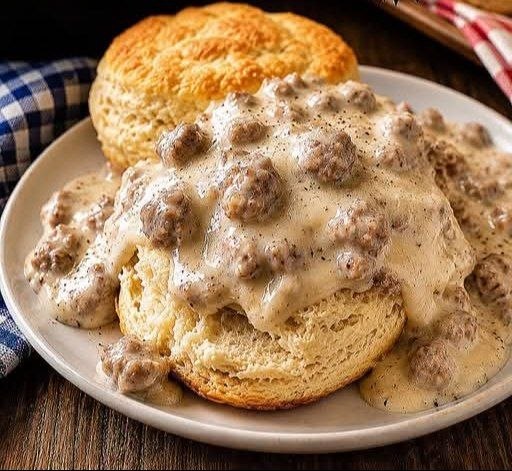
Few dishes in Southern culinary tradition command as much loyalty—or induce as much heartbreak when done wrong—as classic biscuits and gravy.
We have all been served a version that fell flat: dense, hockey-puck biscuits smothered in a pale, floury paste that tastes more like wallpaper glue than savory breakfast sausage. The common culprit is usually a lack of technique rather than bad ingredients. Biscuits turn out heavy when the fat gets overworked into the flour, and gravy turns gluey or greasy when the flour-to-fat ratio is off or the milk is dumped in too quickly.
Mastering scratch-made biscuits and sausage gravy comes down to two foundational principles: temperature control for the pastry and proper fat rendering for the gravy pan sauce. Once you understand how cold butter creates steam pockets for flaky biscuit layers and how rendered sausage fat coats flour to form a smooth roux, you will never need a canned biscuit or pre-packaged gravy mix again.
The Kitchen Science Behind Perfect Biscuits & Gravy
Developing a bulletproof biscuits and gravy recipe requires testing the subtle mechanics of Southern cooking:
- Butter vs. Lard in Biscuits: While traditionalists swear by leaf lard, high-fat European-style unsalted butter creates the best flavor and steam expansion. Grating frozen butter directly into the dry ingredients ensures tiny, discrete pockets of fat remain intact until they hit the oven’s heat.
- The Cutter Twist Mistake: Twisting a biscuit cutter when pushing down seals the dough edges together. This crimps the layers shut, preventing the steam from pushing the biscuit upward. A clean, straight-down press yields maximum height.
- Timing Black Pepper in Gravy: Coarsely cracked black pepper added directly into the hot sausage fat blooms its essential oils, releasing a deep, woodsy heat. Adding a second dose at the very end preserves a fresh, sharp bite.
Recipe Overview
- Prep Time: 20 minutes
- Cook Time: 25 minutes
- Total Time: 45 minutes
- Servings: 6 generous portions (12 biscuits, ample gravy)
- Skill Level: Intermediate
Ingredients & Function
For the Flaky Buttermilk Biscuits
| Ingredient | Amount | Function |
| All-Purpose Flour | 3 cups (360g) | Structure; low-to-medium protein content (like White Lily or standard AP) keeps tender. |
| Baking Powder | 1 tbsp | Primary leavening agent for maximum vertical lift. |
| Baking Soda | ½ tsp | Reacts with the acid in buttermilk for instant air bubbles and golden browning. |
| Fine Sea Salt | 1 tsp | Enhances flour flavor and regulates gluten development. |
| Unsalted Butter (Frozen) | ¾ cup (1½ sticks / 170g) | Provides steam pockets during baking for distinct, flaky layers. |
| Cold Full-Fat Buttermilk | 1¼ cups | Adds rich moisture, acidity for tenderizing gluten, and classic tang. |
For the Southern Sausage Gravy
| Ingredient | Amount | Function |
| Bulk Pork Breakfast Sausage | 1 lb (450g) | The flavor foundation; provides savory notes and essential rendered fat. |
| All-Purpose Flour | ⅓ cup | Binds with rendered sausage fat to build the pan roux. |
| Whole Milk (Warm) | 3 to 3½ cups | The liquid base; high fat content produces a silky, non-watery emulsion. |
| Freshly Cracked Black Pepper | 1 to 1½ tsp | Signature seasoning; provides spicy warmth to cut through rich fat. |
| Kosher Salt | ½ tsp (to taste) | Balances the savory sausage and sweet milk notes. |
| Pinch of Red Pepper Flakes | ¼ tsp (optional) | Adds an underlying background heat. |
Step-by-Step Instructions
Order matters immensely here—get the biscuits into the oven first so they finish baking right as the gravy reaches its ideal, velvety thickness.
1.Prep the Dry Ingredients and Grate Butter:10 minutes.
Preheat your oven to 425°F (218°C) and line a large baking sheet with parchment paper. In a large bowl, whisk together 3 cups of flour, baking powder, baking soda, and salt. Take 1½ sticks of frozen butter and grate it using the large holes of a box grater directly into the flour. Toss lightly with your fingers so every shred of butter is coated in flour.
2.Fold the Biscuit Dough:5 minutes.
Make a well in the center of the flour mixture and pour in the cold buttermilk. Stir gently with a wooden spoon just until a shaggy dough forms. Turn the dough onto a lightly floured surface and pat into a 1-inch thick rectangle. Fold the dough in half over itself, rotate 90 degrees, and pat down again. Repeat this folding process 4 to 5 times to build physical layers.
3.Cut and Bake the Biscuits:15 minutes.
Pat the dough to a final thickness of ¾ to 1 inch. Using a sharp 2.5-inch round biscuit cutter, press straight down without twisting. Place the biscuits on the prepared baking sheet with their sides just touching (this forces them to rise up instead of spreading out). Bake at 425°F for 14–16 minutes until tall and deep golden brown. Brush tops with melted butter.
4.Brown the Sausage:8 minutes.
While biscuits bake, place a heavy 12-inch cast-iron skillet over medium-high heat. Add the pork sausage, breaking it apart with a wooden spoon into bite-sized crumbles. Cook for 6 to 8 minutes until browned and cooked through. Do not drain the fat; you need approximately 3 tablespoons of rendered fat in the pan.
5.Build the Pan Roux:3 minutes.
Sprinkle the ⅓ cup of flour directly over the cooked sausage and fat. Reduce heat to medium. Stir continuously for 2 minutes, ensuring the flour coats all the meat and cooks out its raw wheat flavor. The flour should smell slightly nutty and turn light golden.
6.Simmer and Season the Gravy:6 minutes.
Slowly pour in 3 cups of warm whole milk while whisking constantly to prevent lumps. Add half of the freshly cracked black pepper and a pinch of salt. Bring to a gentle simmer, stirring frequently along the bottom of the pan. Simmer for 3 to 5 minutes until thick enough to coat the back of a spoon. Adjust thickness with the remaining ½ cup of milk if needed. Stir in the remaining black pepper just before serving.
4 Common Mistakes & How to Avoid Them
1. Twisting the Biscuit Cutter
- The Problem: Turning the cutter seals the outer edges of dough together, preventing steam from lifting the layers.
- The Fix: Push straight down, lift straight up. If dough sticks inside the cutter, dip the tool in flour between cuts.
2. Draining the Sausage Fat
- The Problem: Pouring off the rendered pork fat robs the gravy of its primary flavor agent and leaves you without enough fat to bind the flour roux.
- The Fix: Keep all rendered fat in the skillet. If your sausage is exceptionally lean and yields less than 2–3 tablespoons of fat, make up the difference by melting 2 tablespoons of butter in the skillet before adding flour.
3. Adding Ice-Cold Milk to the Roux
- The Problem: Pouring cold milk straight from the fridge into a hot skillet seizes the flour-fat coating, causing stubborn flour lumps and potential gravy separation.
- The Fix: Warm your milk slightly in the microwave (about 45 seconds) or let it sit at room temperature while you prep ingredients so it incorporates smoothly into the hot roux.
4. Overworking the Dough
- The Problem: Kneading biscuit dough like bread dough develops gluten, resulting in chewy, dense biscuits rather than tender, flaky ones.
- The Fix: Handle the dough as little as possible. Stop mixing as soon as the buttermilk incorporates into the flour.
Ingredient Substitutions & Variations
- Sawmill Gravy (Bacon Swap): Substitute 8 ounces of thick-cut bacon, diced, for the breakfast sausage. Render until crispy, leave the bacon grease, and proceed with the flour roux step.
- Spicy Country Gravy: Use “Hot” bulk breakfast sausage, add ¼ teaspoon of cayenne pepper during the roux phase, and finish with a dash of hot sauce.
- Gluten-Free Adaptation: Use a 1:1 gluten-free baking flour blend containing xanthan gum for both biscuits and gravy. Add an extra tablespoon of buttermilk to the biscuit dough, as GF flours absorb more liquid.
- Herb & Cheese Biscuits: Fold ½ cup of sharp white cheddar cheese and 1 tablespoon of finely chopped fresh chives into the dry biscuit flour before adding buttermilk.
Pro Tips for Culinary Excellence
Chill the Biscuits Before Baking: Once you cut your biscuits and place them on the baking sheet, pop the whole pan into the freezer for 10 minutes before sliding it into the hot oven. Shocking the cold butter with intense heat generates an immediate surge of steam, doubling your biscuit height.
- Cast-Iron Heat Retention: Cook your gravy in a seasoned cast-iron skillet. The heavy metal holds heat evenly, preventing the milk from scorching on the bottom of the pan.
- Grind Size Matters: Use coarse, freshly cracked black pepper rather than fine table pepper. Coarse grains provide visual flecks and bursts of flavor without turning the gravy gray.
Frequently Asked Questions
Why did my gravy turn out thin?
Gravy thickens as it simmers and continues to set as it cools slightly. If it remains too thin after 5 minutes of simmering, whisk 1 tablespoon of flour into 2 tablespoons of cold milk, stir it into the simmering gravy, and let it cook for another 2 minutes.
Can I make the biscuits in advance?
Yes. Cut the unbaked biscuits, place them on a baking sheet, and freeze solid. Store frozen biscuits in a freezer bag for up to 3 months. Bake straight from frozen at 425°F, adding 2 to 4 minutes to the total baking time.
How do I store and reheat leftover sausage gravy?
Store leftover gravy in an airtight container in the refrigerator for up to 3 days. As it chills, the starches will gel and solidify. Reheat gently in a saucepan over medium-low heat, whisking in 2–3 tablespoons of milk or water to restore its creamy texture.
Why are my biscuits pale on top?
Pale biscuits are usually caused by an oven that isn’t hot enough or a lack of fat on top. Ensure your oven is fully preheated to 425°F, and brush the biscuit tops with melted butter or a little leftover buttermilk right before baking to encourage deep browning.
Final Thoughts
Making authentic Southern biscuits and gravy from scratch is one of the most rewarding skills a home cook can master. By keeping your butter icy cold, handling your biscuit dough with a gentle touch, and letting the rendered sausage fat build a proper pan roux, you ensure a meal that is rich, comforting, and layered with flavor. Split a hot biscuit down the middle, spoon the warm sausage gravy over top, and serve immediately.