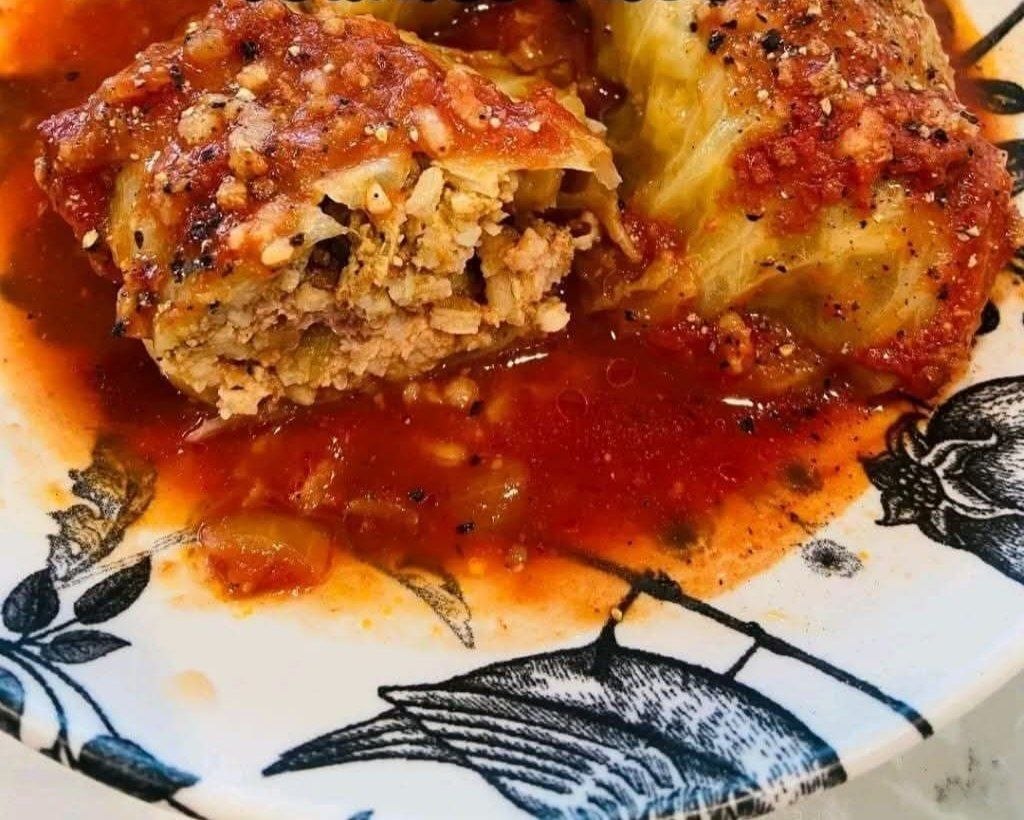
Cabbage rolls are one of those dishes that show up, in one form or another, across nearly every corner of Central and Eastern European cooking — golabki in Poland, sarmale in Romania, holubtsi in Ukraine, töltött káposzta in Hungary. Every family has their own version, their own ratio of beef to pork, their own opinion on whether rice belongs in the filling or not, and their own closely guarded tomato sauce recipe. What unites all of them is the basic idea: tender cabbage leaves wrapped around a well-seasoned meat and rice filling, simmered low and slow until the cabbage practically melts and the sauce turns rich and slightly sweet-tart. It’s the kind of dish that takes a bit of time and hands-on effort, but very little of that effort is difficult — it’s mostly just patient, repetitive, almost meditative work that rewards you with a pot of deeply comforting food. This article walks through the full process, from softening the cabbage to getting that sauce just right.
Ingredients (Serves 6)
- 1 large head green cabbage
- 450g (1 lb) ground beef
- 225g (1/2 lb) ground pork
- 1 cup cooked white rice
- 1 small yellow onion, finely diced
- 2 garlic cloves, minced
- 1 large egg
- 1 1/2 tsp salt
- 1/2 tsp black pepper
- 1 tsp paprika
- 2 cups tomato sauce
- 1 cup crushed tomatoes
- 2 tbsp brown sugar
- 1 tbsp apple cider vinegar
- 1 cup beef broth
- 1 bay leaf
Why Cabbage Rolls Are Worth the Effort
It’s fair to say cabbage rolls have a reputation for being a project dish, and that reputation is somewhat deserved — there’s cabbage to soften, a filling to mix, individual rolls to assemble, and a long simmer at the end. But none of these steps require any real skill, just time. And the payoff is significant: cabbage rolls are one of those dishes that taste like they’ve been made with far more care than almost anything else on a dinner table. The cabbage becomes silky and sweet after its long simmer in tomato sauce, the filling stays moist and tender because it’s gently poaching the entire time rather than drying out in an oven, and the sauce soaks into every layer, so each bite delivers a little bit of everything at once.
They also happen to be an excellent make-ahead and freezer-friendly dish. In fact, most people agree cabbage rolls taste even better the day after they’re made, once the flavors have had time to meld further in the fridge overnight. That makes this a great dish to batch-cook on a weekend for an easy dinner (or several) during a busy week.
The Cabbage: Getting the Leaves Pliable
The biggest technical hurdle in making cabbage rolls isn’t the filling or the sauce — it’s getting the cabbage leaves soft and pliable enough to roll without tearing. Raw cabbage leaves are stiff and will crack the moment you try to fold them, so they need to be softened first. The most reliable method is to bring a large pot of salted water to a boil, core the cabbage (cutting a cone-shaped section out of the base to loosen the leaves), and boil it whole for two to three minutes. As the outer leaves soften in the hot water, use tongs to gently peel them away one at a time and set them aside, then return the head to the water to continue softening the next layer. Repeat this process until you’ve collected 12 to 14 good leaves — that’s usually enough for a full batch, though the exact number will depend on the size of your cabbage and how many tear along the way (a few tears are completely normal and nothing to worry about; just save those torn leaves to line the bottom of the pot later).
Once your leaves are soft, there’s one more small but important step: trimming the thick, rigid rib that runs down the center of each leaf. This rib is what makes the leaf resist folding, and if you skip this step, you’ll end up fighting the leaf the whole time you’re trying to roll it. A sharp knife run along the base of the rib, shaving it down so it’s roughly level with the rest of the leaf, makes rolling dramatically easier.
Building the Filling
The filling is where you have the most room to make this dish your own, but a classic combination — and the one used here — blends ground beef and ground pork. The beef brings a hearty, savory flavor, while the pork adds fat and moisture that keeps the filling from drying out during the long simmer. If you’d rather use just one type of meat, ground beef alone works fine, though the filling will be slightly leaner and benefit from a touch of added olive oil.
Cooked white rice gets mixed directly into the raw meat along with finely diced onion, minced garlic, an egg to help bind everything together, and a simple seasoning of salt, pepper, and paprika. It’s worth noting that the rice goes in already cooked, not raw — this is a common point of confusion, since some older recipes do call for raw rice that finishes cooking inside the roll during the simmer. Using pre-cooked rice is more forgiving and reduces the risk of ending up with undercooked, crunchy rice in the center of your rolls. Mix the filling gently with your hands or a spoon just until everything is evenly combined — overmixing can make the texture dense and tough, the same way it does with meatballs or burgers.
Rolling Technique
Rolling cabbage rolls is very similar to rolling a burrito, and once you’ve done two or three, the technique clicks quickly. Lay a softened, trimmed leaf flat with the base (where the rib used to be) facing you. Place about a third of a cup of filling near that base, then fold the bottom edge up and over the filling, fold in the two sides toward the center, and roll the whole thing up tightly away from you. The goal is a snug roll with no major gaps — a roll that’s too loose can fall apart during the long simmer, while a roll that’s overstuffed may split as the filling expands slightly during cooking. Don’t worry about achieving perfect uniformity; slightly imperfect, rustic-looking rolls are part of the charm of this dish, and it’s genuinely part of the tradition in most of the households that make it regularly.
The Sauce: Sweet, Tangy, and Rich
The tomato sauce is what ties the whole dish together, and it strikes a deliberate balance between savory, sweet, and tangy. A combination of tomato sauce and crushed tomatoes gives you both smoothness and some texture, while brown sugar rounds out the acidity of the tomatoes with a gentle sweetness — this is a hallmark of many Eastern European cabbage roll recipes, where a touch of sweetness in a savory tomato sauce is very much intentional rather than an American add-on. A splash of apple cider vinegar brings back a bit of brightness to balance that sweetness, so the sauce doesn’t tip too far into dessert territory.
Whisk the sauce components together before you start layering the pot, so the sugar has a chance to dissolve evenly rather than sitting in pockets at the bottom.
Assembling and Simmering
To assemble, start with a thin layer of sauce spread across the bottom of a large pot or Dutch oven — this prevents the first layer of rolls from sticking or scorching. If you saved any torn or leftover cabbage leaves earlier, this is the perfect place to use them as an extra protective layer against the direct heat of the pot. Arrange your rolls seam-side down (this helps keep them sealed shut as they cook) in a single snug layer, spoon some sauce over the top, and if you have more rolls than fit in one layer, repeat with a second layer, sauce and all. Pour beef broth around the rolls to make sure there’s enough liquid for a gentle simmer, and tuck in a bay leaf for a subtle background depth.
Bring the pot to a gentle simmer over medium heat, then reduce to low, cover, and let it cook low and slow for around an hour and a half. This isn’t a dish you can rush — the long simmer time is what transforms tough cabbage into something silky and tender, and gives the filling time to cook through gently without drying out. Resist the urge to crank up the heat to speed things along; a hard boil will toughen the cabbage rather than tenderize it, and can cause the rolls to fall apart.
Serving and Pairing Ideas
Once the rolls are tender and cooked through, remove the bay leaf, spoon extra sauce generously over each portion, and serve hot. Cabbage rolls are hearty enough to stand on their own, but they pair beautifully with a few classic sides: a dollop of sour cream on top adds a cooling, tangy contrast to the rich tomato sauce, and a slice of crusty bread is perfect for mopping up any sauce left on the plate. Mashed potatoes or buttered egg noodles alongside also make for a more substantial, old-world-style dinner spread.
Storage, Make-Ahead, and Freezing
As mentioned earlier, cabbage rolls are an excellent make-ahead dish. Once fully cooled, they’ll keep in an airtight container in the refrigerator for up to four days, and the flavor genuinely does improve after a day or two as the sauce continues to soak into the cabbage and filling. To reheat, warm gently on the stovetop over low heat or in a covered dish in a 325°F (165°C) oven until heated through.
Cabbage rolls also freeze remarkably well, which makes them a great candidate for batch cooking. Let the rolls cool completely, then store them in a freezer-safe container along with plenty of their sauce (this keeps them from drying out) for up to three months. Thaw overnight in the refrigerator before reheating gently on the stove or in the oven.
There’s a reason this dish has stayed a beloved staple across so many different culinary traditions for generations — it turns humble, inexpensive ingredients into something deeply satisfying, and it rewards a little patience with a pot of food that only gets better as it sits. Once you’ve made a batch, it’s easy to understand why so many households keep coming back to it.