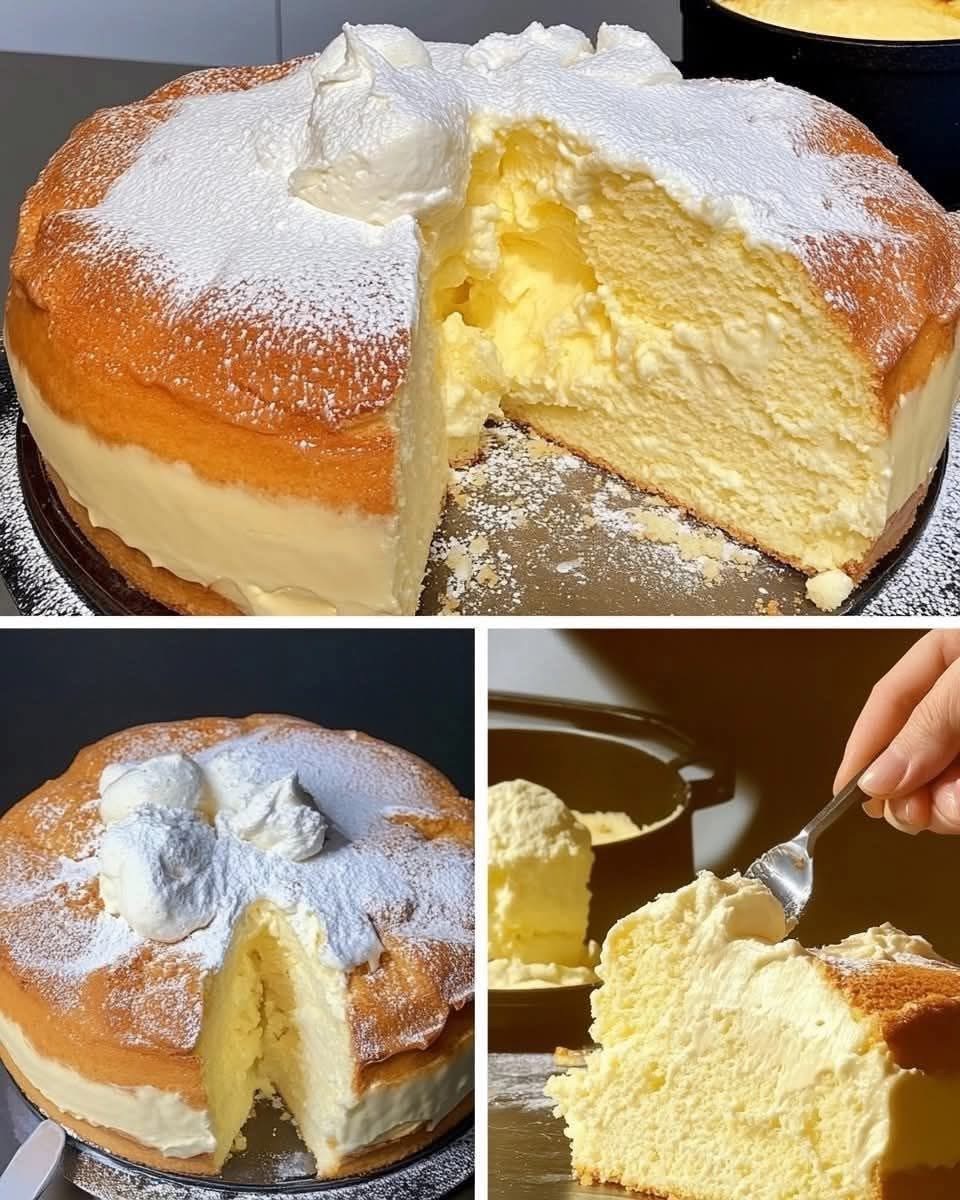
Ingredients
Cream Cheese Mixture
- 250 g (8 oz) cream cheese, softened
- 60 g unsalted butter
- 120 ml whole milk
- 6 large egg yolks
- 70 g cake flour
- 20 g cornstarch
- 1 teaspoon vanilla extract
- 1 tablespoon lemon juice
- ¼ teaspoon salt
Meringue
- 6 large egg whites
- 120 g granulated sugar
- ½ teaspoon cream of tartar (optional but recommended)
For Decoration
- Powdered sugar
- Fresh whipped cream
- Fresh berries (optional)
Equipment
- 8-inch (20 cm) springform pan
- Parchment paper
- Large roasting pan
- Electric mixer
- Rubber spatula
- Fine mesh sieve
- Mixing bowls
Step 1: Prepare the Pan
Preheat your oven to 150°C (300°F).
Line the bottom of your springform pan with parchment paper. Grease the sides lightly.
Wrap the outside of the pan with two or three layers of aluminum foil to prevent water from leaking into the cheesecake during baking.
Step 2: Make the Cream Cheese Base
In a saucepan over low heat, combine:
- Cream cheese
- Butter
- Milk
Stir continuously until completely smooth.
Do not boil the mixture.
Remove from heat and allow it to cool for about five minutes.
Step 3: Add the Egg Yolks
Whisk the egg yolks one at a time into the warm cream cheese mixture.
Add:
- Vanilla
- Lemon juice
- Salt
Mix until smooth.
Step 4: Sift the Dry Ingredients
Sift together:
- Cake flour
- Cornstarch
Slowly whisk them into the batter until completely smooth.
No lumps should remain.
The batter should have a silky consistency similar to thick pancake batter.
Step 5: Prepare the Meringue
Place the egg whites into a completely clean bowl.
Begin beating on medium speed.
Once foamy, add cream of tartar.
Gradually add sugar in three additions.
Continue whipping until medium-stiff peaks form.
The peaks should hold their shape but still have slightly curved tips.
Avoid overbeating.
Step 6: Fold Everything Together
Add one-third of the meringue into the cream cheese mixture.
Mix gently to lighten the batter.
Fold in the remaining meringue using a spatula.
Use slow folding motions from the bottom upward.
Do not stir aggressively.
Preserving the air bubbles is the secret to achieving the famous fluffy texture.
Step 7: Pour into the Pan
Pour the batter into the prepared pan.
Tap the pan gently once or twice to release large air bubbles.
Do not tap excessively.
Step 8: Prepare the Water Bath
Place the cheesecake pan into a larger roasting pan.
Pour hot water into the roasting pan until it reaches halfway up the sides of the cheesecake pan.
This gentle baking method ensures even cooking and prevents cracking.
Step 9: Bake
Bake at:
- 150°C (300°F) for 30 minutes
Then reduce temperature to:
- 130°C (265°F)
Bake another 45–60 minutes.
The cake should have:
- A golden brown top
- Slight wobble in the center
- Firm edges
Step 10: Cool Slowly
Turn off the oven.
Leave the oven door slightly open.
Allow the cheesecake to remain inside for 20 minutes.
This prevents sudden temperature changes that can cause collapsing.
Remove from the oven.
Cool completely before refrigerating.
Chill for at least 2 hours.
Overnight is even better.
Decorating
Dust generously with powdered sugar.
Top with whipped cream.
Serve with:
- Strawberries
- Blueberries
- Raspberries
- Lemon zest
The simple presentation lets the delicate texture shine.
Texture
A perfect soufflé cheesecake should have:
- Feather-light texture
- Creamy interior
- Slight jiggle
- Moist crumb
- Soft golden crust
- Melt-in-your-mouth finish
Every bite should almost dissolve on your tongue.
Tips for Success
- Use room-temperature ingredients.
- Do not rush the meringue.
- Fold gently to keep the batter airy.
- Always bake in a water bath.
- Avoid opening the oven door during baking.
- Cool gradually to prevent shrinking.
- Refrigerate before slicing for cleaner cuts.
- Use a sharp knife wiped clean between slices.
Common Mistakes
Cake Collapsed
Usually caused by:
- Underbaking
- Overmixed batter
- Sudden cooling
Large Cracks
Usually caused by:
- Oven temperature too high
- No water bath
- Overbaked cake
Dense Texture
Usually caused by:
- Deflated meringue
- Overmixing
- Egg whites beaten incorrectly
Wet Bottom
Usually caused by:
- Poorly wrapped springform pan
- Water leaking into the pan
Wrap with several layers of foil to prevent this.
Flavor Variations
Lemon
Add:
- Extra lemon zest
- Lemon extract
Produces a bright, refreshing cheesecake.
Matcha
Mix:
- 2 teaspoons matcha powder
Creates a beautiful green tea version.
Chocolate
Add:
- 80 g melted white chocolate
or
- 60 g melted dark chocolate
Both versions are delicious.
Strawberry
Fold chopped fresh strawberries into the batter or serve with homemade strawberry sauce.
Vanilla Bean
Use seeds from one vanilla bean instead of vanilla extract for a luxurious bakery-style flavor.
Storage
Refrigerate:
Up to 4 days.
Freeze:
Up to 2 months.
Wrap tightly in plastic wrap and then aluminum foil.
Thaw overnight in the refrigerator before serving.
Serving Suggestions
This cheesecake pairs wonderfully with:
- Fresh berries
- Raspberry coulis
- Blueberry compote
- Salted caramel drizzle
- Chocolate sauce
- Fresh whipped cream
- Vanilla ice cream
- Hot coffee
- Green tea
- Earl Grey tea
Why You’ll Love This Recipe
This Japanese soufflé cheesecake is a dessert that impresses with both its appearance and taste. Its airy, cloud-like crumb and creamy, delicate flavor make it lighter than a classic cheesecake while still feeling wonderfully indulgent. Whether you’re baking it for a birthday, afternoon tea, a family gathering, or simply to satisfy a craving, this recipe delivers a bakery-quality result with simple ingredients and careful technique. Once chilled and dusted with powdered sugar, each slice is soft, elegant, and irresistibly delicious—perfect for sharing, though you may find everyone asking for a second piece.