🧴 Baking Soda Face Mask for Dark Spots, Wrinkles & Dark Circles — What You Should Know
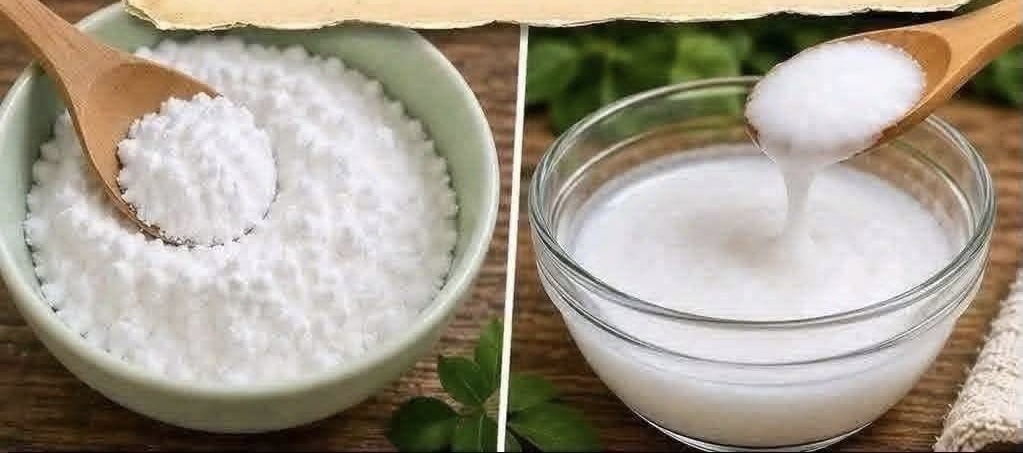
The image suggests using baking soda (sodium bicarbonate) on the face to remove dark spots, wrinkles, and dark circles. Although baking soda is inexpensive and commonly found at home, it is not a proven treatment for these concerns, and applying it directly to facial skin can actually cause irritation.
Baking soda is alkaline, while healthy facial skin has a naturally acidic protective barrier. Applying a concentrated baking-soda paste may disrupt that barrier, causing dryness, burning, redness, irritation, or increased sensitivity. Irritation can also make pigmentation appear worse, particularly in people who are prone to dark marks after inflammation.
So rather than copying the recipe shown in the picture, here is a gentler homemade alternative designed to moisturize and soothe the skin without using baking soda.
🌿 Gentle Oat & Yogurt Face Mask
This simple mask can temporarily make the skin feel softer and more hydrated. It does not bleach the skin or erase wrinkles, but it can be a pleasant addition to a gentle skincare routine.
Ingredients
- 1 tablespoon finely ground plain oats or colloidal oatmeal
- 1 tablespoon plain, unsweetened yogurt
- ½ teaspoon honey, optional
- A few drops of water, if needed
Why these ingredients?
Oatmeal is a gentle ingredient that can help soothe dry or irritated skin. Finely ground oats are preferable to coarse oatmeal because rough particles can cause unnecessary friction.
Plain yogurt contains lactic acid, an alpha-hydroxy acid (AHA), although the amount and activity in homemade yogurt masks are unpredictable. It may provide mild exfoliation, but it should not be considered a substitute for a properly formulated skincare product.
Honey can help the mixture feel moisturizing and smooth. Use only a small amount.
🥣 Step 1: Prepare the Oatmeal
Place 1 tablespoon of finely ground oats in a clean bowl.
If you only have regular rolled oats, grind them into a fine powder using a clean blender or food processor.
Avoid using large, rough pieces of oats as a facial scrub. Scrubbing aggressively can create tiny areas of irritation and may make pigmentation more noticeable.
🥛 Step 2: Add the Yogurt
Add 1 tablespoon of plain, unsweetened yogurt.
Mix slowly until you have a smooth paste.
If the mixture is too thick, add a few drops of water.
You want a soft consistency that spreads easily across the skin without requiring rubbing.
If your skin is very sensitive, you can skip the yogurt and use oatmeal mixed with a little water instead.
🍯 Step 3: Add Honey
If desired, add ½ teaspoon of honey.
Stir everything together thoroughly.
You should end up with a smooth, creamy mixture.
There is no need to add baking soda, lemon juice, toothpaste, salt, or other harsh household ingredients.
🧪 Step 4: Patch Test First
Before applying any homemade mixture to your entire face, test a small amount on an inconspicuous area of skin.
Wait to see whether irritation develops.
If you experience burning, itching, swelling, significant redness, or discomfort, wash it off and don’t use it.
This is especially important if your skin is sensitive or you already use products containing retinoids, exfoliating acids, benzoyl peroxide, or other active ingredients.
🧖 Step 5: Apply the Mask
Clean your face with a gentle cleanser and pat it dry.
Apply a thin layer of the oatmeal mixture using clean fingers.
Avoid:
- The eyelids
- The immediate eye area
- Broken skin
- Cuts
- Active rashes
- Areas that are already irritated
Don’t scrub the mixture into your skin.
Simply spread it gently over the face.
⏱️ Step 6: Leave It On Briefly
Leave the mask on for approximately 5–10 minutes.
You don’t need to wait until it becomes completely dry and tight.
If you feel burning, strong itching, or significant discomfort, rinse it off immediately.
Homemade skincare should feel comfortable, not painful.
💦 Step 7: Rinse Gently
Use lukewarm water to remove the mask.
Don’t use hot water and don’t scrub your face with a washcloth.
Pat your skin dry with a clean, soft towel.
Immediately afterward, apply a simple fragrance-free moisturizer.
This helps support the skin barrier.
☀️ The Most Important Step for Dark Spots
If your main concern is dark spots or uneven pigmentation, sunscreen is much more important than a baking-soda mask.
Sun exposure can darken existing pigmentation and make it more difficult for dark marks to fade.
Use a broad-spectrum SPF 30 or higher every morning, especially when spending time outdoors.
Reapply according to the sunscreen’s directions, particularly after sweating, swimming, or prolonged outdoor exposure.
Without good sun protection, even an effective pigmentation treatment may produce disappointing results.
✨ What Actually Helps Dark Spots?
Dark spots can have many causes, including acne marks, sun exposure, hormonal changes, and inflammation.
Ingredients with better evidence for pigmentation include:
Vitamin C
Topical vitamin C can help brighten uneven pigmentation and provides antioxidant protection. Results depend heavily on the formulation and concentration.
Niacinamide
Niacinamide is generally well tolerated and can help improve the appearance of uneven skin tone over time.
Azelaic acid
Azelaic acid is another useful ingredient for pigmentation, particularly when dark marks are associated with acne.
Retinoids
Retinoids can encourage skin-cell turnover and are used for several concerns, including acne, pigmentation, and signs of photoaging. They can also cause irritation, so they should be introduced gradually.
Sunscreen
This is essential. Treating pigmentation while leaving your skin unprotected from UV exposure is working against yourself.
👁️ What About Dark Circles?
Baking soda is not a good solution for dark circles.
Dark circles can have many different causes.
Sometimes the problem is pigmentation. In other cases, the darkness comes from shadows caused by the shape of the eye socket, visible blood vessels, thin skin, allergies, lack of sleep, dehydration, or other factors.
Because the causes are different, there isn’t one homemade mask that removes every type of dark circle.
And the skin around the eyes is particularly delicate.
For this reason, do not put baking soda, lemon juice, or abrasive scrubs around your eyes.
A cool compress and adequate sleep may temporarily improve the appearance of tired-looking eyes, while persistent dark circles may require a skincare or dermatological approach tailored to the underlying cause.
🧓 Can a Homemade Mask Remove Wrinkles?
A homemade mask cannot permanently erase wrinkles.
However, hydration can temporarily make the skin look smoother and plumper, which may make fine lines appear less noticeable.
For long-term prevention and improvement of photoaging, the most useful habits include:
- Daily sunscreen
- Gentle cleansing
- Regular moisturizing
- Avoiding smoking
- Adequate sleep
- A balanced diet
- Evidence-based skincare ingredients when appropriate
Retinoids are among the better-studied topical ingredients for photoaging, but they aren’t appropriate for everyone and can cause irritation.
🚫 Why I Would Skip the Baking Soda Recipe
The recipe shown in the picture may look simple:
Baking soda + liquid → paste → apply to face.
But “natural” or “from the kitchen” doesn’t automatically mean “safe for facial skin.”
Baking soda is alkaline and can interfere with the skin’s normal acid environment.
Repeated use may leave the skin:
- Dry
- Tight
- Red
- Irritated
- More sensitive
- More vulnerable to barrier damage
And if irritation causes inflammation, people who are prone to pigmentation can potentially develop more noticeable dark marks afterward.
So if the goal is healthier-looking skin, using baking soda is unnecessary.
🥣 Simple Version to Remember
If you want an easy homemade facial mask, try:
Ingredients
- 1 tbsp finely ground oats
- 1 tbsp plain yogurt
- ½ tsp honey
Directions
- Mix the ingredients into a smooth paste.
- Patch-test before using.
- Apply gently to clean skin.
- Leave for 5–10 minutes.
- Rinse with lukewarm water.
- Pat dry.
- Apply a gentle moisturizer.
- Use sunscreen during the day.
Use it occasionally rather than treating it as a daily treatment.
🌸 Final Thoughts
The photograph’s promise that baking soda can “remove dark spots, wrinkles and dark circles” is too strong. There isn’t good evidence that a baking-soda facial treatment can accomplish those things, and using baking soda directly on the face can irritate the skin.
If you’re looking for a homemade option, a simple oatmeal-based mask is a much gentler choice for temporarily soothing and softening the skin.
For persistent dark spots, wrinkles, or dark circles, a consistent skincare routine is generally more useful than a DIY remedy: gentle cleanser + moisturizer + daily SPF, with an appropriate evidence-based active ingredient added if needed.
If the pigmentation is new, rapidly changing, very irregular, bleeding, or otherwise unusual, it’s better to have it assessed by a dermatologist rather than trying to treat it with a homemade mask.