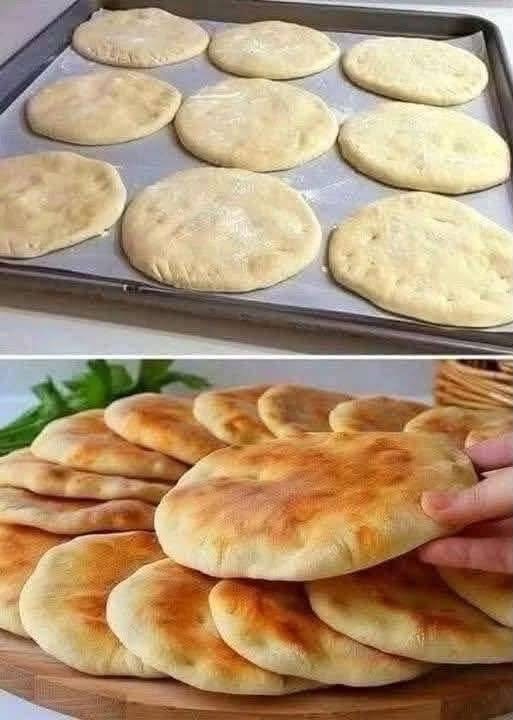
These homemade soft flatbreads are simple, delicious, and wonderfully versatile. They have a lightly golden exterior with a soft, tender center, making them perfect for serving alongside soups, stews, grilled meats, curries, vegetables, or your favorite dips.
The flatbreads shown in the photo are pleasantly rustic and slightly puffed, with golden spots across the surface. They can be prepared in a few different ways, but this recipe uses a simple yeast dough that produces soft, flexible breads with just the right amount of chew.
One of the best things about homemade flatbread is that you do not need complicated equipment. A mixing bowl, rolling pin, baking sheet, and oven are enough. Once you become comfortable with the dough, you can make a batch whenever you need fresh bread.
Ingredients
For the dough:
- 4 cups (500 g) all-purpose flour
- 2 teaspoons instant yeast
- 1 teaspoon sugar
- 1 ½ teaspoons salt
- 1 ½ cups (360 ml) warm water
- 3 tablespoons olive oil
- 2 tablespoons plain yogurt
For brushing:
- 2 tablespoons olive oil or melted butter
- 1 small garlic clove, finely minced, optional
- 1 tablespoon chopped fresh parsley, optional
Choosing the Flour
All-purpose flour is perfect for this recipe because it creates a soft dough that is easy to handle.
Bread flour can also be used if you prefer a slightly chewier texture.
Try not to add too much flour while kneading. A dough that is slightly soft and tacky will generally produce a much softer finished flatbread than a stiff dough.
If the dough feels extremely sticky, add flour one tablespoon at a time rather than adding a large amount at once.
Preparing the Dough
Begin by adding the warm water to a large mixing bowl.
The water should feel comfortably warm, not hot. If it is too hot, it can interfere with the yeast.
Add the sugar and yeast.
Let the mixture sit for approximately 5 minutes if using active dry yeast. If using instant yeast, you can mix it directly with the flour instead.
Add the flour, salt, olive oil, and yogurt.
Stir everything together with a wooden spoon until a rough dough forms.
The yogurt is optional, but it adds moisture and helps create a soft texture.
Once the dough comes together, transfer it to a lightly floured work surface.
Kneading the Dough
Knead the dough for approximately 7–10 minutes.
Push the dough away from you with the heel of your hand, fold it back toward you, turn it slightly, and repeat.
At first, the dough may feel sticky and uneven.
As you continue kneading, it should become smoother and more elastic.
You can also use a stand mixer fitted with a dough hook. Mix on low to medium speed until the dough becomes smooth and elastic.
The finished dough should feel soft and supple.
Lightly coat a clean bowl with olive oil.
Place the dough inside and turn it once so the surface is lightly coated.
Cover the bowl with plastic wrap or a clean kitchen towel.
Letting the Dough Rise
Allow the dough to rise in a warm place for approximately 1–1½ hours.
It should become noticeably larger, ideally close to doubling in size.
The exact rising time depends on the temperature of your kitchen.
A warm kitchen will speed up the process, while a cool kitchen may require additional time.
Do not worry if the dough does not look perfectly doubled. What matters is that it has become noticeably puffy and airy.
Dividing the Dough
Once the dough has risen, gently press it down to release some of the excess air.
Transfer it to a lightly floured work surface.
Divide the dough into approximately 8 equal pieces.
For smaller flatbreads, divide it into 10–12 pieces.
Shape each portion into a smooth ball by folding the edges underneath.
Place the dough balls on a lightly floured tray.
Cover them with a clean kitchen towel and allow them to rest for another 10–15 minutes.
This short resting period relaxes the gluten and makes the dough much easier to roll.
Shaping the Flatbreads
Preheat your oven to 450°F (230°C).
Line one or two baking sheets with parchment paper.
Take one dough ball and place it on a lightly floured surface.
Using a rolling pin or your fingertips, flatten it into a round or oval shape.
Aim for approximately ¼ inch (6 mm) thick.
You do not need perfectly round flatbreads.
In fact, slightly irregular shapes give them a beautiful homemade appearance.
If the dough keeps shrinking back while you roll it, let it rest for another 5–10 minutes. This means the gluten needs a little more time to relax.
Creating the Surface
For a more rustic appearance like the flatbreads shown in the photo, gently press your fingertips into the surface of each piece.
You can also make a few shallow indentations with your fingertips.
These small depressions will create attractive golden patches during baking.
Do not press all the way through the dough.
You simply want to create a textured surface.
Brush each flatbread lightly with olive oil.
If desired, mix the olive oil with minced garlic and chopped parsley before brushing.
Baking the Flatbreads
Arrange the shaped flatbreads on the prepared baking sheets.
Leave a little space between them because they may puff slightly as they bake.
Place the tray in the preheated oven.
Bake for approximately 8–12 minutes, depending on thickness and oven temperature.
The flatbreads should become lightly golden around the edges with attractive brown spots across the surface.
For a slightly darker finish, move the baking tray closer to the top heating element during the final 1–2 minutes.
Watch carefully because they can brown quickly.
You want them golden rather than deeply browned throughout.
Keeping Them Soft
Freshly baked flatbread can become dry if exposed to air for too long.
As soon as the flatbreads come out of the oven, place them in a clean kitchen towel and cover them.
The trapped steam will soften the crust and keep the breads flexible.
You can also brush them lightly with melted butter immediately after baking.
This adds flavor and helps maintain a tender texture.
Stacking the flatbreads on top of one another also helps keep them soft.
Cooking Them in a Skillet
Although the oven method works beautifully, you can also cook these flatbreads on the stovetop.
Heat a heavy skillet or cast-iron pan over medium-high heat.
Do not add much oil.
Place one flattened dough round in the hot skillet.
Cook for approximately 1–2 minutes on the first side.
When bubbles begin appearing and the underside has golden spots, flip it.
Cook for another 1–2 minutes.
Continue until both sides have attractive golden-brown patches.
Transfer the cooked bread to a clean kitchen towel and cover it.
Repeat with the remaining dough.
The skillet method is especially convenient when you do not want to heat the oven.
Garlic Butter Version
For an especially delicious finish, prepare garlic butter.
Melt 3 tablespoons of butter and stir in one minced garlic clove and a little chopped parsley.
Brush the hot flatbreads with the garlic butter as soon as they come out of the oven.
The butter melts into the surface and gives the bread an irresistible aroma.
You can also add a pinch of dried oregano, thyme, or rosemary.
Herb Flatbread
Fresh herbs can easily be incorporated into the dough.
Try adding finely chopped parsley, cilantro, rosemary, thyme, or oregano.
For approximately 4 cups of flour, 2–3 tablespoons of finely chopped fresh herbs are enough to add noticeable flavor without overpowering the bread.
You can also sprinkle sesame seeds or nigella seeds over the top before baking.
Cheese Flatbread
Cheese makes these flatbreads even more satisfying.
Sprinkle shredded mozzarella, cheddar, or Parmesan over the surface before baking.
For a stuffed version, place a small amount of cheese in the center of a flattened dough piece, fold the edges over the filling, seal well, and gently roll it flat again.
Cook in a skillet until golden and the cheese has melted inside.
Serving Suggestions
These soft flatbreads are incredibly versatile.
Serve them with hummus, baba ganoush, labneh, tzatziki, or another creamy dip.
They are excellent alongside soups and stews because they can be used to scoop up the broth and sauce.
For a complete meal, use them as wraps for grilled chicken, beef, lamb, falafel, roasted vegetables, or salad.
Fill one with sliced chicken, lettuce, tomato, cucumber, red onion, and garlic sauce for an easy homemade wrap.
You can also use them as a base for quick pizzas. Add tomato sauce, cheese, vegetables, and cooked meat, then bake until the cheese melts.
Breakfast Ideas
These flatbreads are also excellent for breakfast.
Serve them warm with scrambled eggs, cheese, avocado, and tomatoes.
You can also make a simple breakfast wrap with eggs, sausage, cheese, and vegetables.
For a lighter breakfast, serve one with yogurt, cucumber, herbs, and a drizzle of olive oil.
Because the bread is soft and flexible, it can hold a variety of fillings without breaking.
Storage
Allow the flatbreads to cool completely before storing.
Place them in an airtight container or reusable food bag.
They can be kept at room temperature for approximately 1–2 days.
For longer storage, refrigerate them for up to several days.
However, refrigeration can make bread firmer, so reheating is recommended.
Warm them briefly in a skillet, oven, or microwave.
A few seconds in the microwave under a slightly damp paper towel can restore some of their softness.
Freezing the Flatbreads
These flatbreads freeze very well.
Place a sheet of parchment paper between each flatbread to prevent them from sticking together.
Transfer the stack to a freezer-safe bag.
Freeze for up to approximately 2–3 months for best quality.
When you need one, remove it from the freezer and let it thaw at room temperature.
Reheat it in a dry skillet for a minute or two on each side.
You can also warm several flatbreads in the oven wrapped loosely in aluminum foil.
Make-Ahead Dough
The dough can be prepared in advance.
After kneading, place it in a covered bowl and refrigerate.
A slow refrigerator rise can actually improve the flavor.
When ready to use, remove the dough from the refrigerator and let it sit at room temperature until it becomes easier to handle.
Divide, shape, and bake as usual.
This is an excellent method when you want fresh flatbread for dinner without doing all the preparation at the last minute.
Tips for Soft, Golden Flatbread
Use warm rather than hot water.
Do not add excessive flour while kneading.
Give the dough enough time to rise.
Allow the individual dough balls to rest before rolling.
Avoid rolling the flatbreads too thin if you want the soft texture shown in the photo.
Make sure your oven or skillet is properly heated before cooking.
Do not overbake them. Overbaking is one of the fastest ways to turn soft flatbread into dry bread.
Finally, keep the cooked flatbreads covered with a clean towel while you finish the batch.
Easy Homemade Soft Flatbread Recipe
Prep Time: 25 minutes
Rising Time: 1½ hours
Cooking Time: 8–12 minutes per batch
Total Time: About 2 hours
Servings: 8 flatbreads
Ingredients
- 4 cups all-purpose flour
- 2 teaspoons instant yeast
- 1 teaspoon sugar
- 1 ½ teaspoons salt
- 1 ½ cups warm water
- 3 tablespoons olive oil
- 2 tablespoons plain yogurt
- Melted butter or olive oil for brushing
Instructions
- Combine flour, yeast, sugar, and salt in a large bowl.
- Add warm water, olive oil, and yogurt.
- Mix until a soft dough forms.
- Knead for 7–10 minutes until smooth and elastic.
- Place in an oiled bowl and cover.
- Let rise for approximately 1–1½ hours.
- Gently deflate the dough.
- Divide into 8 equal portions.
- Shape each portion into a ball.
- Cover and rest for 10–15 minutes.
- Roll each ball into a round or oval approximately ¼ inch thick.
- Press shallow fingertip indentations into the surface if desired.
- Brush lightly with olive oil.
- Bake at 450°F (230°C) for 8–12 minutes, until lightly golden.
- Brush with butter immediately after baking if desired.
- Keep the finished flatbreads covered with a clean towel to maintain softness.
These homemade flatbreads are wonderfully simple and adaptable. Their soft centers, lightly crisp golden surfaces, and rustic appearance make them a fantastic everyday bread. Once you master the basic dough, you can turn the same recipe into garlic flatbread, cheese-filled bread, herb bread, wraps, or even quick homemade pizzas.
Fresh from the oven and brushed with a little melted butter, they are especially delicious. Serve them warm alongside your favorite meal, use them for dipping, or fill them with meat and vegetables for a satisfying homemade wrap.