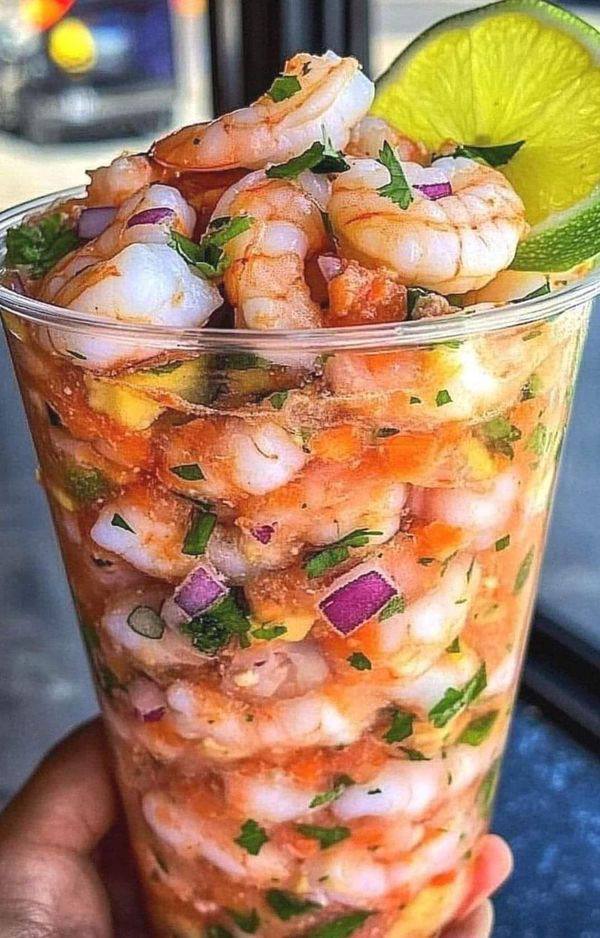
There’s nothing quite as refreshing on a hot day as a cold cup of Mexican shrimp ceviche, packed with tender lime-cured shrimp, crisp cucumber, juicy tomato, and a bright, citrusy dressing that wakes up every single bite. This Mexican shrimp ceviche recipe captures that classic street-cart style ceviche — the kind sold from coolers on hot afternoons, served in a plastic cup with a spoon and a scattering of fresh cilantro on top.
This dish leans fully into everything that makes ceviche so beloved across coastal Mexico: fresh, high-quality shrimp “cooked” through the acid in fresh lime juice rather than heat, mixed with a colorful medley of crisp vegetables and a bright, herby dressing. The result is a dish that’s light, refreshing, and packed with contrasting textures and flavors — tender shrimp, crunchy vegetables, and a citrusy, slightly spicy kick that keeps you coming back for another spoonful.
What makes this ceviche so satisfying is the balance it strikes between simplicity and bold flavor. There’s no cooking involved beyond the citrus-curing process, yet the finished dish tastes vibrant, complex, and deeply refreshing. A splash of hot sauce or diced jalapeño adds just enough heat to keep things interesting, while diced avocado folded in at the end (or served alongside) adds a rich, creamy contrast to all that bright acidity.
Texturally, this ceviche delivers real contrast in every bite: firm, tender shrimp that’s been perfectly “cooked” by the lime juice, crisp cucumber and onion for crunch, juicy diced tomato, and a light, citrusy dressing that ties everything together. It’s cool, refreshing, and endlessly satisfying, especially served with a handful of crispy tostadas or saltine crackers on the side.
Whether you’re making this for a summer gathering, a light lunch, or simply because you’re craving that authentic street-cart flavor, this Mexican shrimp ceviche recipe delivers the real deal right from your own kitchen.
Why You’ll Love This Recipe
- The shrimp are perfectly “cooked” by fresh lime juice, no stovetop needed.
- It’s incredibly refreshing, ideal for hot summer days.
- The flavor is bright, zesty, and slightly spicy.
- It’s naturally light and healthy, packed with fresh vegetables.
- It’s easy to customize with different heat levels and mix-ins.
- It’s a genuine crowd-pleaser at summer gatherings and parties.
- It requires no cooking equipment beyond a knife and a bowl.
- It tastes just like authentic street-cart ceviche.
- It’s naturally gluten-free (serve with corn tostadas for a fully gluten-free option).
- It’s a great make-ahead dish for entertaining.
Ingredients
For the Ceviche
- 1 lb raw shrimp, peeled, deveined, and finely diced
- 1 cup fresh lime juice (about 8–10 limes)
- 1/2 cup fresh lemon juice
- 1 cup Roma tomatoes, diced
- 1/2 cup cucumber, diced
- 1/3 cup red onion, finely diced
- 1 jalapeño, seeded and finely diced
- 1/4 cup fresh cilantro, chopped
- 1 avocado, diced (added just before serving)
- 1 teaspoon salt, or to taste
For Serving
- Tostadas, tortilla chips, or saltine crackers
- Hot sauce, for drizzling
- Extra lime wedges
Ingredient Notes
- Shrimp: Use the freshest raw shrimp you can find, since the lime juice “cooks” it through acid rather than heat. Dicing the shrimp finely helps it cure more quickly and evenly.
- Lime juice: Freshly squeezed lime juice is essential for both flavor and the curing process — bottled juice doesn’t provide the same acidity or bright flavor. A mix of lime and lemon juice adds extra brightness.
- Tomatoes: Roma tomatoes are a good choice since they’re less watery than other varieties, helping keep the ceviche from becoming too diluted.
- Jalapeño: Adjustable to taste — remove the seeds and ribs for a milder version, or leave some in for extra heat.
- Avocado: Best added just before serving to prevent it from browning or turning mushy if left to sit in the acidic marinade for too long.
Kitchen Equipment
- Large non-reactive glass or plastic bowl (avoid metal, which can react with the acid)
- Sharp knife and cutting board
- Citrus juicer or reamer
- Plastic wrap
- Serving cups or bowls
Step-by-Step Instructions
- Prepare the shrimp. Finely dice the raw shrimp and place it in a large non-reactive bowl.
- Add the citrus juice. Pour the fresh lime and lemon juice over the shrimp, making sure it’s fully submerged.
- Cure the shrimp. Cover and refrigerate for 20–30 minutes, stirring occasionally, until the shrimp turns opaque and pink throughout, indicating it’s fully “cooked” by the acid.
- Drain excess juice. Once cured, drain off most of the citrus juice, reserving a small amount to keep the ceviche moist.
- Add the vegetables. Add the diced tomatoes, cucumber, red onion, jalapeño, and cilantro to the bowl with the cured shrimp.
- Season. Add salt to taste and gently toss everything together.
- Chill. Refrigerate for another 10–15 minutes to let the flavors meld.
- Add avocado just before serving. Gently fold in the diced avocado right before serving to keep it from browning.
- Serve. Spoon into cups or bowls and serve with tostadas, tortilla chips, or saltine crackers, along with hot sauce and extra lime wedges on the side.
Chef Tips
- Use the freshest shrimp possible, ideally from a trusted fishmonger, since this dish relies on high-quality raw seafood.
- Dice the shrimp finely and evenly so it cures at the same rate throughout.
- Don’t over-cure the shrimp — once it turns fully opaque and pink, it’s ready; leaving it in the acid too long can make the texture tough and rubbery.
- Use a non-reactive bowl (glass or plastic, not metal) for curing, since metal can react with the acidic citrus juice and affect the flavor.
- Add the avocado at the very last moment before serving to keep it from browning or turning mushy.
- Taste and adjust the salt and heat level just before serving, since flavors can shift slightly as the ceviche chills.
Variations
- Mango Shrimp Ceviche: Add diced fresh mango for a sweet, tropical contrast to the tangy lime and spicy jalapeño.
- Mixed Seafood Ceviche: Add diced white fish or bay scallops along with the shrimp for a mixed seafood version.
- Spicy Habanero Ceviche: Swap the jalapeño for a small amount of finely diced habanero for significantly more heat.
- Tropical Coconut Ceviche: Add a splash of coconut water or diced fresh coconut for a tropical twist.
- Tomatillo Ceviche: Add diced tomatillos alongside the tomatoes for a tangier, slightly greener flavor.
- Clamato Ceviche: Stir in a splash of Clamato juice for a classic Mexican coastal-style variation with extra savory depth.
- Avocado Ceviche Bowl: Serve the ceviche stuffed inside a halved avocado instead of folding the avocado directly in.
- Cucumber Cup Ceviche: Serve small portions in hollowed-out cucumber cups for an elegant appetizer presentation.
Serving Suggestions
- Crispy corn tostadas or tortilla chips
- Saltine crackers, in classic street-cart style
- A cold Mexican beer or michelada
- Extra hot sauce and lime wedges on the side
- Fresh, cold agua fresca for a refreshing, non-alcoholic pairing
Storage Instructions
Refrigerator: Store in an airtight container in the refrigerator for up to 1 day. Ceviche is best enjoyed fresh, as the shrimp and vegetables can continue to soften over time.
Freezer: Freezing is not recommended, as the texture of both the cured shrimp and fresh vegetables will suffer significantly upon thawing.
Reheating: Not applicable, as ceviche is a cold dish and is not intended to be reheated.
Common Mistakes to Avoid
- Using low-quality or previously frozen shrimp that hasn’t been properly thawed. Always use the freshest shrimp available for the best texture and safety.
- Over-curing the shrimp. Leaving it in the citrus juice for too long can make the texture tough and rubbery rather than tender.
- Using a metal bowl. This can react with the acidic citrus and affect the flavor of the ceviche.
- Adding the avocado too early. It can turn brown and mushy if left in the acidic marinade for too long.
- Not dicing the shrimp evenly. Uneven pieces will cure at different rates, leading to inconsistent texture.
- Skipping fresh lime juice in favor of bottled. Bottled juice lacks the same bright flavor and proper acidity for curing.
- Not draining excess citrus juice before adding vegetables. Too much liquid can dilute the flavor and make the ceviche watery.
- Letting the ceviche sit out at room temperature for too long. Keep it chilled, especially in warm weather, for food safety.
Frequently Asked Questions (FAQ)
1. Is the shrimp actually “cooked” in this recipe? Yes, the acid in the fresh lime and lemon juice denatures the proteins in the shrimp in a process similar to cooking with heat, turning it opaque and firm.
2. How do I know when the shrimp is fully cured? The shrimp should turn from translucent gray to an opaque pink or white color throughout, usually within 20–30 minutes.
3. Can I use pre-cooked shrimp instead? Yes, if you prefer to use pre-cooked shrimp, simply dice it and toss it with the lime juice and vegetables for a shorter marinating time, just enough to absorb the citrus flavor.
4. How long does ceviche last in the fridge? It’s best enjoyed within 24 hours for the best texture and flavor, as the shrimp and vegetables will continue to soften over time.
5. Can I make this dish less spicy? Yes, simply omit the jalapeño or use a milder pepper, adjusting the heat level to your preference.
6. What’s the best way to serve ceviche? Classic street-cart style is served in a cup with a spoon, tostadas, or saltine crackers on the side, though it can also be served in a bowl as an appetizer.
7. Can I add fruit to this ceviche? Yes, diced mango or pineapple are popular additions that add a sweet, tropical contrast to the tangy, spicy flavors.
8. Why did my avocado turn brown? This happens if it’s added too early and left to sit in the acidic marinade for too long. Add it just before serving to prevent browning.
9. Can I freeze ceviche? It’s not recommended, as both the texture of the cured shrimp and the fresh vegetables suffer significantly upon freezing and thawing.
10. What can I use instead of shrimp? White fish, such as tilapia or snapper, or a combination of shrimp and scallops both work well for a similar ceviche preparation.
Nutrition Information
The following values are estimates per serving (based on 4 servings) and may vary depending on specific ingredients and brands used.
| Nutrient | Amount (approx.) |
|---|---|
| Calories | 190 kcal |
| Protein | 20g |
| Fat | 7g |
| Carbohydrates | 13g |
| Fiber | 4g |
| Sugar | 4g |
| Sodium | 480mg |
Final Thoughts
Mexican shrimp ceviche brings all the bright, refreshing flavors of a coastal street cart right to your own kitchen, with tender lime-cured shrimp, crisp vegetables, and a zesty, slightly spicy dressing in every bite. It’s light, satisfying, and endlessly refreshing, especially on a hot day. Give this recipe a try next time you’re craving something fresh and vibrant, and it just might become your new favorite way to cool off.