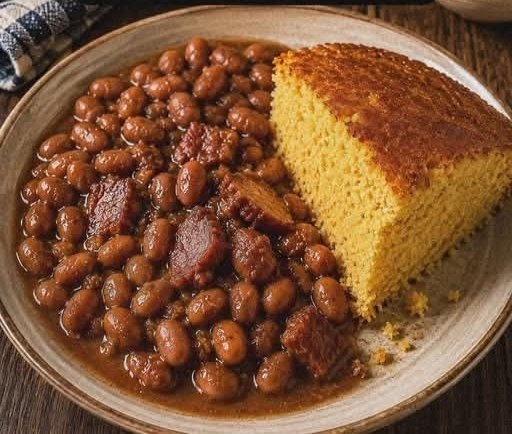
There’s a certain kind of humble, soul-satisfying comfort that comes from a bowl of slow-simmered pinto beans served alongside a warm, golden wedge of buttery cornbread. This cornbread and beans recipe captures that classic Southern combination in its truest form — smoky, tender beans simmered low and slow until they’re rich and creamy, paired with a slightly sweet, buttery cornbread that’s perfect for soaking up every last bit of broth.
This pairing has deep roots in Southern and Appalachian cooking traditions, where simple, affordable ingredients were transformed into something deeply nourishing and satisfying through patience and time rather than complicated technique. Dried beans, a bit of smoked meat for flavor, and a handful of pantry staples come together to create a pot of beans that tastes far richer than the sum of its parts, while the cornbread bakes up alongside it in a fraction of the time.
What makes this combination so enduring is the way the two components complement each other. The beans are savory, smoky, and slightly brothy, while the cornbread brings a touch of sweetness, a tender crumb, and a golden, buttery crust that’s perfect for crumbling directly into the bowl of beans or eating on the side, slathered with butter. It’s a meal that feels like it’s been passed down through generations, because in many households, it has been.
Texturally, this meal offers real contrast and comfort: soft, creamy beans in a savory broth, paired with a cornbread that’s tender in the middle with a slightly crisp, golden crust. Together, they create a meal that’s hearty, warming, and deeply satisfying, especially on a cold day.
Whether you grew up with a version of this meal or you’re discovering it for the first time, this cornbread and beans recipe delivers that same nostalgic, old-fashioned comfort that’s kept it a beloved staple on Southern tables for generations.
Why You’ll Love This Recipe
- The beans turn out rich, creamy, and deeply flavorful after their long simmer.
- The cornbread is tender with a golden, buttery crust.
- It’s an incredibly affordable, budget-friendly meal.
- It’s a nostalgic, old-fashioned recipe with real Southern roots.
- The beans freeze beautifully, making this great for batch cooking.
- It’s a filling, complete meal on its own.
- It’s simple to make, using mostly pantry staples.
- It’s naturally vegetarian-adaptable with a few easy swaps.
- It’s a genuine crowd-pleaser for family dinners.
- It reheats wonderfully, making it perfect for leftovers.
Ingredients
For the Pinto Beans
- 1 lb dried pinto beans, sorted and rinsed
- 6 cups water or low-sodium chicken broth
- 1 small yellow onion, diced
- 3 garlic cloves, minced
- 1 smoked ham hock or 4 slices bacon, chopped
- 1 teaspoon salt (plus more to taste)
- 1/2 teaspoon black pepper
- 1/2 teaspoon smoked paprika
- 1 bay leaf
For the Cornbread
- 1 cup yellow cornmeal
- 1 cup all-purpose flour
- 1/4 cup granulated sugar
- 1 tablespoon baking powder
- 1/2 teaspoon salt
- 1 cup buttermilk
- 2 large eggs
- 1/3 cup unsalted butter, melted
Ingredient Notes
- Dried pinto beans: Dried beans deliver the best texture and flavor for this dish, though canned beans can be used in a pinch for a much quicker version (see FAQ for details).
- Smoked ham hock or bacon: This is what gives the beans their signature smoky, savory depth. For a vegetarian version, smoked paprika and a splash of liquid smoke can help replicate some of that flavor.
- Cornmeal: Yellow cornmeal provides classic flavor and color for the cornbread. A medium grind offers the best balance of texture.
- Buttermilk: Adds tang and moisture to the cornbread, helping it stay tender rather than dry or crumbly.
- Bay leaf: Adds a subtle aromatic depth to the beans as they simmer; remove before serving.
Kitchen Equipment
- Large pot or Dutch oven (for the beans)
- Large mixing bowl (for cornbread batter)
- Medium mixing bowl
- Whisk
- 9-inch cast iron skillet or baking dish (for cornbread)
- Colander (for rinsing beans)
Step-by-Step Instructions
For the Pinto Beans
- Soak the beans (optional but recommended). Cover the dried beans with water and let soak for at least 4 hours or overnight. Drain and rinse before cooking.
- Combine ingredients. In a large pot or Dutch oven, combine the soaked beans, water or broth, onion, garlic, ham hock or bacon, salt, pepper, smoked paprika, and bay leaf.
- Simmer. Bring to a boil, then reduce heat to low, cover, and simmer for 1.5 to 2 hours, stirring occasionally, until the beans are tender and creamy.
- Adjust seasoning. Taste and adjust salt and pepper as needed. If using a ham hock, remove it, shred any meat, and stir it back into the beans, discarding the bone.
- Remove the bay leaf before serving.
For the Cornbread
- Preheat the oven to 400°F (200°C) and place a cast iron skillet inside to heat while you prepare the batter.
- Mix the dry ingredients. In a large bowl, whisk together the cornmeal, flour, sugar, baking powder, and salt.
- Mix the wet ingredients. In a separate bowl, whisk together the buttermilk, eggs, and melted butter.
- Combine. Pour the wet ingredients into the dry ingredients and stir until just combined.
- Bake. Carefully remove the hot skillet from the oven, add a bit of butter or oil to coat the bottom, and pour in the batter. Bake for 18–22 minutes, until golden brown and a toothpick inserted into the center comes out clean.
- Serve. Let the cornbread cool slightly, then slice and serve warm alongside a hot bowl of beans.
Chef Tips
- Soaking the dried beans overnight helps them cook more evenly and reduces overall cooking time.
- Keep the beans at a gentle simmer rather than a hard boil, which can cause the skins to split and the texture to turn mushy.
- Preheating the cast iron skillet before adding the cornbread batter helps create that classic crispy, golden crust on the bottom and edges.
- Taste the bean broth as it simmers and adjust the seasoning gradually, since flavors will continue to concentrate over the long cooking time.
- Don’t overmix the cornbread batter — a few small lumps are fine, and overmixing can result in a denser texture.
- Crumble a piece of cornbread directly into your bowl of beans for the most classic, comforting way to enjoy this meal.
Variations
- Smoky Bacon Beans: Use extra bacon in place of the ham hock for a smokier, more bacon-forward flavor.
- Spicy Cornbread and Beans: Add diced jalapeños to the cornbread batter and a pinch of cayenne to the beans for extra heat.
- Vegetarian Beans: Omit the ham hock or bacon, and use vegetable broth along with smoked paprika and a touch of liquid smoke for depth.
- Cheesy Jalapeño Cornbread: Fold shredded cheddar cheese and diced jalapeños into the cornbread batter for a spicy, cheesy variation.
- Slow Cooker Beans: Combine all the bean ingredients in a slow cooker and cook on low for 7–8 hours for a hands-off version.
- Ham and Bean Soup Style: Add extra broth and diced carrots and celery to turn the beans into more of a hearty soup.
- Sweet Honey Cornbread: Add a tablespoon of honey to the cornbread batter for extra sweetness.
- Instant Pot Beans: Pressure cook soaked beans with the same seasonings for about 25–30 minutes with a natural release for a much faster version.
Serving Suggestions
- A side of collard greens or sautéed greens
- Sliced raw onion and pickled jalapeños for topping the beans
- A drizzle of hot sauce for those who like extra heat
- Butter and honey for the cornbread
- Sweet tea for a classic Southern-style meal
Storage Instructions
Refrigerator: Store the beans and cornbread separately in airtight containers in the refrigerator for up to 4 days.
Freezer: The beans freeze exceptionally well for up to 3 months. The cornbread can also be frozen for up to 2 months, wrapped tightly.
Reheating: Reheat the beans on the stovetop over low heat, adding a splash of water or broth if they’ve thickened too much. Reheat the cornbread in a 350°F (175°C) oven for a few minutes, or in the microwave for a quick option.
Common Mistakes to Avoid
- Not soaking the dried beans. While not strictly required, skipping this step can significantly increase cooking time and result in less evenly cooked beans.
- Boiling the beans too hard. This can cause the skins to split and the texture to become mushy rather than creamy.
- Adding salt too early in the cooking process. Some cooks find that adding salt at the very beginning can toughen bean skins; adding it partway through or at the end is often preferred.
- Overmixing the cornbread batter. This can result in a denser, tougher texture rather than a tender crumb.
- Not preheating the skillet for the cornbread. This step is key to achieving that classic crispy, golden crust.
- Rushing the bean simmering time. Beans need time to become truly tender and creamy; cutting this short results in a firmer, less satisfying texture.
- Not tasting and adjusting the bean seasoning. Flavors concentrate over the long simmer, so taste and adjust as you go.
- Overbaking the cornbread. This can dry it out; start checking for doneness a few minutes before the recipe’s suggested time.
Frequently Asked Questions (FAQ)
1. Can I use canned beans instead of dried? Yes, for a quicker version, use about 4 cans of pinto beans, drained and rinsed, and simmer with the aromatics and seasonings for about 30–40 minutes to let the flavors meld, rather than the full 1.5–2 hours needed for dried beans.
2. Do I need to soak the beans overnight? It’s recommended but not strictly required. Soaking helps the beans cook more evenly and can reduce cooking time, though a longer simmer without soaking will also work.
3. Can I make this dish vegetarian? Yes, omit the ham hock or bacon and use vegetable broth, adding smoked paprika and a touch of liquid smoke to help replicate the smoky flavor.
4. Can I make the beans in a slow cooker? Yes, combine all the ingredients in a slow cooker and cook on low for 7–8 hours, or on high for about 4 hours, until the beans are tender.
5. Why are my beans still hard after simmering for a long time? This can happen with older dried beans, which take longer to soften, or if the beans were cooked at too low a simmer. Older beans may need extra cooking time.
6. Can I freeze the beans and cornbread? Yes, both freeze well. The beans freeze for up to 3 months, and the cornbread freezes for up to 2 months when wrapped tightly.
7. What’s the best way to reheat cornbread? A quick few minutes in a 350°F (175°C) oven helps restore some of the crispness better than the microwave, though the microwave works fine for a quick reheat.
8. Can I add other vegetables to the beans? Yes, diced carrots, celery, or bell peppers can all be added to the pot along with the onion for extra flavor and nutrition.
9. What can I use instead of a ham hock? Bacon, smoked sausage, or even a smoked turkey leg can all be used as substitutes for a similar smoky flavor.
10. How do I make the cornbread less sweet? Simply reduce the sugar in the cornbread batter for a more traditional, savory-leaning version.
Nutrition Information
The following values are estimates per serving (based on 6 servings, including both beans and cornbread) and may vary depending on specific ingredients and brands used.
| Nutrient | Amount (approx.) |
|---|---|
| Calories | 420 kcal |
| Protein | 18g |
| Fat | 13g |
| Carbohydrates | 58g |
| Fiber | 11g |
| Sugar | 8g |
| Sodium | 680mg |
Final Thoughts
Cornbread and beans is proof that some of the most comforting, satisfying meals come from the simplest, most humble ingredients. Between the rich, smoky beans and the tender, buttery cornbread, this classic Southern combination delivers real warmth and nostalgia in every bite. Give this recipe a try on a cold day, and it’s easy to see why it’s remained a cherished tradition on family tables for generations.