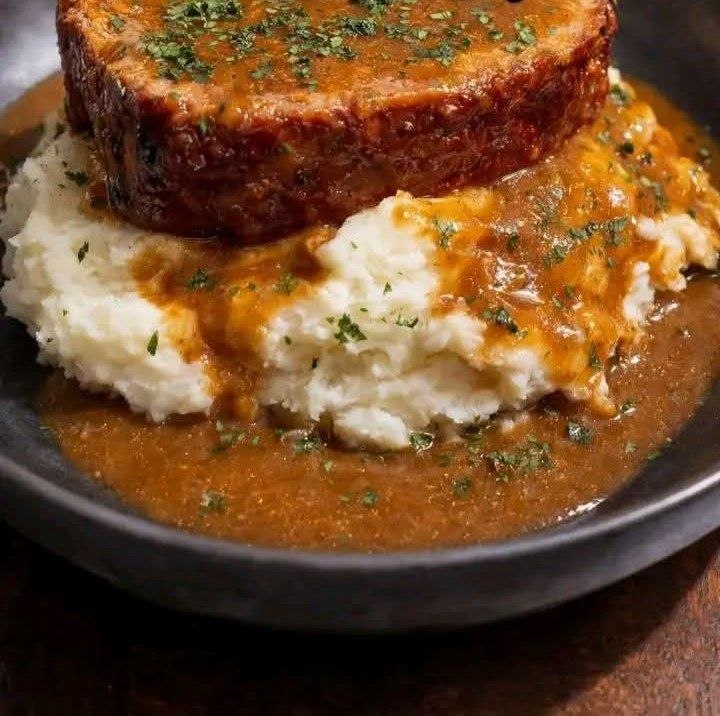
If comfort food had a flagship dish, meatloaf and mashed potatoes smothered in gravy would be a strong contender for the title. It’s the classic American dinner-table meal: a savory, glazed loaf of seasoned ground beef, sliced thick and set atop a mound of creamy mashed potatoes, all of it drenched in rich, velvety brown gravy. This is the kind of meal that shows up in family memories as much as in cookbooks — the dinner grandma made on a Sunday, the one that always tasted a little better the next day as a sandwich, the meal that quietly defines what “home cooking” means to a lot of people.
Meatloaf itself has a long history in American cooking, with roots tracing back to European meat dishes like German scrapple and Scandinavian meatloaf traditions brought over by immigrants. It became especially popular in the United States during the Great Depression and World War II rationing years, when ground meat, stretched with breadcrumbs, eggs, and vegetables, offered an affordable and filling way to feed a family. Paired with mashed potatoes, another humble, stretch-your-dollar ingredient, and finished with gravy, the combination became a defining meal of mid-century American home cooking — and it has never really gone out of style.
What Makes a Great Meatloaf
The secret to a truly great meatloaf lies in a few key details that are easy to overlook. First, the ratio of binder to meat matters enormously. Breadcrumbs and eggs aren’t just filler; they help retain moisture throughout the long baking process, preventing the loaf from drying out. Milk, soaked into the breadcrumbs, adds even more moisture and helps create a tender, rather than dense, texture.
Second, the glaze is doing more work than it might seem. A classic ketchup-based glaze, brightened with brown sugar and a splash of Worcestershire sauce, caramelizes on top of the meatloaf as it bakes, creating a sticky, tangy-sweet crust that contrasts beautifully with the savory meat underneath. Applying it in two stages — once before baking and again partway through — builds up layers of flavor and color rather than relying on a single coat.
Finally, resting the meatloaf after baking, just like you would a steak or roast, allows the juices to redistribute throughout the loaf. Skipping this step and cutting immediately often results in a meatloaf that falls apart on the cutting board and loses much of its moisture onto the plate instead of staying in the meat.
Getting Mashed Potatoes Right
Creamy, lump-free mashed potatoes might seem simple, but a few small details separate good mashed potatoes from great ones. Starting with the right potato variety matters — starchy potatoes like russets break down more easily into a smooth, fluffy mash compared to waxy varieties, which tend to turn gluey when mashed. Boiling the potatoes in well-salted water seasons them from the inside out, rather than relying entirely on salt added after mashing.
Perhaps most importantly, warming the milk or cream before adding it to the potatoes helps maintain a smooth, silky texture. Adding cold dairy straight from the refrigerator can shock the starches in the potatoes and lead to a gluier, less appealing consistency.
Ingredients You’ll Need
For the meatloaf:
- 2 pounds ground beef
- 1 cup breadcrumbs
- 2 large eggs
- 1 onion, finely diced
- 3 garlic cloves, minced
- ½ cup milk
- 1 teaspoon salt
- ½ teaspoon black pepper
For the glaze:
- ½ cup ketchup
- 2 tablespoons brown sugar
- 1 tablespoon Worcestershire sauce
For the mashed potatoes:
- 2½ pounds russet potatoes, peeled and cubed
- 4 tablespoons butter
- ½ cup warm milk or cream
For the gravy:
- 3 tablespoons butter
- 3 tablespoons flour
- 2 cups beef broth
Step-by-Step Instructions
Step 1: Mix the meatloaf. In a large bowl, combine the ground beef, breadcrumbs, eggs, finely diced onion, minced garlic, milk, salt, and pepper. Mix gently with your hands or a fork just until everything is evenly combined — overmixing at this stage compacts the meat too much and results in a dense, tough meatloaf rather than a tender one.
Step 2: Shape the loaf. Transfer the mixture to a baking sheet lined with parchment paper (for a free-form loaf with more caramelized surface area) or press it into a standard loaf pan. Shape it into an even, compact loaf, smoothing the top and sides.
Step 3: Make and apply the glaze. In a small bowl, whisk together the ketchup, brown sugar, and Worcestershire sauce until smooth. Brush about half of this glaze evenly over the top and sides of the meatloaf before baking, reserving the rest for later.
Step 4: Bake the meatloaf. Bake in a preheated 350°F oven for about 1 hour, brushing the remaining glaze over the top halfway through baking. The meatloaf is done when a meat thermometer inserted into the center reads 160°F. Baking time can vary depending on the exact shape and thickness of your loaf, so rely on the thermometer rather than the clock alone.
Step 5: Boil the potatoes. While the meatloaf bakes, place the cubed russet potatoes in a large pot and cover with cold, well-salted water. Bring to a boil and cook for 15 to 20 minutes, until the potatoes are completely fork-tender. Drain thoroughly.
Step 6: Mash the potatoes. Return the drained potatoes to the pot, or transfer to a large bowl. Add the butter and warm milk or cream, then mash with a potato masher or ricer until smooth and creamy. Season with additional salt and pepper to taste.
Step 7: Start the gravy roux. In a saucepan, melt the butter for the gravy over medium heat. Whisk in the flour and cook, whisking constantly, for 1 to 2 minutes, until the mixture turns a light golden color and loses its raw flour smell.
Step 8: Finish the gravy. Slowly whisk in the beef broth, adding it gradually to avoid lumps. Continue whisking as the gravy comes to a simmer, and let it cook for about 5 minutes, until thickened to a smooth, pourable consistency.
Step 9: Rest, plate, and serve. Once the meatloaf is done baking, let it rest for 10 minutes before slicing — this helps it hold together and keeps the juices inside rather than spilling out onto the cutting board. Slice into thick pieces and serve over a generous scoop of mashed potatoes, smothered in the warm gravy.
Tips for the Best Results
- Don’t overmix the meatloaf. Combine the ingredients just until evenly distributed. Overworking the mixture leads to a dense, tough texture.
- Use a meat thermometer. This is the most reliable way to know your meatloaf is fully cooked without drying it out from overbaking.
- Let the meatloaf rest before slicing. Cutting too soon lets valuable juices escape, leaving the meatloaf drier than it needs to be.
- Warm the dairy for mashed potatoes. Cold milk or cream can make mashed potatoes gluey rather than light and fluffy.
- Whisk the gravy constantly. This is the key to a smooth, lump-free gravy, especially when adding the broth to the roux.
Variations Worth Trying
- Add shredded cheese into the meatloaf mixture or on top for a cheesy variation.
- Swap ground beef for a mix of beef and pork for a slightly different flavor and texture.
- Add finely diced bell pepper or carrots to the meatloaf mixture for extra vegetables and moisture.
- Make garlic mashed potatoes by adding roasted garlic to the potatoes before mashing.
- Use a mushroom gravy instead of a classic beef gravy for an earthier flavor profile.
Serving Suggestions
This meal is hearty enough to stand entirely on its own, but a simple green vegetable like steamed green beans, roasted broccoli, or a side salad helps round out the plate and adds some freshness to balance the richness of the gravy and meat.
Storage and Reheating
Leftover meatloaf, mashed potatoes, and gravy all keep well separately in airtight containers in the refrigerator for up to 4 days. Reheat gently in the microwave or in a low oven, covered with foil to retain moisture. Meatloaf also freezes well, either whole or sliced, for up to 3 months — wrap tightly and thaw overnight in the refrigerator before reheating. Leftover meatloaf makes an excellent sandwich the next day, often considered by many to be just as good, if not better, than the original meal.
Few meals deliver comfort quite like a well-made meatloaf dinner. It’s humble, unpretentious, and endlessly satisfying — proof that some of the best food doesn’t need to be complicated to be truly memorable.