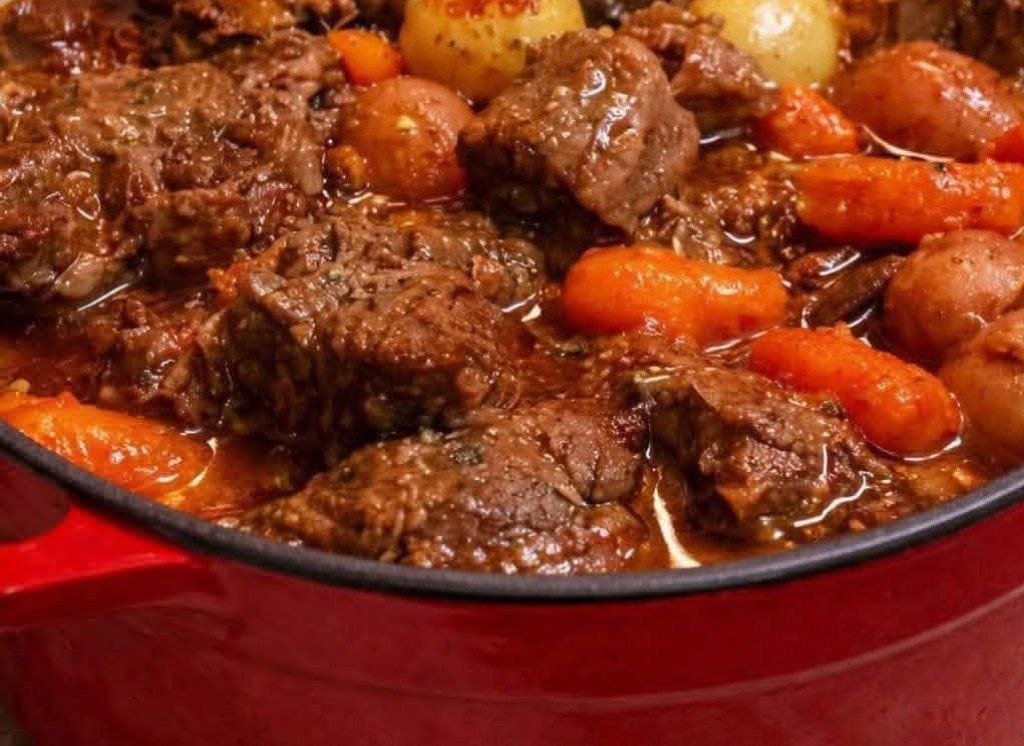
There’s a reason beef stew has held its place at the family dinner table for generations, across countless cultures and kitchens. It’s the dish that turns a tough, inexpensive cut of beef into something tender enough to cut with a spoon, wrapped in a deeply savory, wine-enriched broth alongside soft potatoes and sweet carrots. This is slow-cooked comfort food in its truest form — the kind of meal that fills the house with a rich, savory aroma for hours before it ever hits the table, and rewards every bit of that waiting time tenfold.
Beef stew’s roots run deep across nearly every culinary tradition that has ever had access to tougher cuts of beef and a pot to cook them in low and slow. From French boeuf bourguignon to Irish beef and Guinness stew to countless regional American versions passed down through family recipe boxes, the core idea remains the same: take a cut of meat that’s naturally tough and full of connective tissue, and transform it, through hours of gentle simmering, into something meltingly tender. It’s a technique built on patience rather than skill, which is part of what makes it so approachable, even for cooks who don’t consider themselves particularly experienced in the kitchen.
Why Beef Chuck Is the Right Cut for Stew
Not all beef cuts are created equal when it comes to stewing, and this is one case where a more expensive, leaner cut would actually work against you. Beef chuck, cut from the shoulder area of the cow, is relatively tough and well-marbled with connective tissue when raw, which is exactly why it’s ideal for a long, slow braise. That connective tissue, primarily collagen, breaks down gradually over hours of gentle cooking, transforming from tough and chewy into soft, gelatinous richness that makes the meat tender and also thickens and enriches the surrounding broth.
Leaner, more tender cuts like sirloin or tenderloin, which are prized for quick cooking methods like grilling or searing, actually don’t hold up as well in a long braise. Without much connective tissue to break down, they tend to dry out and turn stringy over hours of slow cooking rather than becoming more tender. This is one of those cases in cooking where the “better” cut on paper is actually the wrong choice for the technique.
The Role of Searing and Deglazing
Before the beef ever meets the braising liquid, it needs a proper sear. This step does more than add color — it triggers the Maillard reaction, a chemical process that creates hundreds of new flavor compounds on the surface of the meat, resulting in a deep, savory, almost caramelized flavor that becomes the foundation of the stew’s overall taste. Skipping this step, or rushing it, leaves a lot of potential flavor on the table.
Just as important is deglazing the pot after searing. All those browned bits stuck to the bottom of the pan, sometimes called fond, are packed with concentrated flavor. Pouring in wine and scraping up those bits as it simmers dissolves that flavor back into the liquid, ensuring nothing goes to waste and the finished broth carries deep, complex savoriness from the very first step of cooking.
Ingredients You’ll Need
- 2½ pounds beef chuck roast, cut into 2-inch chunks
- 3 tablespoons all-purpose flour
- 2 tablespoons olive oil
- 1 onion, diced
- 4 garlic cloves, minced
- 2 tablespoons tomato paste
- 1 cup dry red wine
- 3 cups beef broth
- 1 bay leaf
- 2 fresh thyme sprigs
- 1 pound baby potatoes, halved
- 4 carrots, cut into chunks
- 1 teaspoon salt
- ½ teaspoon black pepper
Step-by-Step Instructions
Step 1: Prep the beef. Pat the beef chunks thoroughly dry with paper towels — this is a small step that makes a big difference in how well the meat browns, since excess moisture on the surface causes steaming rather than searing. Season the beef generously with salt and pepper, then toss with the flour until lightly coated. The flour will help create a slightly thicker, richer sauce as the stew cooks.
Step 2: Sear the beef. Heat the olive oil in a large Dutch oven over medium-high heat until shimmering. Working in batches to avoid overcrowding the pot, sear the beef chunks on all sides until deeply browned, about 2 to 3 minutes per side. Overcrowding the pot causes the meat to steam instead of sear, so take the time to do this in smaller batches, transferring browned beef to a plate as you go.
Step 3: Sauté the aromatics. In the same pot, add the diced onion and cook for 4 to 5 minutes, until softened, using the residual fat and browned bits left behind by the beef. Stir in the minced garlic and tomato paste, cooking for another 1 to 2 minutes until fragrant and the tomato paste has darkened slightly, which deepens its flavor.
Step 4: Deglaze with wine. Pour in the red wine, scraping up all the browned bits stuck to the bottom of the pot with a wooden spoon. Let the wine simmer for 2 to 3 minutes, reducing slightly and concentrating in flavor.
Step 5: Add the broth and herbs. Return the seared beef to the pot, along with any accumulated juices from the plate. Pour in the beef broth and add the bay leaf and thyme sprigs. Bring everything to a gentle simmer.
Step 6: Braise low and slow. Cover the pot and reduce the heat to low, letting the stew simmer gently for about 2 hours, or transfer the covered pot to a 325°F oven for the same amount of time. The goal is a slow, steady simmer, not a rolling boil — too much heat will toughen the meat rather than tenderize it. The beef should be nearly fork-tender by the end of this stage.
Step 7: Add the vegetables. Stir in the halved baby potatoes and carrot chunks. Continue simmering, covered, for another 45 minutes or so, until the vegetables are fully tender and the beef is falling-apart tender.
Step 8: Season and serve. Remove the bay leaf and thyme stems before serving. Taste the stew and adjust the seasoning with additional salt and pepper as needed. Ladle into bowls and serve hot, ideally with crusty bread alongside for soaking up the rich broth.
Tips for the Best Results
- Don’t skip the sear. This step builds the flavor foundation for the entire dish and is worth the extra time it takes.
- Keep the braise gentle. A low, steady simmer breaks down connective tissue without toughening the meat. Resist the urge to turn up the heat to speed things along.
- Add vegetables later in the process. Potatoes and carrots don’t need nearly as long to become tender as the beef does, so adding them partway through prevents them from turning to mush by the time the beef is ready.
- Let it rest before serving if you have time. Like many braises, this stew often tastes even better after resting for a bit, or even the next day, once the flavors have had time to meld further.
- Use a Dutch oven if you have one. Its heavy construction distributes heat evenly and retains it well, which is ideal for long, slow braises like this one.
Variations Worth Trying
- Add pearl onions for a more traditional, French-inspired presentation.
- Swap the red wine for Guinness or another dark beer for an Irish-style beef stew.
- Add mushrooms during the last 30 minutes of cooking for extra earthiness.
- Thicken the broth further with a cornstarch slurry at the end if you prefer a thicker, gravy-like consistency.
- Add frozen peas during the last 5 minutes of cooking for a pop of color and sweetness.
Serving Suggestions
Beef stew is a complete meal on its own, but it pairs beautifully with crusty bread, buttery dinner rolls, or a simple green salad on the side. For an extra hearty meal, serve over mashed potatoes or egg noodles, letting the rich broth soak into the base beneath it.
Storage and Reheating
Leftover beef stew keeps exceptionally well in the refrigerator for up to 4 days in an airtight container, and like most braises, it often tastes even better the next day as the flavors continue to meld. Reheat gently on the stovetop over low heat, adding a splash of broth if the stew has thickened too much during storage. This stew also freezes beautifully for up to 3 months — portion into freezer-safe containers and thaw overnight in the refrigerator before reheating.
There’s nothing flashy about a good beef stew, and that’s exactly the point. It’s a dish built on patience and simple technique, transforming humble ingredients into something deeply comforting and satisfying — the kind of meal worth coming home to on a cold day.