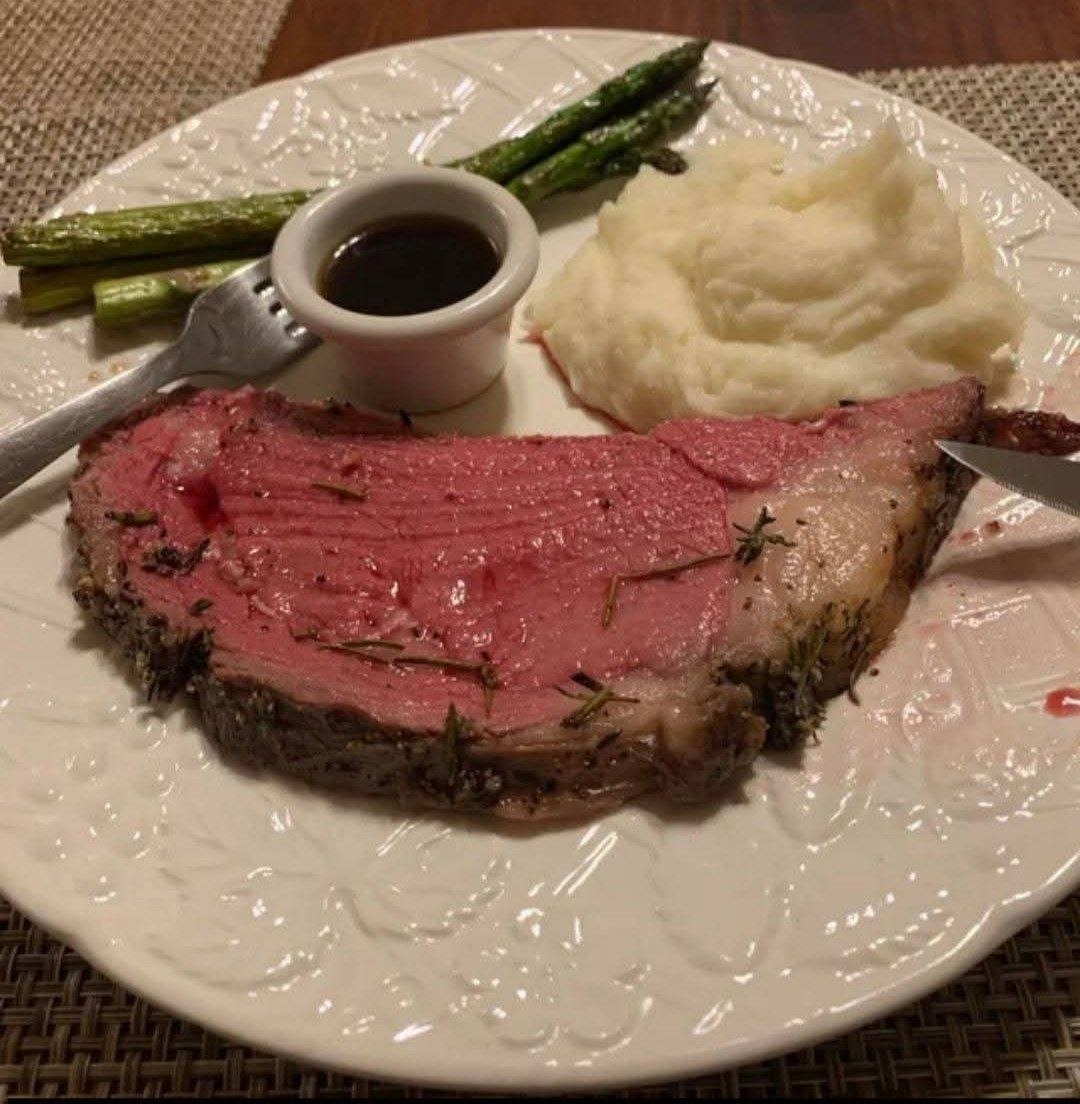
There are few dishes that command a table quite like a whole prime rib roast, carved into thick, rosy-pink slices rimmed with a deeply herbed, cracked-pepper crust. It’s the centerpiece of holiday dinners, milestone celebrations, and the kind of Sunday roast that turns an ordinary evening into an occasion. A great prime rib is simultaneously simple and impressive — simple because the ingredient list is short and the technique is really about temperature control more than complicated steps, and impressive because almost nothing else on the dinner table draws the same reaction when it’s carried out of the kitchen.
This version leans on a reverse-sear method, which has become the gold standard among home cooks and professional chefs alike for producing the most consistently perfect prime rib. Instead of blasting the roast with high heat from the start, which often leads to an overcooked gray band around the edges and an undercooked center, the reverse sear cooks the roast low and slow first, then finishes it with a fast blast of high heat right at the end to build the deeply browned, crackly crust everyone fights over.
What Makes Prime Rib Special
Prime rib, also called a standing rib roast, comes from the rib primal section of the cow — the same general area that gives us ribeye steaks. What sets it apart is the sheer size and generous marbling running throughout the meat, which bastes the roast from the inside as it cooks, keeping it exceptionally juicy and flavorful. The “prime” in prime rib doesn’t necessarily mean USDA Prime grade, though if you can find and afford it, that grade offers the most marbling and tenderness. Choice grade is a very worthy and more widely available alternative that still delivers excellent results.
Bone-in versus boneless is a common question when shopping for this cut. Bone-in roasts, which is what’s pictured here, tend to be more flavorful and moist, since the bones insulate the meat during cooking and add flavor as they roast. They also make for a more dramatic presentation when carved tableside. Boneless roasts are easier to carve and slightly more convenient, but many purists consider bone-in the superior choice for a special-occasion roast.
Why the Reverse Sear Method Works So Well
Traditional prime rib recipes often call for a hot oven the entire way through, but this approach makes it difficult to achieve an evenly pink interior from edge to edge. What typically happens is the exterior inches of meat overcook into a gray, dry band before the center ever reaches the desired temperature.
The reverse sear solves this problem by cooking the roast at a low, gentle oven temperature first — around 250°F — which cooks the meat evenly and slowly from edge to center, minimizing that overcooked gray ring. Once the roast reaches just under your target internal temperature, it comes out to rest while the oven cranks up to a very high heat. The roast then goes back in for a short, intense blast that browns and crisps the exterior into a flavorful, deeply caramelized crust, without pushing the interior past the ideal doneness.
Ingredients You’ll Need
- 6 pounds bone-in prime rib roast
- 3 tablespoons olive oil
- 4 garlic cloves, minced
- 2 tablespoons fresh rosemary, chopped
- 2 tablespoons fresh thyme leaves
- 2 tablespoons coarsely cracked black pepper
- 1 tablespoon kosher salt
- 2 cups beef broth, for the jus
- ½ cup dry red wine, for the jus
Step-by-Step Instructions
Step 1: Bring the roast to room temperature. Remove the prime rib from the refrigerator 2 to 3 hours before cooking and let it sit out, uncovered, on the counter. Starting with a cold roast straight from the fridge leads to uneven cooking, since the outer layers will be significantly further along than the chilled center by the time it comes up to temperature. This step matters more for a large roast like this than it does for smaller cuts.
Step 2: Make the herb and pepper crust. In a small bowl, combine the olive oil, minced garlic, chopped rosemary, and thyme leaves into a loose paste. Rub this mixture generously over the entire surface of the roast, working it into every crevice. Then coat the roast evenly with the cracked black pepper and kosher salt, pressing gently so the seasoning adheres well. The pepper in particular should be coarse rather than finely ground, since a coarser texture is what creates that signature crunchy, peppery crust.
Step 3: Slow roast at low heat. Preheat your oven to 250°F. Place the roast, bone-side down (which naturally forms a sort of roasting rack), on a rack set inside a roasting pan. Insert a meat thermometer into the thickest part of the meat, avoiding the bone. Roast slowly until the internal temperature reaches 115 to 120°F for medium-rare, which typically takes about 2.5 hours for a 6-pound roast, though timing varies based on the exact size and your oven. Resist the temptation to rely on time alone — a thermometer is essential here for consistent, accurate results.
Step 4: Rest before searing. Once the roast hits temperature, remove it from the oven and tent loosely with foil. Let it rest for 20 to 30 minutes while you crank the oven up to 500°F. This resting period allows the juices to redistribute throughout the meat and gives the oven time to reach the high heat needed for the final sear.
Step 5: Reverse sear for the crust. Once the oven has fully preheated to 500°F, return the roast, uncovered, for 5 to 10 minutes, watching closely. This short blast of intense heat browns and crisps the exterior into a deep, flavorful crust without significantly raising the internal temperature further, since the meat is already close to its target doneness.
Step 6: Make the pan jus. While the roast rests a final time, place the roasting pan over medium-high heat on the stovetop. Pour in the red wine and scrape up all the flavorful browned bits stuck to the bottom of the pan — this is where a huge amount of concentrated flavor lives. Let the wine reduce by about half, then add the beef broth and simmer for 5 minutes, until slightly reduced and full of rich, savory flavor. Strain if desired for a smoother jus.
Step 7: Carve and serve. Slice the roast between the bones into thick portions, or slice off the bone entirely for boneless-style servings. Serve immediately with the warm pan jus alongside for spooning or dipping.
Tips for the Best Results
- Invest in a good meat thermometer. This is genuinely the single most important tool for a perfect prime rib. Pull the roast at 115 to 120°F for medium-rare, keeping in mind the temperature will rise slightly during resting and again during the final sear.
- Don’t skip the resting periods. Both the initial rest before searing and the classic post-cooking rest are essential for a juicy roast. Cutting too early lets all those hard-earned juices spill out onto the cutting board.
- Use coarse pepper, not fine. The texture of coarsely cracked pepper is what gives this roast its signature crust. Pre-ground fine pepper won’t deliver the same effect.
- Let it come to room temperature. Skipping this step is one of the most common reasons home cooks end up with unevenly cooked roasts.
- Watch the sear closely. The high-heat finishing step happens fast, and a few extra minutes can push a beautifully medium-rare roast past your target doneness.
Variations Worth Trying
- Add a horseradish cream sauce on the side, a classic and traditional pairing with prime rib that cuts through the richness of the meat.
- Try a Dijon mustard crust instead of or in addition to the herb paste for extra tang.
- Swap the herbs for a more Mediterranean profile using oregano and lemon zest, or lean into a more classic steakhouse flavor with just salt, pepper, and garlic.
- Make a red wine reduction jus by using a full cup of wine instead of a splash, for a more pronounced wine flavor in the sauce.
- Add a compound butter finish, melting a pat of garlic-herb butter over each slice right before serving.
Serving Suggestions
Prime rib pairs beautifully with classic holiday sides: creamy mashed potatoes, roasted asparagus, Yorkshire pudding, or a simple green salad to balance the richness of the meat. Horseradish sauce and the pan jus are both traditional accompaniments worth having on the table. For wine pairing, a full-bodied red like Cabernet Sauvignon or a good Bordeaux complements the richness of the roast beautifully.
Storage and Reheating
Leftover prime rib keeps well in the refrigerator for up to 4 days in an airtight container. To reheat without overcooking the meat further, warm slices gently in a low oven, around 250°F, just until heated through, or enjoy cold in a sandwich the next day, which is a classic and delicious way to use up leftovers. Prime rib also freezes well for up to 3 months — wrap slices tightly and thaw overnight in the refrigerator before gently reheating.
A well-made prime rib roast is proof that a handful of quality ingredients, careful temperature control, and a little patience can produce something truly special. It’s a dish worth mastering, and once you do, it will likely become the centerpiece of your holiday table for years to come.