Ingredients
• 500ml Whole milk (don’t use skim; you need the fat for mouthfeel).
• 1 Vanilla bean (split and scraped) or 2 tsp vanilla bean paste.
• 4 Large egg yolks (room temperature).
• 100g Granulated sugar.
• 40g Cornstarch (sifted).
• 30g Unsalted butter (cubed, at room temperature).
• A pinch of sea salt.
Instructions
1. Infuse the Milk: In a medium saucepan, combine the milk and vanilla. Heat over medium until it just begins to simmer (small bubbles appearing around the edges). Remove from heat.
2. Whisk the Base: In a separate bowl, whisk the egg yolks and sugar until pale and slightly thickened. Add the cornstarch and salt, whisking until no lumps remain.
3. Temper the Eggs: Slowly pour about half of the hot milk into the egg mixture, whisking constantly. This “tempers” the eggs so they don’t scramble.
4. Thicken: Pour the egg/milk mixture back into the saucepan with the remaining milk. Cook over medium-low heat, whisking vigorously. The mixture will suddenly thicken into a pudding-like consistency. Once it “pops” (bubbles break the surface), cook for 1 more minute to cook out the starch taste.
5. Finish: Remove from heat and whisk in the butter until glossy.
6. Chill: Strain through a fine-mesh sieve into a bowl to ensure it is perfectly smooth. Press plastic wrap directly onto the surface of the cream to prevent a skin from forming. Refrigerate until cold.
Part 2: The Enriched Brioche Dough
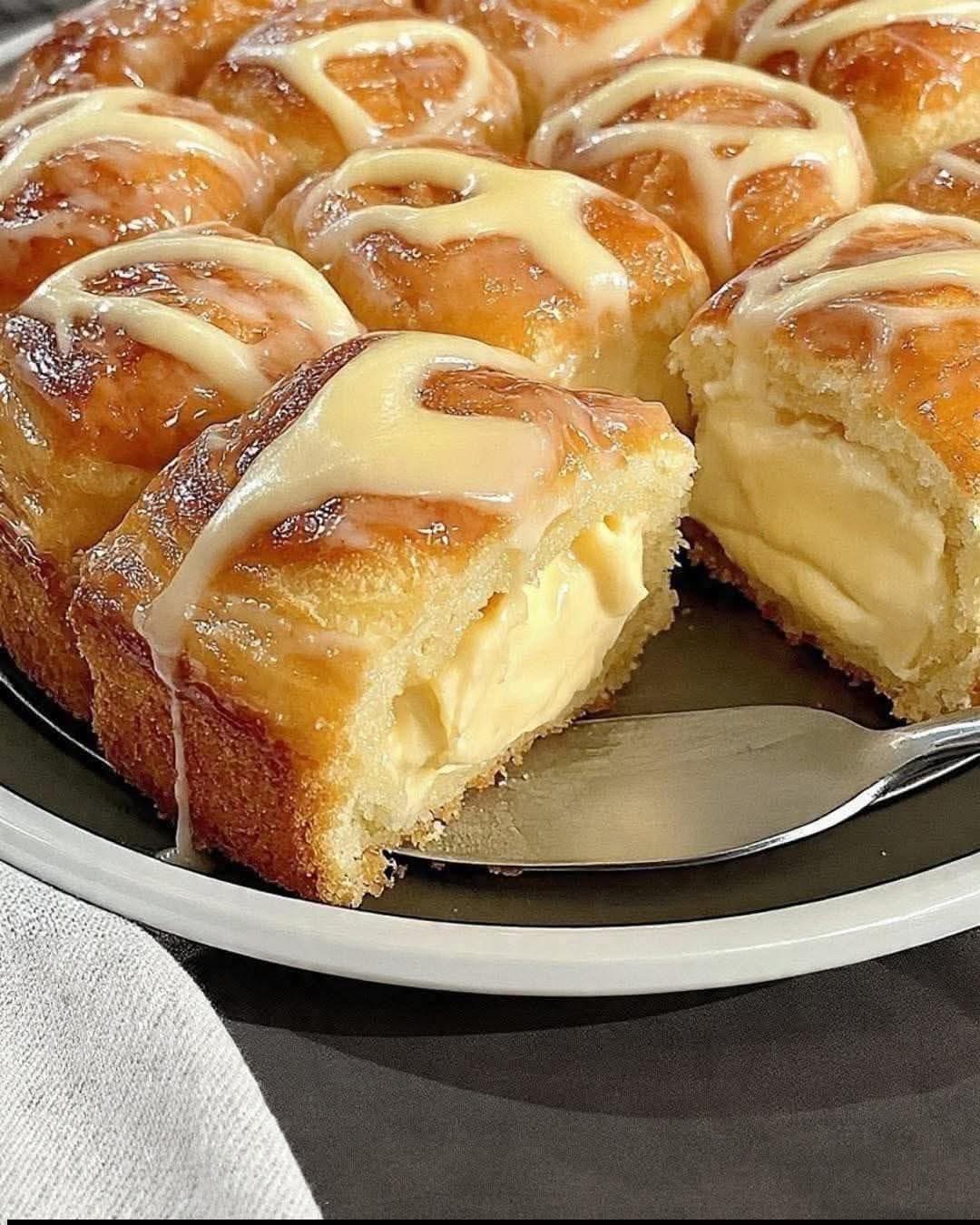
The buns in image.png have a specific “pull-apart” texture. This is achieved through high hydration and a long kneading process to develop gluten.
Ingredients
• 500g Bread flour (high protein is essential here).
• 7g Instant yeast (1 packet).
• 60g Granulated sugar.
• 10g Fine sea salt.
• 3 Large eggs (cold).
• 120ml Whole milk (slightly warm, around 35°C).
• 150g Unsalted butter (high quality, softened but not melted).
Instructions
1. The Mix: In the bowl of a stand mixer fitted with a dough hook, combine flour, yeast, sugar, and salt. Add the milk and eggs.
2. The Initial Knead: Mix on low speed for about 5 minutes until a shaggy dough forms. Increase to medium speed and knead for another 5–8 minutes. The dough should start to pull away from the sides of the bowl.
3. The Butter Integration: This is the most important step. With the mixer on medium-low, add the softened butter one tablespoon at a time. Wait until each piece is fully incorporated before adding the next.
4. The Windowpane Test: Once all the butter is in, knead on medium-high for 10 minutes. The dough should be glossy, elastic, and very tacky. It should pass the “windowpane test”—you should be able to stretch a small piece of dough thin enough to see light through it without it tearing.
5. First Rise: Place the dough in a lightly oiled bowl, cover, and let rise in a warm spot until doubled in size (about 1.5 to 2 hours).
Part 3: Shaping and Baking
As seen in image.png, these rolls are baked close together in a high-sided pan so they rise up rather than out, creating those soft, white “shredded” sides when pulled apart.
Instructions
1. Degas: Gently punch down the risen dough.
2. Portion: Divide the dough into 12 equal portions (approx. 70-80g each). Roll them into tight, smooth balls by tensioning the dough against your work surface.
3. Pan Prep: Lightly grease a 9×13 inch baking pan or a large circular ceramic dish. Place the balls in the pan, leaving about a half-inch of space between them.
4. Second Rise: Cover and let rise for another 45–60 minutes. They should be touching each other and looking very puffy.
5. Bake: Preheat your oven to 175°C (350°F). Lightly brush the tops with an egg wash (1 egg beaten with 1 tbsp milk). Bake for 22–25 minutes until the tops are deep golden brown, as depicted in image.png.
6. Cool: Allow the buns to cool completely in the pan. If you fill them while hot, the pastry cream will melt and turn into a liquid mess.
Part 4: The Glaze and Assembly
The final touch that gives the buns in image.png their professional sheen is a dual-layered glaze.
Glaze Ingredients
• Glaze A (Clear Shine): 50g apricot jam melted with 1 tbsp water (strained).
• Glaze B (White Drizzle): 100g powdered sugar mixed with 2 tbsp heavy cream and a drop of vanilla.
Assembly Instructions
1. Create the Pocket: Once the buns are cool, use a small paring knife or a chopstick to poke a hole into the side of each bun. Gently wiggle it around inside to create a “cave” for the cream without piercing the other sides.
2. Fill: Transfer your chilled pastry cream to a piping bag fitted with a plain round tip. Insert the tip into the hole of each bun and squeeze until you feel the bun expand and the cream starts to slightly peek out.
3. The First Glaze: Brush the tops of the buns with the warm apricot glaze. This seals the bread and gives it that “bakery glow.”
4. The Final Drizzle: Transfer the white sugar glaze to a piping bag (or use a spoon). Replicate the pattern in image.png by drizzling thick, zigzagging lines across the tops of the buns.
Pro-Tips for Success
1. Temperature is Everything
Brioche is a “temperamental” dough because of the high butter content. If your kitchen is too hot, the butter will leak out of the dough, leaving you with a greasy mess rather than a fluffy roll. If you notice the dough getting too oily during the kneading process, pop the whole mixer bowl in the fridge for 15 minutes to firm up the fats.
2. The Secret to the Filling
In image.png, the filling looks exceptionally thick and creamy. To achieve this “bakery style” thickness, some chefs fold 100ml of stiffly whipped heavy cream into the cold pastry cream. This is called Crème Légère. It adds aeration and makes the center feel like a cloud.
3. Storage
Because these contain fresh dairy custard, they must be stored in the refrigerator if not eaten within two hours. However, brioche can get firm when cold. For the best experience, take them out of the fridge 30 minutes before serving to let the bread soften back to its original pillowy state.
4. Flavor Variations
While image.png shows a classic vanilla profile, you can easily adapt this recipe:
• Chocolate: Add 100g of melted dark chocolate to the pastry cream while it’s still warm.
• Lemon/Citrus: Add fresh lemon zest to the dough and use a lemon juice-based glaze for the drizzle.
• Coffee: Infuse the milk for the pastry cream with crushed espresso beans.
Enjoy your baking! When you pull these apart, you should see the steam (if slightly warm) and the generous “ooze” of custard that makes this recipe a world-class dessert.