The Spirit of the Dish
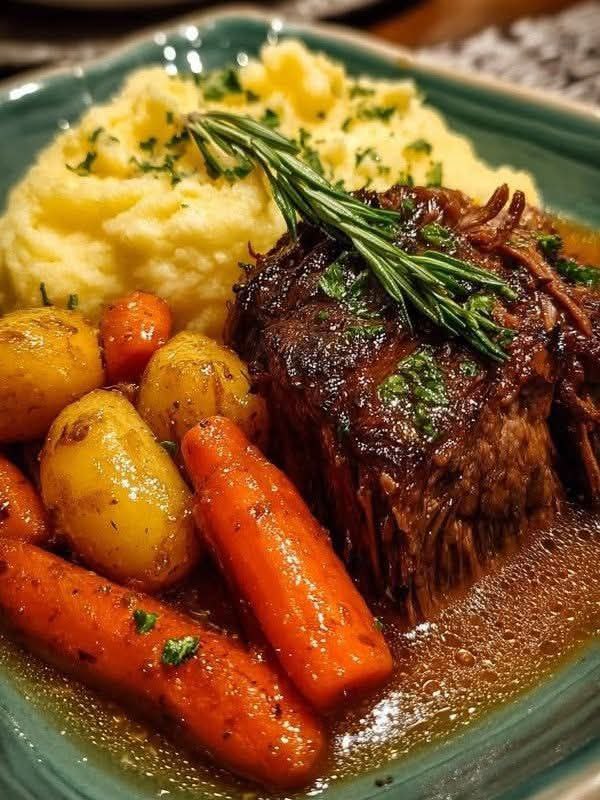
Pot roast is comfort food at its finest. It’s rustic yet elegant, hearty yet tender. The beef is seared to build flavor, then braised slowly with aromatics until it yields to the fork. Mashed potatoes provide the creamy, buttery canvas, while gravy transforms the cooking juices into liquid gold.
The first time I made pot roast, I rushed the braise. I thought three hours would be enough, but the beef was chewy. The second time, I let it go for nearly five hours, low and slow. The difference was remarkable: the meat fell apart, the vegetables softened into sweetness, and the gravy was rich and velvety. That’s the lesson—patience is the secret ingredient.
Ingredients
For the Pot Roast:
- 3–4 lbs beef chuck roast
- 2 tablespoons olive oil
- 2 tablespoons butter
- 1 large onion, sliced
- 3 carrots, cut into chunks
- 3 celery stalks, cut into chunks
- 4 cloves garlic, smashed
- 2 tablespoons tomato paste
- 1 cup red wine (optional, for depth)
- 3 cups beef broth
- 2 sprigs thyme
- 2 bay leaves
- Salt and pepper
For the Mashed Potatoes:
- 2 lbs russet or Yukon gold potatoes, peeled and cubed
- ½ cup whole milk (warm)
- 4 tablespoons butter
- Salt and pepper
For the Gravy:
- Pan juices from pot roast
- 2 tablespoons flour
- 2 tablespoons butter
- Salt and pepper
Optional Garnishes:
- Fresh parsley
- Chives
Step-by-Step Method
Step 1: Sear the Beef Pat roast dry, season generously. Heat oil and butter in Dutch oven. Sear beef on all sides until deep brown. 👉 Why: Caramelization builds flavor base.
Step 2: Build the Flavor Base Remove beef, add onion, carrot, celery, garlic. Sauté until softened. Stir in tomato paste, cook until darkened. 👉 Why: Vegetables and paste add depth and sweetness.
Step 3: Deglaze Pour in wine, scrape browned bits. Add broth, thyme, bay leaves. Return beef. 👉 Why: Deglazing captures flavor stuck to pan.
Step 4: Braise Cover, cook at 300°F (150°C) for 4–5 hours until beef is fork-tender. 👉 Visual cue: Meat should shred easily.
Step 5: Make Mashed Potatoes Boil potatoes until tender. Drain, mash with butter and warm milk. Season. 👉 Why: Warm milk keeps mash creamy.
Step 6: Make Gravy Strain pot roast juices. Melt butter, whisk in flour, cook 1–2 minutes. Slowly whisk in juices until thickened. Season. 👉 Why: Roux ensures smooth, velvety gravy.
Step 7: Assemble the Plate Slice or shred beef, spoon gravy over. Serve with mashed potatoes and roasted vegetables from braise. Garnish with parsley.
Mistakes to Avoid
- Skipping sear: Flavor won’t develop.
- Rushing braise: Beef will be tough.
- Cold milk in potatoes: Makes mash gluey.
- Thin gravy: Always cook roux properly.
Variations
- Add mushrooms for earthiness.
- Swap wine for balsamic vinegar.
- Use sweet potatoes for mash.
- Add horseradish cream for kick.
Storage
- Pot roast: Refrigerate 4 days, freeze 2 months.
- Mashed potatoes: Best fresh, but can be reheated with extra milk.
- Gravy: Keeps 3 days, reheat gently.
Serving Suggestions
Serve with crusty bread to mop up gravy. Pair with roasted greens or salad. For drinks, a bold red wine or dark ale complements richness.
Cultural Context
Pot roast is a staple of American comfort food, often served at Sunday dinners. Its roots trace back to European braising traditions, where tough cuts were transformed by slow cooking. The pairing with mashed potatoes and gravy reflects farmhouse cooking—simple, hearty, nourishing.
Reflection
Cooking pot roast is about rhythm: sear, sauté, deglaze, braise, mash, whisk. The kitchen fills with aromas—beef, garlic, thyme, butter. When you plate it, you see harmony: tender beef, creamy potatoes, glossy gravy. It’s indulgent yet balanced, rustic yet refined.
Final Thoughts
Classic Beef Pot Roast with Mashed Potatoes & Gravy is more than a recipe—it’s a ritual. It embodies patience, care, and comfort. Every bite delivers contrast: tender beef, creamy mash, rich gravy. It’s timeless, versatile, and deeply satisfying.
Once you make it, you’ll see why it’s worth the effort. It’s the kind of dish that gathers people around the table, warms the soul, and lingers in memory.