In the diverse world of finger foods, few items command as much attention as a platter of perfectly glazed chicken wings. While the Spicy Honey-Glazed Wings offer a classic American heat and the Seared Garlic Butter Chicken Bites provide a decadent, savory experience, the Sticky Lemon Sesame Chicken Wings represent a masterclass in flavor balance. They bring together the brightness of Mediterranean citrus with the deep, umami-rich profiles of East Asian cuisine.
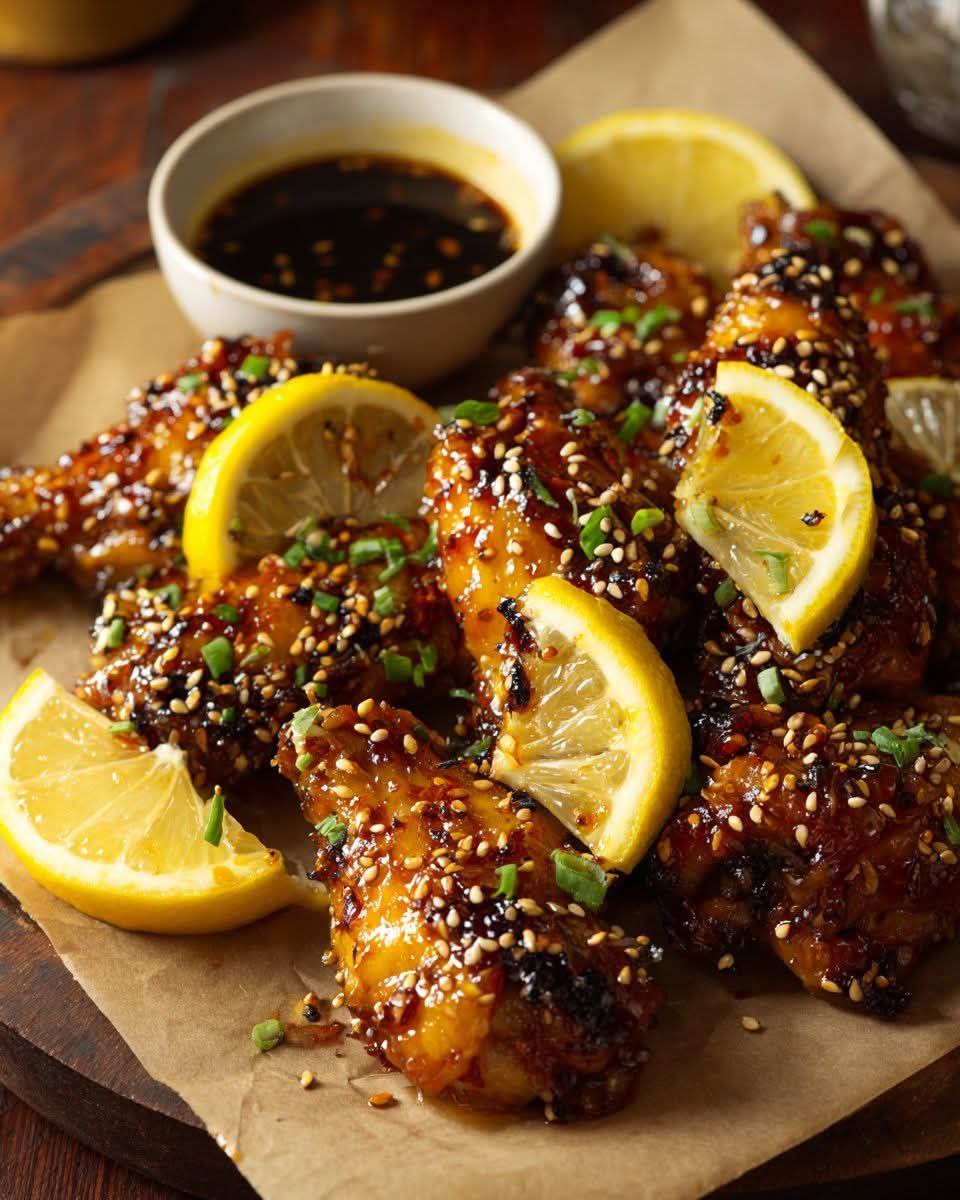
The featured image showcases a mountain of wings, each coated in a translucent, amber-colored glaze that shimmers under the light. Garnished with toasted sesame seeds, fresh scallions, and bright lemon wedges, this dish is a visual and textural feast.
1. Visual Anatomy: What Makes These Wings Irresistible?
The appeal of the lemon sesame wing lies in its multi-layered presentation:
The Glaze Consistency
- Vitreous Coating: Unlike the thicker, opaque sauce seen on the Sweet and Sour Meatballs, this glaze is thin and glass-like. It clings to the wing without pooling at the bottom, suggesting a high sugar-to-liquid ratio that has been reduced to the “hard crack” or “tack” stage.
- Color Gradient: The wings transition from a golden-yellow hue to deep, charred mahogany at the tips. This indicates a two-step cooking process—likely an initial bake or fry followed by a high-heat finish with the sauce to caramelize the sugars.
Textural Contrast
- The “Crunch” Factor: Even under the glaze, the skin appears taught and blistered. This is similar to the texture of the Crispy Potatoes, where moisture has been driven out of the surface to create a rigid, crunchy exterior.
- Toppings: The scatter of white sesame seeds provides a micro-crunch, while the finely sliced green onions add a soft, fresh bite that contrasts with the sticky meat.
2. Technical Mastery: The Science of “Sticky”
Achieving the results shown in the photograph requires precise temperature control and ingredient selection:
The Lemon-Sesame Synergy
The sauce is a delicate emulsion of several key components:
- Fresh Lemon Juice & Zest: Provides the high-frequency acidic notes that prevent the wing from feeling overly fatty.
- Toasted Sesame Oil: Adds a low-frequency, nutty aroma that anchors the dish in umami.
- Soy Sauce & Honey: The soy provides salt and color, while the honey acts as the primary “sticking agent,” creating that finger-licking residue seen in the photo.
Cooking for Crispness
To get wings that look like these, many chefs use cornstarch or baking powder in the dry rub. This raises the pH of the chicken skin, allowing it to brown and crisp more efficiently in the oven—a technique also used for the Roasted Chicken to ensure the skin doesn’t become soggy once the wet sauce is applied.
3. Flavor Profile: A Four-Way Balance
This dish is a classic example of “flavor balancing”:
- Sweet: Honey and reduced lemon sugars.
- Sour: Concentrated lemon juice and zest.
- Salty: Soy sauce and toasted sesame seeds.
- Bitter/Aromatic: Charred chicken skin and fresh scallions.
Unlike the Garlic Butter Shrimp, which focuses on rich fats, these wings are designed to make your mouth water through high acidity.
4. Strategic Menu Pairings
Sticky wings are high-impact and flavor-dense, so they require accompaniments that offer a “reset”:
The Cooling Sides
- Charcuterie Relief: The Pickle and Cheese Jar is an excellent companion. The cold, vinegary snap of the cornichons provides a sharp contrast to the warm, sweet glaze of the wings.
- Fresh Greens: Pair with the mixed greens from the Herb Roasted Chicken Bowl to add a light, vegetal element that cleanses the palate between bites.
Starch and Bulk
- Lemon Rice: The white rice from the Shrimp Bowl can be used as a base to catch the extra wing sauce, turning an appetizer into a full meal.
- Crispy Fries: As seen in the background of the Philly Cheesesteak, salted French fries provide the perfect salty, neutral surface to dip into the lemon-sesame sauce.
5. FAQ: Perfecting the Wing at Home
Why is my sauce too runny? You likely didn’t reduce it enough. A sticky sauce needs to simmer until the water content evaporates, leaving behind the thick sugars. If it still won’t thicken, a tiny “slurry” of cornstarch and water (as used in the Crockpot Beef Tips) will help it coat the wings instantly.
Can I use bottled lemon juice? It is not recommended. Bottled juice lacks the essential oils found in the skin (zest) and has a flat, metallic aftertaste. For the bright, professional look in the photo, always use fresh fruit.
How do I stop the sesame seeds from falling off? Toss the wings in the sauce first, then sprinkle the seeds while the glaze is still hot and “tacky”. This ensures they act as a glue.
6. Photography Analysis: Creating “Crave-ability”
The image uses Warm, Directional Lighting and a Shallow Depth of Field to make the wings pop:
- The Highlight Reel: The light source is positioned to create “specular highlights”—those bright white spots on the glaze. This tells the viewer’s brain that the food is moist and freshly prepared.
- Color Complementarity: The bright yellow of the lemon wedges against the dark, reddish-brown wings creates a high-contrast visual that is naturally stimulating to the eye.
- Rustic Styling: The use of brown parchment paper on a dark wooden board makes the dish feel like a premium pub or “gastropub” offering, elevating it from simple home cooking to a special event meal.