In the vast landscape of Italian-inspired comfort food, few dishes strike the perfect balance between elegance and ease as effectively as Shrimp Spaghetti. While heavier, slow-cooked classics like Crockpot Beef Tips with Mushrooms or the indulgent, cheese-laden Green Chile Scalloped Potatoes define winter comfort, shrimp pasta is the quintessential “any-night” luxury. It occupies a culinary space similar to the Lemon Garlic Shrimp Rice Bowl—focusing on lean protein and bright, aromatic flavors—but trades the earthy base of rice for the silky, sauce-grabbing texture of long-strand pasta.
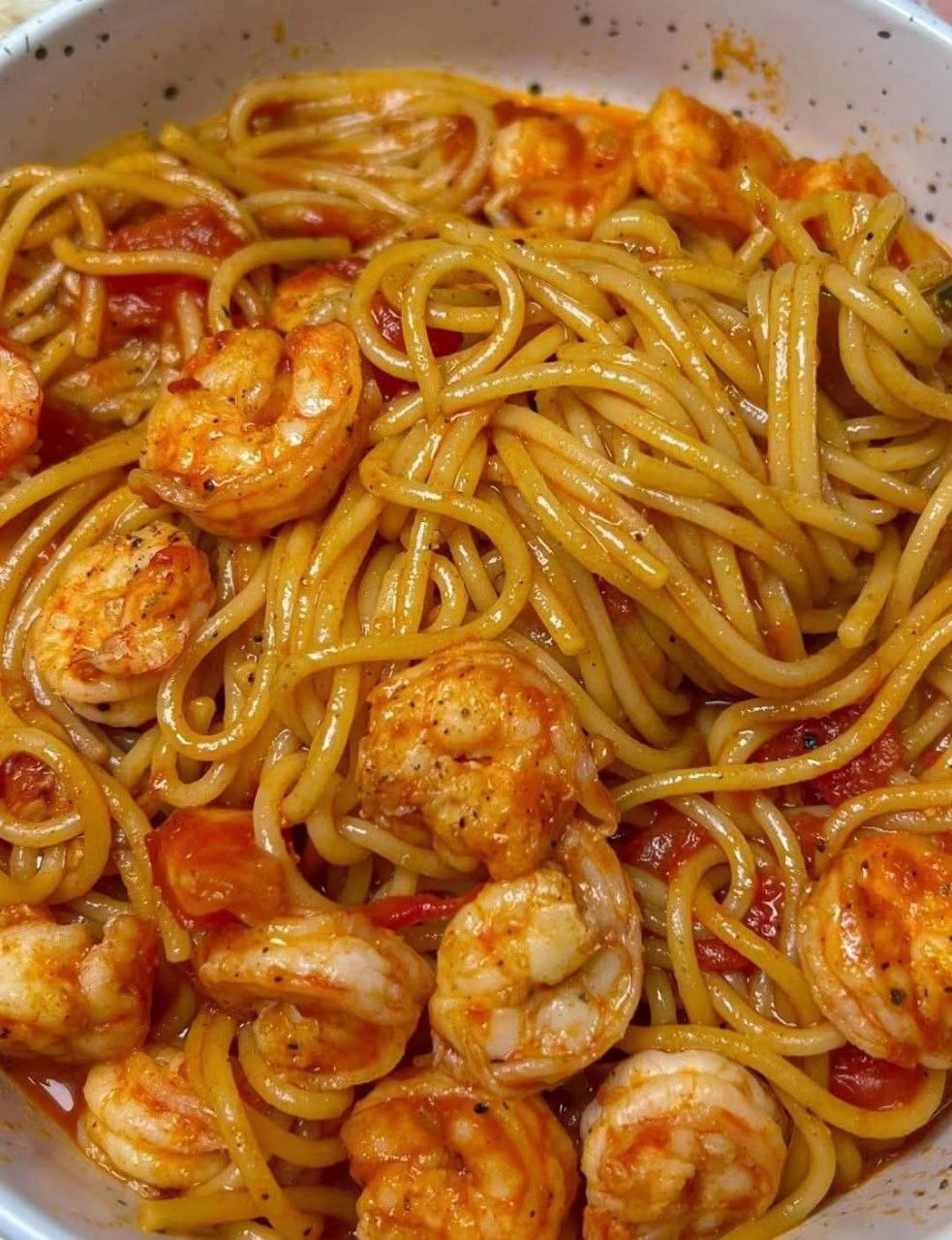
The featured image showcases a vibrant, speckled bowl where perfectly al dente spaghetti is tossed in a glossy, tomato-based sauce, punctuated by plump, pink-curled shrimp that have been seared to maintain their snap.
1. Visual Anatomy: The Markers of a High-Quality Pasta
A great shrimp spaghetti is a multi-sensory experience that begins with the eyes:
The Shrimp “C” Curve
- Doneness Indicators: The shrimp in the photo are curled into a tight “C” shape. This is the visual signal of a perfect cook; shrimp that are overdone often curl into an “O,” becoming rubbery.
- Surface Seasoning: Each shrimp exhibits small, dark flecks of black pepper and dried herbs. This suggests they were seasoned and seared independently of the sauce, ensuring the flavors are layered rather than boiled together.
- Vibrant Color: The contrast of the white-pink flesh against the red sauce indicates freshness and a quick, high-heat cooking method.
The Sauce Emulsion
- Glossy Finish: The sauce is not watery or thin; it has a shimmering, viscous quality that coats every strand of spaghetti. This is achieved by emulsifying pasta water and olive oil with the tomato base.
- Tomato Integration: Small, tender pieces of crushed tomato are visible throughout the pasta, adding a rustic texture that sets it apart from a smooth, jarred marinara.
Pasta Integrity
- Strand Separation: Despite being well-sauced, the spaghetti strands are distinct and “slippery” looking rather than clumped. This is the hallmark of pasta that was finished in the sauce for the last minute of cooking.
2. Technical Execution: Mastering the Seafood Pasta
To recreate the professional look and texture seen in the image, the cook must master the delicate timing required for seafood:
The Two-Stage Cook
- The Shrimp Sear: Much like the preparation for the Lemon Garlic Shrimp, the shrimp should be cooked in a hot pan with olive oil and garlic for only 90 seconds per side. They are then removed from the pan to prevent overcooking while the sauce is developed.
- Developing the “Fond”: The brown bits left in the pan from the shrimp are the “flavor gold”. Adding tomatoes, white wine, or lemon juice to this pan deglazes it, incorporating that seafood essence directly into the sauce.
Starch Water: The Secret Ingredient
The glossy adherence of the sauce is almost always the result of adding a splash of the salty, starchy water the pasta was boiled in. This liquid acts as a bridge between the oil in the sauce and the starch on the pasta, creating a velvety coating.
3. Flavor Profiles: Bright, Briny, and Savory
This dish relies on a “Holy Trinity” of seafood flavoring: Acid, Allium, and Heat.
- The Acid (Tomatoes & Lemon): The tomatoes provide the savory backbone, while a final squeeze of lemon (as seen in the Shrimp Rice Bowl) brightens the entire dish and cuts through the starch of the pasta.
- The Allium (Garlic): Garlic is the primary aromatic here. It is usually sautéed until just golden—never brown—to provide a sweet, pungent base for the shrimp.
- The Heat (Crushed Red Pepper): If you look closely at the sauce, there are tiny red flakes. This subtle spice mimics the “Sweet Heat” of the Spicy Honey-Glazed Wings but in a more refined, Mediterranean context.
4. Strategic Menu Pairings
To round out a meal centered on Shrimp Spaghetti, look for sides that offer “crunch” or a “creamy” reset for the palate:
- The Appetizer: Start with the Salami, Cheese, and Pickle Charcuterie Jar. The saltiness and acidity of the pickles are a perfect pre-game for a tomato-based pasta.
- The Bread Side: A crusty baguette or garlic bread is essential for mopping up the extra sauce at the bottom of the bowl.
- The Fresh Counterpoint: A side of Grilled Asparagus adds a charred, vegetal bitterness that balances the sweetness of the shrimp.
- The Sweet Ending: For dessert, choose something light and fruit-forward, like the No-Bake Strawberry Cheesecake. The berries echo the brightness of the pasta’s tomato base.
5. FAQ: Perfecting the Shrimp Pasta Experience
How do I keep my shrimp from getting rubbery? The most common mistake is cooking them in the boiling sauce for the entire duration. Always sear them first, set them aside, and only return them to the pan during the final 30 seconds of tossing the pasta.
Can I use frozen shrimp? Absolutely, but they must be thawed completely and patted bone-dry. If they are wet, they will steam in the pan rather than sear, losing that beautiful texture seen in the image.
Why isn’t my sauce sticking to the spaghetti? You may have rinsed your pasta. Never rinse pasta after boiling; the surface starch is what allows the sauce to “grip” the noodle.
6. Photography Analysis: Visual Satiety
The photography of the spaghetti uses a Close-Up Macro Style and High-Angle Lighting to create depth:
- Tangled Geometry: The way the spaghetti is swirled creates a sense of movement and volume. By filling the entire frame with the pasta, the photographer emphasizes abundance.
- Reflective Highlights: The light catching the oil on the shrimp and the sauce signals “freshness” and “moisture”. Dull pasta often looks unappetizing or cold.
- Color Saturation: The deep red of the tomato sauce against the pale yellow of the pasta and the pink of the shrimp creates a classic warm-tone color palette that is universally associated with appetizing, savory food.