In the vibrant pantheon of modern nutritious dining—a spectrum that includes everything from the hearty, seared indulgence of Steak & Eggs with Crispy Potatoes to the handheld complexity of Mediterranean Ground Beef Pita Wraps—the Lemon Garlic Shrimp Rice Bowl represents the pinnacle of “bright” culinary engineering. This dish is an exercise in acidity, herbal aromatics, and lean protein, designed to provide a satisfying satiety without the heavy caloric load of traditional comfort foods like Crockpot Beef Tips.
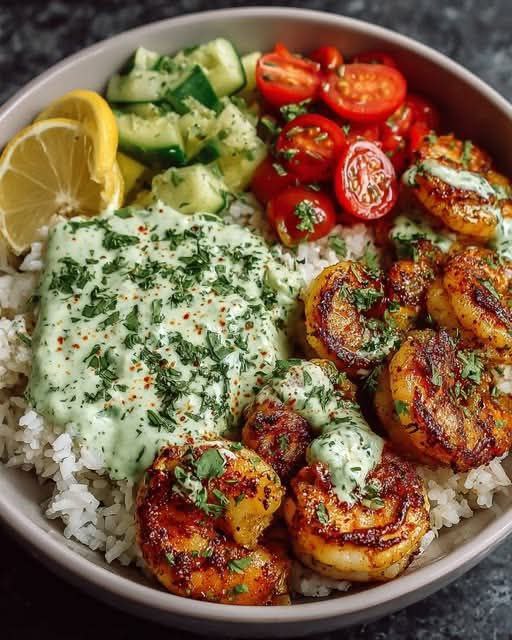
The featured image presents a meticulously assembled bowl that acts as a visual map of flavor. Resting on a bed of fluffy, long-grain white rice is a ring of spice-rubbed shrimp, a mound of fresh cucumber-lemon salad, halved cherry tomatoes, and a generous pool of pale-green avocado cilantro cream.
1. Visual Anatomy: The Geometry of a Power Bowl
The aesthetic success of this bowl relies on the “segmented” assembly method, which allows each ingredient to maintain its structural integrity and flavor profile until the moment of consumption:
The Spice-Rubbed Shrimp
- Charred Precision: Each shrimp exhibits a deep, reddish-brown “crust”. This suggests a high-heat sear in a cast-iron skillet, likely seasoned with a blend of smoked paprika, garlic powder, and dried oregano.
- Uniform Curl: The shrimp are cooked to a perfect “C” shape, which is the visual indicator of tenderness. An “O” shape would indicate overcooking and a rubbery texture.
- Herbal Accents: Flecks of fresh, chopped parsley are scattered over the shrimp, echoing the greens found in the Grilled Chicken & Asparagus Glow Plate.
The Avocado Cilantro Cream
- Velvety Texture: Unlike the chunky blue cheese dip seen with Spicy BBQ Salmon Bites, this sauce is a smooth emulsion. Its pale green color and thick consistency suggest a base of ripe avocado processed with Greek yogurt or lime juice.
- Garnish Detail: The sauce is finished with a dusting of dried chili flakes and a heavy hand of fresh cilantro, promising a flavor profile that is simultaneously cooling and mildly piquant.
The Refreshing Components
- Citrus Integration: Two bright yellow lemon slices are tucked into the side of the bowl. This isn’t just a garnish; the fresh-squeezed juice is essential for activating the flavors of the rice and shrimp.
- Garden Freshness: The cucumber salad and cherry tomatoes provide the “snap”. The cucumbers are roughly chopped to provide a different mouthfeel than the soft rice and tender shrimp.
2. Technical Execution: Mastering the Seafood Sear
To achieve the professional, high-contrast look of the shrimp in the image, the cook must master the relationship between moisture and heat:
The Shrimp Preparation
- The Dry Rub: For the seasoning to stick and create that beautiful crust, the shrimp must be patted completely dry before the spice rub is applied.
- Flash Cooking: Shrimp cook extremely fast—usually within 2 minutes per side. To get the dark sear seen in the photo without drying out the interior, the pan must be screaming hot with a high-smoke-point oil (like avocado oil).
The Rice Foundation
The rice in the photo appears as individual, fluffy grains rather than a sticky mass.
- Rinsing: This texture is achieved by rinsing the dry rice until the water runs clear, removing the surface starch that causes clumping.
- Aromatic Cooking: To mirror the flavors of the bowl, the rice can be cooked in chicken or vegetable broth with a clove of smashed garlic and a strip of lemon zest.
3. Flavor Harmony: A Balanced Coastal Palette
This dish is a study in “Bright Umami”—the combination of savory protein and high-acid finishing notes:
- Acidity as a Cleanser: The lemon and tomato provide a sharp top note that prevents the avocado cream from feeling too heavy on the tongue.
- The Cooling Buffer: The avocado cilantro cream acts as a bridge, mellowing the spices of the shrimp and providing a rich, fatty mouthfeel that satisfies the appetite.
- Neutral Ground: The rice serves as a “blank canvas,” soaking up the juices from the tomatoes and the drippings from the shrimp, ensuring no flavor is wasted.
4. Strategic Menu Pairings
Because the Lemon Garlic Shrimp Bowl is so balanced, it can be paired with either high-protein appetizers or light, fruit-based desserts:
- The Coastal Starter: Begin the meal with the Seared Shrimp and Avocado Bowl appetizer. While similar in ingredients, the appetizer’s focus on mango salsa provides a sweeter prelude to the more savory rice bowl.
- The High-Protein Side: For those needing more calories, a side of Skillet Seared Garlic Butter Chicken Bites adds a different protein texture that shares the garlic-forward DNA of the shrimp.
- The Fresh Side: A small bowl of the Tomato and Feta Salad can double down on the Mediterranean-adjacent flavors of the bowl’s tomato garnish.
- The Cooling Dessert: Finish with the No-Bake Sugar-Free Strawberry Cheesecake. The fruitiness of the strawberries complements the lemon notes of the bowl, while the cream cheese base offers a decadent but light conclusion.
5. FAQ: Perfecting the Rice Bowl Experience
How can I keep the avocado cream from turning brown? The acid in the lime juice is key, but the real secret is keeping air away from the sauce. If making it in advance, press plastic wrap directly onto the surface of the cream to prevent oxidation.
Can I substitute the shrimp? Yes. This bowl structure works perfectly with the Grilled Chicken seen in the Asparagus Glow Plate or even the Salmon Bites. Simply adjust your cooking times to ensure the new protein is just as tender.
My rice is always mushy. What’s the fix? Use a 1:1.5 ratio of rice to liquid and never lift the lid during the steaming process. Once the timer goes off, let the rice sit covered for 10 minutes before fluffing it with a fork to achieve the distinct grains shown in the photo.
6. Photography Analysis: Freshness in Focus
The photography of the bowl uses Soft, Overhead Lighting and Vibrant Saturation to communicate a “healthy lifestyle”:
- Color Blocking: The photographer has arranged the ingredients so that the greens (cucumber/cream), reds (tomatoes), and oranges (shrimp) are in distinct zones. This makes the dish look organized and nutritionally diverse.
- Texture Highlights: The light catches the moisture on the cucumber and the glistening oil on the shrimp, which is a visual shorthand for “just made”.
- The “Hero” Sauce: By placing a large dollop of the avocado cream in the center-left, the image creates a focal point that promises a creamy, decadent experience despite the low-calorie nature of the ingredients.