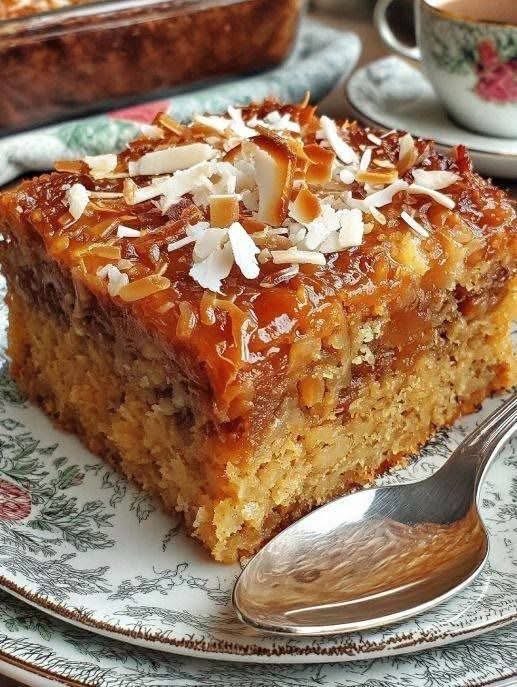
Why You’ll Love This Cake
This cake combines three amazing textures in one bite. The base is soft and airy, the caramel topping adds stickiness and sweetness, and the coconut gives a slight chewiness with a delicate nutty aroma. The flavor balance makes it feel rich but not overpowering. It is also beginner-friendly, meaning you don’t need advanced baking skills to make it successful.
Another reason this recipe stands out is versatility. You can enjoy it warm with coffee, chilled from the fridge, or slightly reheated. It tastes even better the next day because the caramel seeps gently into the cake, making it extra moist.
Ingredients You Will Need
For the Cake Batter
- 2 cups all-purpose flour
- 1 cup granulated sugar
- ½ cup brown sugar
- 1 cup shredded coconut (unsweetened or sweetened)
- 1 cup milk (room temperature)
- ½ cup vegetable oil or melted butter
- 3 large eggs
- 2 teaspoons baking powder
- 1 teaspoon vanilla extract
- ¼ teaspoon salt
For the Caramel Topping
- 1 cup brown sugar
- ½ cup heavy cream
- 4 tablespoons butter
- 1 teaspoon vanilla extract
- ½ cup coconut flakes for garnish
Kitchen Tools Needed
- Mixing bowls
- Whisk or electric mixer
- Measuring cups and spoons
- 9×13 inch baking dish
- Saucepan for caramel
- Spatula
- Cooling rack
Using the proper tools helps ensure even mixing and consistent results. A glass or metal baking dish both work well; just adjust baking time slightly depending on your oven.
Step 1: Preparing Your Ingredients
Before you begin mixing, prepare all ingredients. Bring eggs and milk to room temperature so they blend smoothly with the batter. Preheat your oven to 175°C (350°F). Grease your baking dish lightly with butter or oil and line it with parchment paper if you want easier removal.
Pre-measuring ingredients prevents mistakes and allows a smooth baking process. This step is often overlooked but makes a big difference, especially when working with caramel.
Step 2: Mixing the Dry Ingredients
In a large bowl, combine flour, baking powder, salt, granulated sugar, and brown sugar. Mix well with a whisk to remove any lumps. Properly distributing the baking powder ensures that the cake rises evenly.
Adding coconut at this stage helps spread the texture throughout the cake instead of forming clumps later.
Step 3: Mixing the Wet Ingredients
In another bowl, whisk together eggs, milk, vanilla extract, and oil or melted butter. Continue whisking until smooth and slightly frothy. The air incorporated here contributes to a lighter cake texture.
Slowly pour the wet mixture into the dry ingredients while gently stirring. Do not overmix. Mix only until no dry flour remains. Overmixing can make the cake dense instead of soft.
Step 4: Baking the Cake
Pour the batter into your prepared baking dish and spread it evenly using a spatula. Tap the dish gently on the counter to release trapped air bubbles.
Bake for about 30–35 minutes or until a toothpick inserted in the center comes out clean. Every oven differs, so start checking around the 28-minute mark.
Once baked, remove the cake from the oven and let it cool slightly while you prepare the caramel topping.
Step 5: Making the Caramel Sauce
In a medium saucepan, melt butter over medium heat. Add brown sugar and stir continuously until the sugar dissolves. Slowly pour in the heavy cream while stirring. The mixture will bubble — this is normal.
Reduce heat and simmer for 3–5 minutes until slightly thickened. Add vanilla extract at the end for aroma. The caramel should be smooth and glossy.
Do not overcook the caramel or it may become too thick once cooled.
Step 6: Adding the Topping
While the cake is still warm, pour the caramel sauce evenly over the surface. The warmth allows the caramel to soak into the top layer, adding moisture and flavor.
Sprinkle coconut flakes generously over the caramel. You can toast them lightly in a dry pan beforehand for extra flavor and crunch.
Let the cake rest for at least 20 minutes so the topping sets slightly before slicing.
Texture and Flavor Tips
- Use brown sugar for deeper caramel flavor.
- Don’t skip the salt; it balances sweetness.
- Toasted coconut adds complexity.
- Let the cake rest overnight for maximum moisture.
If you prefer a richer dessert, serve with whipped cream or vanilla ice cream. For a lighter version, reduce the caramel quantity slightly.
Storage and Shelf Life
Store the cake covered at room temperature for up to 2 days or in the refrigerator for up to 5 days. The caramel may firm up when chilled, so warm slices briefly in the microwave before serving.
You can also freeze individual slices wrapped tightly in plastic wrap for up to 2 months. Thaw at room temperature before eating.
Serving Ideas
This caramel coconut cake pairs beautifully with:
- Hot coffee or espresso
- Black tea or chai
- Cold milk
- Vanilla ice cream
- Fresh berries
Serve it as a dessert after dinner or as a sweet treat during gatherings. The glossy caramel topping makes it look impressive with minimal decoration.
Common Mistakes to Avoid
- Overmixing the batter – leads to a tough texture.
- Skipping room-temperature ingredients – may cause uneven mixing.
- Overcooking caramel – results in hard topping.
- Cutting too soon – wait for the caramel to settle.
Paying attention to these small details guarantees a perfect result.
Variations You Can Try
- Add chopped pecans or walnuts for crunch.
- Replace vanilla with coconut extract for stronger flavor.
- Add crushed pineapple for a tropical twist.
- Drizzle chocolate over the top for extra richness.
These variations allow you to adapt the recipe to your taste without changing the base technique.
Final Thoughts
This caramel coconut cake is a simple yet elegant dessert that brings comfort and sweetness to any table. The soft crumb, sticky caramel top, and coconut texture create a combination that feels homemade and special at the same time. Whether you are baking for family, guests, or just yourself, this recipe is reliable, satisfying, and full of flavor.