In the diverse world of contemporary cuisine—spanning from the delicate layers of Honey-Drizzled Pastry-Wrapped Pears to the rustic, jarred convenience of Marinated Cheese and Salami—the Hibachi Steak & Shrimp Fried Rice Plate stands as the definitive example of balance. This dish represents a complete meal that harmonizes intense protein searing, starchy satisfaction, and charred vegetable brightness, all unified by a signature creamy sauce.
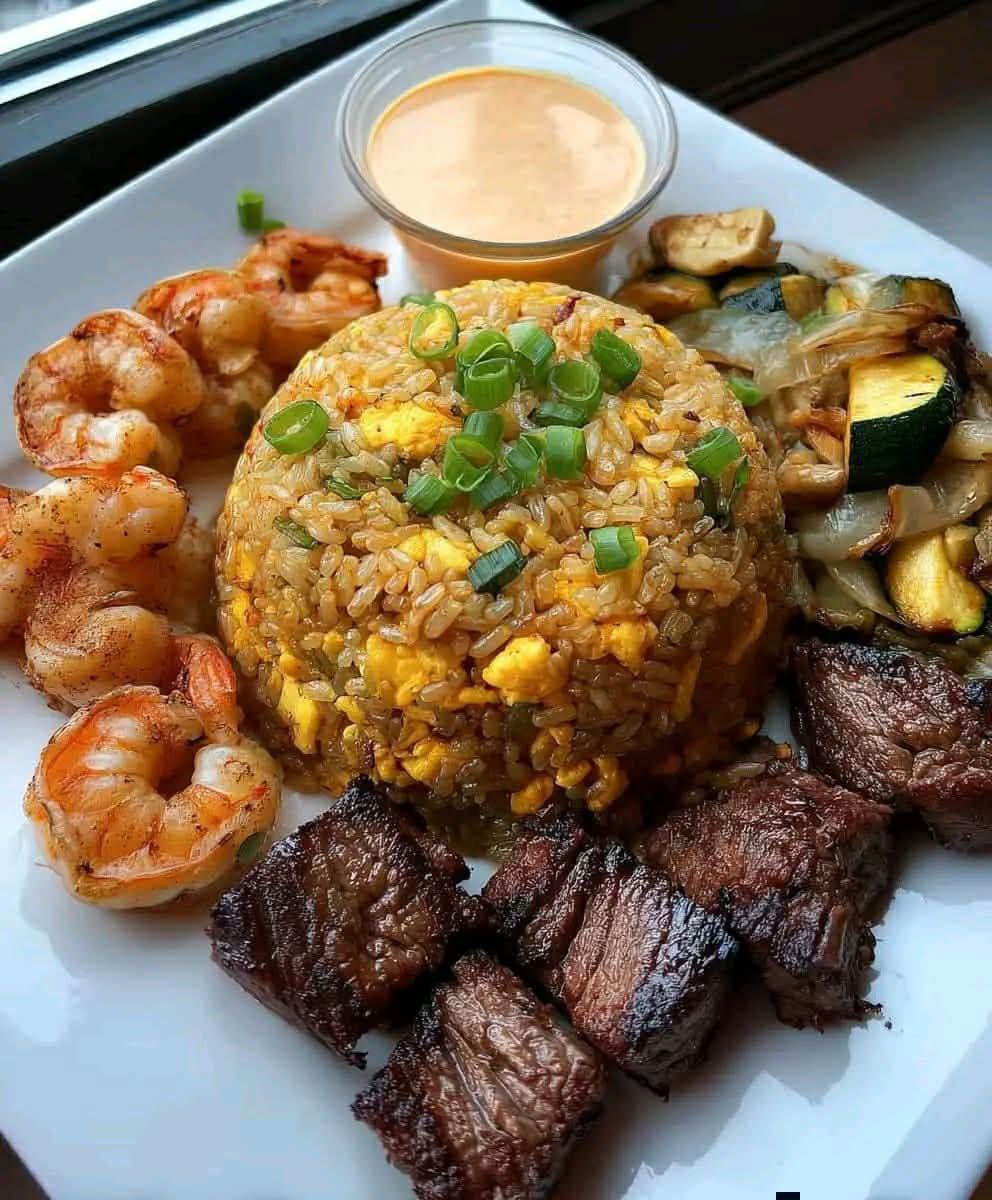
The provided image showcases a meticulously plated square white dish featuring a central dome of egg fried rice, flanked by a row of succulent seared shrimp, a cluster of charred steak cubes, and a medley of stir-fried zucchini and onions. At the top, a small glass ramekin of “Yum Yum” sauce serves as the final, indulgent component.
1. Visual Anatomy: The Four Pillars of the Hibachi Plate
The visual success of this plate is rooted in the “separate but equal” presentation of its components, which allows the diner to appreciate the distinct textures of each element:
The Fried Rice Core
- Architectural Precision: The rice is formed into a perfect dome, likely using a bowl as a mold before inverting it onto the plate.
- Texture and Color: The grains exhibit a deep golden hue, indicating they were tossed in a mixture of soy sauce and toasted sesame oil. Visible bits of scrambled egg are distributed throughout, providing soft yellow highlights.
- Garnish: A crown of freshly sliced green onions provides a pop of bright green and a sharp, fresh contrast to the rich, salty rice.
The Sizzling Proteins
- Hibachi Steak Cubes: Located at the bottom of the plate, the steak is cut into bite-sized rectangles. They feature a dark, caramelized crust—reminiscent of the sear seen on the Garlic Herb Steak Skewers—while the interiors remain presumably tender.
- Seared Shrimp: A vertical line of five large shrimp lines the left side. Their curled shape and orange-pink edges indicate they were cooked quickly at high heat, retaining their moisture. A light dusting of black pepper and perhaps paprika or chili powder is visible on their surface.
The Vegetable Medley
- Zucchini and Onion: On the right side, the vegetables show significant “char,” especially the onions. The zucchini retains its dark green skin, providing a visual bridge to the green onion garnish on the rice.
2. Technical Execution: Mastering the Teppanyaki Style
Achieving the professional results seen in the photo requires mastery of heat and timing:
The Importance of “Day-Old” Rice
For the fried rice to maintain the distinct, non-mushy grains visible in the dome, the rice must be cold and dry before cooking. Freshly cooked rice contains too much moisture and would result in a clumped texture rather than the airy, separate grains seen here.
High-Heat Searing
The steak and shrimp both benefit from the Maillard reaction.
- Protein Prep: Like the Skillet Seared Garlic Butter Chicken Bites, the proteins should be patted dry to ensure the heat goes toward browning rather than evaporating surface moisture.
- Sequential Cooking: Vegetables are typically cooked first to soften, followed by the steak (which requires more time), and finally the shrimp, which cook in under three minutes.
3. Flavor Harmony: The Role of Yum Yum Sauce
The small glass ramekin at the top contains the “bridge” of the entire dish: Yum Yum Sauce. This pale orange sauce typically consists of mayonnaise, tomato paste, sugar, and paprika.
- The Acidic Balance: While the rice, steak, and shrimp are savory and salty, the sauce provides a creamy, slightly sweet, and tangy element. This serves a similar palate-cleansing purpose to the pickles in the Marinated Cheese Appetizer.
- The Texture Softener: The sauce adds moisture to the lean steak cubes and the fried rice grains, creating a more luxurious mouthfeel.
4. Strategic Menu Integration
Because this hibachi plate is a self-contained “meat, starch, and veg” meal, it serves as an excellent centerpiece for a themed dinner:
- The Starter: Pair this with the Shrimp and Avocado Bowl as a shared appetizer to lean into the seafood theme. The fresh mango and avocado would provide a light, cold contrast to the hot, seared hibachi elements.
- The Fusion Feast: Serve the Middle Eastern-Style Spiced Chicken Kofta alongside for a “Global Skewers and Sizzle” night. The garlic-herb profiles of both dishes would complement each other well.
- The Indulgent Finish: After a savory meal of soy, ginger, and garlic, a rich dessert like the Banana Pudding Cheesecake Bars provides a creamy, fruit-forward conclusion.
5. FAQ: Perfecting the Hibachi Experience
How do I get my rice into that perfect dome shape? Pack your finished fried rice tightly into a small, greased cereal bowl. Place your plate upside down over the bowl, then quickly flip both over. Lift the bowl slowly to reveal the mold.
My shrimp are rubbery. What happened? Shrimp cook very quickly. To keep them as tender as those in the photo, remove them from the heat the moment they turn opaque and form a “C” shape. If they curl into a tight “O,” they are overcooked.
What kind of steak is best for hibachi? Looking at the marbling and grain in the image, a Sirloin or New York Strip is the standard choice. These cuts are sturdy enough to be cubed and seared without falling apart, but tender enough to be eaten without a steak knife.
6. Photography Analysis: Symmetry and Light
The photograph employs a Top-Down Balanced Composition to showcase the meal’s abundance:
- The Rule of Thirds: The rice dome acts as the central axis, with the proteins and vegetables occupying the surrounding thirds of the plate.
- Gloss and Glisten: The lighting highlights the moisture on the shrimp and the sauce in the ramekin, communicating a “fresh off the grill” sensation.
- Color Saturation: The deep browns of the steak, the golden rice, and the bright green onions create a high-contrast palette that signals a well-seasoned meal.