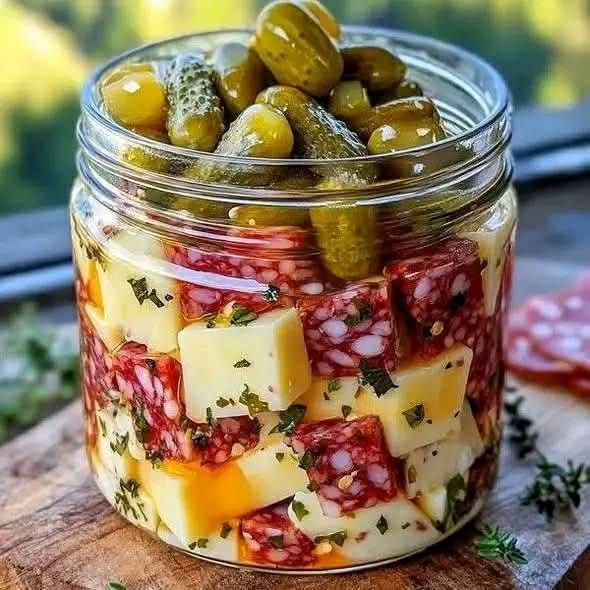
In the contemporary culinary landscape—which often balances technical hot-seared dishes like Garlic Herb Steak Skewers with indulgent baked goods like Reese’s Peanut Butter Chocolate Chip Cookie Bites—the Easy Marinated Cheese Appetizer represents the ultimate in “make-ahead” efficiency and flavor concentration. This dish focuses on the cold-infusion of fats and aromatics, resulting in a portable, high-impact snack that is as visually striking as it is palate-cleansing.
The appetizer is presented in a clear glass mason jar, showcasing a vibrant, layered mosaic of cubical cheese and salami, topped with whole cornichons (mini pickles) and suspended in a herb-flecked oil marinade.
1. Visual Anatomy: The Architecture of the Jar
The visual appeal of this marinated appetizer is rooted in its geometric symmetry and the transparency of its container:
The Mosaic Core
- Uniform Cubing: The cheese and salami are cut into precise, uniform cubes of approximately 0.5 to 0.75 inches. This uniformity ensures that every forkful provides a balanced ratio of salt, fat, and protein.
- High-Contrast Layering: The creamy, pale ivory of the cheese cubes provides a stark backdrop for the deep ruby-red and white-marbled textures of the salami.
- Aromatic Suspension: Fine flecks of dried and fresh herbs (likely parsley, oregano, and red pepper flakes) are visible throughout the jar, clinging to the surfaces of the cubes.
The Crown of Pickles
- Textural Cap: The top third of the jar is densely packed with whole, bumpy-skinned cornichons. Their muted olive-green color provides a secondary visual anchor and a promise of acidity to cut through the richness below.
- The Oil Level: The marinade—a clear, golden liquid—reaches almost to the brim of the jar, ensuring that all ingredients are fully submerged for maximum preservation and infusion.
2. Technical Execution: The Science of Marinating
While this dish requires no heat, its success depends on the chemical interaction between the oil and the solid ingredients over time:
Fat-to-Fat Infusion
Cheese and salami are both high-fat ingredients. When placed in an oil marinade, the oil acts as a solvent for the essential oils in the herbs and the capsaicin in the red pepper flakes.
- Osmotic Balance: Over a period of 4 to 24 hours, the flavors of the salami and herbs migrate into the cheese, which acts like a sponge.
- Ingredient Selection: To replicate the results in the photo, a semi-hard cheese like white cheddar, Monterey Jack, or Havarti is ideal. These are soft enough to absorb flavor but firm enough not to crumble in the oil.
The Marinade Base
The marinade visible in the jar is a thin, translucent emulsion.
- Base Oil: A high-quality extra virgin olive oil or a neutral avocado oil is likely used.
- Acidic Component: To prevent the oil from feeling too “heavy,” a splash of white wine vinegar or the brine from the cornichons is typically whisked into the oil before pouring.
3. Flavor Harmony: Salt, Fat, and Acid
This appetizer follows the fundamental “Golden Trio” of culinary balance:
- Salt (The Salami): The cured meat provides the primary savory backbone of the dish.
- Fat (The Cheese & Oil): The cheese provides a creamy, mellow base that coats the tongue, while the oil carries the aromatic herbs.
- Acid (The Pickles): The cornichons provide a sharp, vinegary “snap” that cleanses the palate between bites of the rich cheese and meat. This is a similar balancing act to the tangy yogurt sauce used on the Middle Eastern-Style Chicken Kofta.
4. Strategic Menu Pairings
The Marinated Cheese Appetizer is a versatile “starter” that fits into many different dining scenarios:
- The Picnic Platter: Serve this jar alongside the Broccoli and Red Pepper Crescent Ring. The flaky, warm pastry of the crescent ring is the perfect vessel for stacking a cube of marinated cheese and a slice of pickle.
- The Steakhouse Starter: Use this as a light appetizer before a heavy main like the Garlic Herb Steak Skewers. The acidity of the pickles prepares the stomach for the protein-dense meal to follow.
- The Contrast Plate: Serve it on a charcuterie board with the Tomato and Feta Salad. The fresh, juicy tomatoes provide a high-moisture contrast to the oil-cured textures of the jarred appetizer.
5. FAQ: Perfecting the Marinated Jar
How long can I keep this in the fridge? Due to the preservative qualities of oil and vinegar, this appetizer stays fresh for up to 5–7 days in an airtight jar. However, for the best texture, consume it within 48 hours, as the cheese can eventually become overly soft.
My oil turned cloudy/solid in the fridge. Is it ruined? No! High-quality olive oil contains natural waxes that solidify at cold temperatures. Simply take the jar out of the fridge 20–30 minutes before serving; the oil will return to its clear, golden state as it reaches room temperature.
Can I use different meats? Absolutely. Pepperoni, cubed ham, or even smoked turkey can work. The key is to use a “dry” cured meat like the salami shown in the photo, as it won’t release excess water into the marinade.
6. Photography Analysis: Transparency and Depth
The photographer utilizes a Clear-Vessel Macro Perspective to emphasize the quality of the ingredients:
- Lateral View: By shooting through the side of the jar, the photographer reveals the internal layers. This creates a sense of “culinary discovery,” showing the viewer exactly what they will be eating from top to bottom.
- Refraction and Specular Highlights: The light reflecting off the glass and the oil creates bright “glints,” which suggest freshness and a luxurious mouthfeel.
- Natural Backdrop: The jar is placed on a rustic wooden board with a blurred, green outdoor background. This lifestyle-focused framing suggests that the dish is ideal for outdoor gatherings, tailgates, or garden parties.