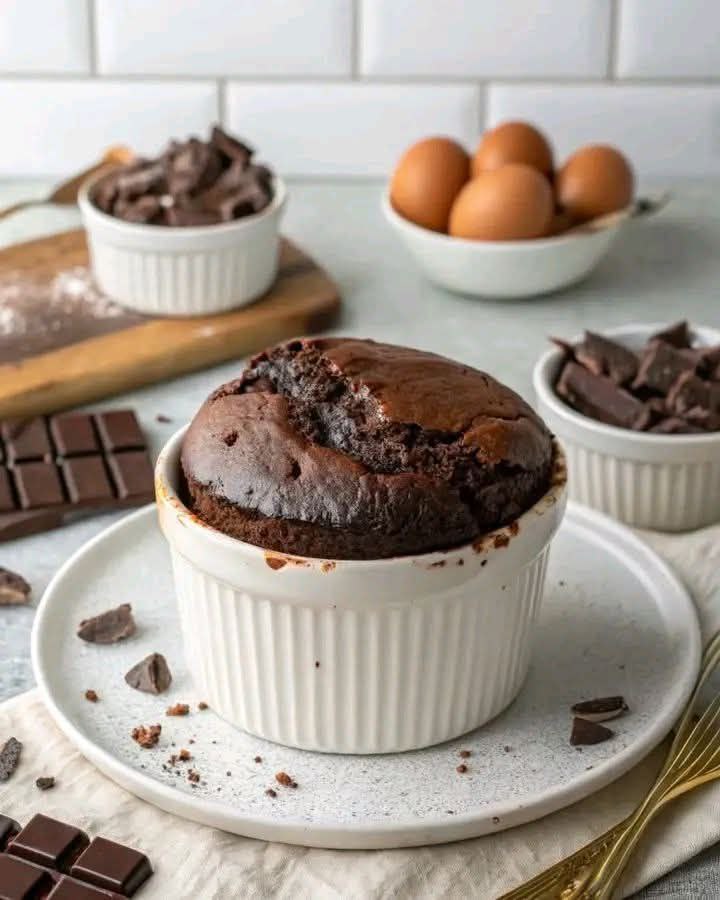
In the vast landscape of culinary indulgence—ranging from the dense, multi-textured decadence of a Brownie Caramel Cheesecake to the airy, golden spirals of Brie-Stuffed Pears in Puff Pastry—the Homemade Chocolate Soufflé represents the ultimate triumph of technique over simple ingredients. It is a dish that lives and breathes, a delicate balance of air and cocoa that rises majestically above the rim of its ceramic home.
Presented in a classic white fluted ramekin, the soufflé stands as a centerpiece of individual luxury, its cracked, deep-cocoa surface hinting at the molten, cloud-like interior waiting beneath the crust.
1. Visual Anatomy: The Architecture of the Rise
The visual success of a soufflé is judged by its “lift”—the vertical height it achieves beyond the vessel:
The Proud Exterior
- The “Hat”: The top of the soufflé features a beautiful, rustic crackling. This outer layer is slightly firmer than the center, providing a delicate “snap” before giving way to the foam.
- Uniform Color: The surface is a rich, dark mahogany, indicating a high percentage of dark cocoa or bittersweet chocolate used in the base.
- The Ramekin Contrast: The clean, vertical lines of the white porcelain ramekin serve to emphasize the organic, rising shape of the chocolate. Traces of the batter can be seen on the rim, a sign of the powerful expansion that occurred during the bake.
The Mise en Place Background
The photography captures the essential building blocks of the dish scattered in the background:
- Whole Eggs: A bowl of brown eggs represents the structural foundation of the dish. The whites provide the air, while the yolks provide the richness.
- Raw Chocolate: Chunks of dark chocolate are visible in ramekins and on the board, signifying that this is a “real chocolate” soufflé rather than one made solely with cocoa powder.
2. Technical Execution: The Science of Air
A soufflé is not merely baked; it is engineered. To achieve the result seen in the image, several critical technical steps must be mastered:
- The Meringue Base: The height of the dish depends entirely on the whipping of the egg whites. They must be whipped to “stiff peaks”—where the foam holds its shape but remains glossy—before being folded into the heavy chocolate base.
- The Gentle Fold: To keep the air trapped in the batter, the whites are “folded” in with a spatula rather than stirred. Over-mixing would lead to a flat, dense cake rather than a rising soufflé.
- The Ramekin Prep: To ensure a straight vertical rise, the inside of the ramekin is brushed with butter and coated in sugar. This creates a “ladder” for the batter to climb as the heat expands the air bubbles.
- The “No-Peek” Rule: Opening the oven door during the bake causes a sudden drop in temperature that can collapse the delicate structure. The result in the photo shows a soufflé that has been allowed to reach its maximum height undisturbed.
3. Flavor Profile: Intense Cocoa and Cream
The soufflé offers a sensory experience that is both light and incredibly intense:
- Bittersweet Top: The top crust often carries a concentrated chocolate flavor, enhanced by the slight caramelization of the sugar.
- Molten Center: While the exterior looks solid, the heart of a perfect soufflé remains slightly undercooked and saucy, providing a built-in “lava” effect.
- Aromatic Depth: High-quality vanilla and a pinch of salt are standard additions to help the chocolate flavors pop against the richness of the egg yolks.
4. Strategic Menu Pairings
Because the chocolate soufflé is such a dominant, rich dessert, it benefits from pairings that offer acidity or temperature contrast:
- The Refreshing Counterpoint: Pair this with the Strawberry Banana Trifle. The cool cream and tart berries provide a refreshing break from the warm, intense chocolate of the soufflé.
- The Textural Contrast: Serve with a few Brownie Cookies on the side. While both are chocolate, the cookies offer a chewy, dense texture that contrasts with the soufflé’s airy lightness.
- The Savory Lead-In: For a complete dinner party, serve the soufflé after a main course like the Cajun Chicken Pasta. The spice of the Cajun seasoning prepares the palate for the deep, soothing sweetness of the chocolate.
5. FAQ: Mastering the Soufflé
Why did my soufflé collapse as soon as I took it out? This is actually normal! A soufflé stays risen because of the hot air trapped inside the foam. As the air cools, it occupies less space, causing the dish to sink. This is why soufflés must be served immediately from the oven to the guest.
Can I make the batter ahead of time? You can prepare the chocolate base (the yolks and melted chocolate) ahead of time. However, you must whip and fold the egg whites just before baking, or the air will escape, and it won’t rise.
What kind of chocolate is best? The visual depth of the soufflé suggests a chocolate with at least 60-70% cocoa solids. Milk chocolate lacks the structural intensity and flavor punch needed to stand up to the eggs.
6. Photography Analysis: Capturing the Moment
The photography of the soufflé uses Soft-Focus Macro Lighting to emphasize its fleeting nature:
- Shallow Depth of Field: The soufflé in the foreground is perfectly sharp, highlighting the porous texture of the crust, while the ingredients in the back are blurred. This guides the eye to the “hero” of the shot.
- Natural Color Palette: The use of white tiling, white plates, and brown eggs creates a clean, farmhouse aesthetic that makes the dark chocolate look even more vibrant.
- The “Crumb” Detail: Scattered chocolate bits on the plate add a touch of “controlled chaos,” making the dish feel approachable and freshly made.