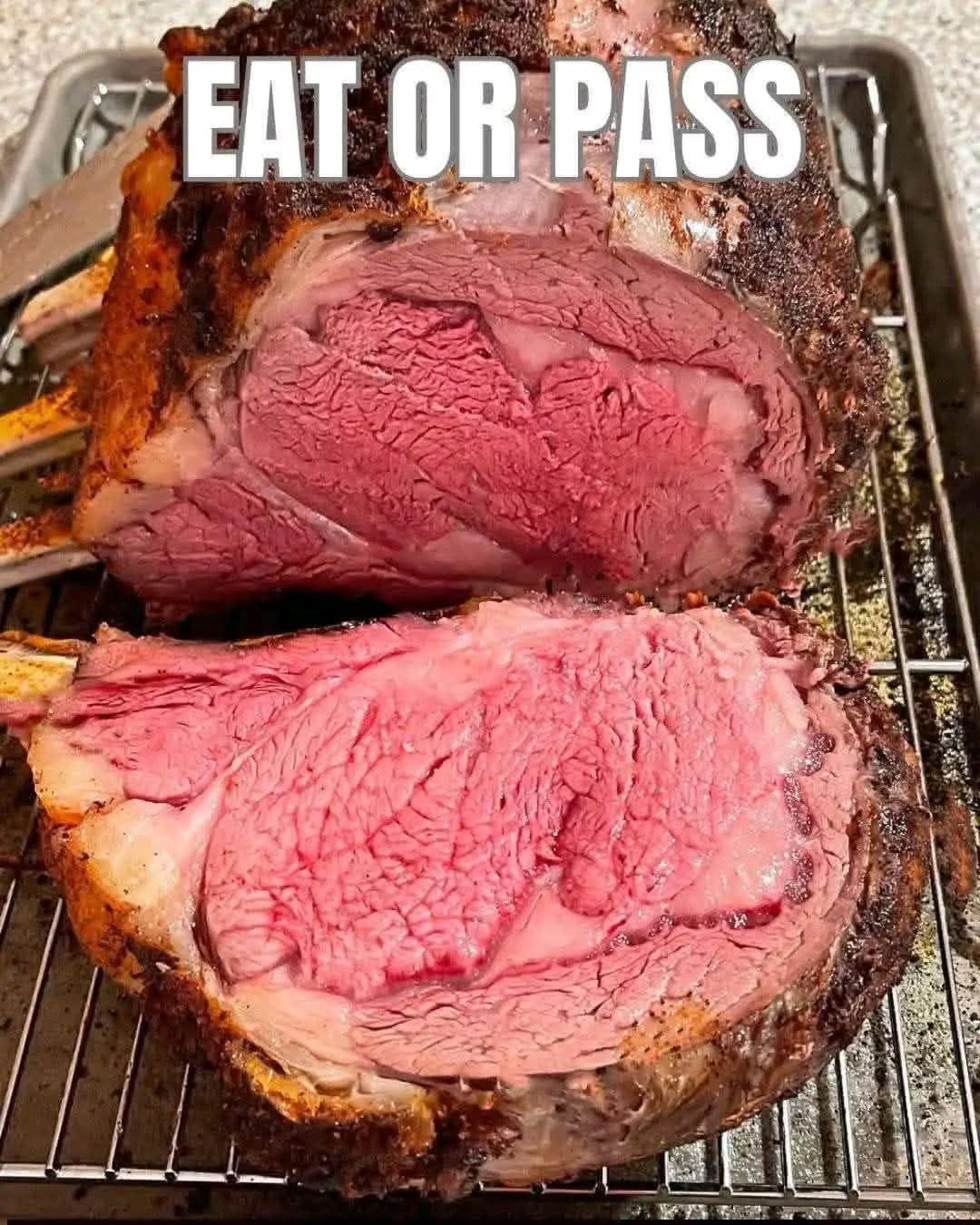
Ingredients
- 2.5–3 kg (5–7 lb) prime rib or standing rib roast
- 3 tablespoons olive oil or melted butter
- 6 garlic cloves, minced
- 2 tablespoons coarse salt
- 1 tablespoon black pepper
- 1 tablespoon fresh rosemary, chopped
- 1 tablespoon fresh thyme
- 1 teaspoon paprika
- 1 teaspoon onion powder
- Optional: Dijon mustard (for extra flavor)
## Choosing the Right Cut
The key to a perfect roast beef starts at the butcher.
Look for:
- Good marbling (thin white fat lines inside meat)
- Bright red color
- Bone-in for extra flavor (optional but recommended)
- Thick, even shape
Prime rib is ideal because the fat melts during cooking and keeps everything incredibly juicy. Ribeye roast, sirloin roast, or top round also work well if prime rib isn’t available.
More marbling = more flavor + tenderness.
## Preparing the Meat
Remove the roast from the fridge 1–2 hours before cooking. Cold meat cooks unevenly, so bringing it to room temperature ensures perfect doneness inside.
Pat it dry with paper towels. Moisture prevents crust formation, so dryness is important.
If there’s too much thick fat on top, trim slightly but leave a thin layer. That fat protects the meat while roasting.
## Making the Flavorful Garlic Herb Rub
In a small bowl mix:
- olive oil or butter
- garlic
- salt
- pepper
- rosemary
- thyme
- paprika
- onion powder
This mixture forms a paste that sticks to the meat and creates a powerful flavor crust.
Massage the rub all over the roast. Don’t be shy — coat every side.
Optional: spread a thin layer of Dijon mustard first. It adds depth and helps seasoning stick better.
Let the roast rest 30 minutes to absorb flavors.
## Setting Up the Oven
Preheat oven to 120°C (250°F).
Low and slow cooking is the secret to:
- even doneness
- juicy interior
- no gray overcooked edges
- tender texture
Place the roast on a rack inside a roasting pan. The rack allows hot air to circulate evenly.
If you don’t have a rack, use chopped onions or carrots under the meat.
## Slow Roasting Technique
Place roast in the oven uncovered.
Cook slowly until internal temperature reaches:
- 48–50°C (118–122°F) for rare
- 52–54°C (125–130°F) for medium-rare
- 57–60°C (135–140°F) for medium
For a 3 kg roast, this usually takes 2.5–3 hours.
Use a meat thermometer — it’s the most important tool for perfect results.
Avoid guessing. Temperature = success.
## Resting the Meat
Once target temperature is reached, remove roast from oven.
Tent loosely with foil and let rest for 30–40 minutes.
Resting allows:
- juices to redistribute
- meat to stay moist
- easier slicing
If you cut too early, all juices run out and meat becomes dry.
Patience makes the difference.
## Creating the Crispy Crust (Final Sear)
Now comes the magic step.
Increase oven to 240°C (475°F).
Return roast for 10–15 minutes until crust turns deep brown and crispy.
This high heat creates:
- caramelization
- crunchy exterior
- rich roasted flavor
Watch carefully so it doesn’t burn.
You’ll smell incredible aromas — that’s when you know it’s ready.
## Slicing Like a Pro
Always slice against the grain.
This shortens muscle fibers and makes every bite tender.
Use a sharp carving knife and cut thick or thin depending on preference.
You’ll notice:
- pink center
- juicy texture
- beautiful roast ring
- crispy seasoned edges
Exactly like the image you shared.
## Serving Suggestions
This roast beef pairs perfectly with:
- roasted potatoes
- garlic mashed potatoes
- butter vegetables
- Yorkshire pudding
- fresh salad
- gravy or au jus
- horseradish sauce
For sauces, try:
- beef jus
- chimichurri
- garlic butter
- creamy mushroom sauce
Each adds extra flavor without overpowering the meat.
## Pro Tips for Perfect Results
Use these tricks for restaurant-level roast beef:
✔ Always use a thermometer
✔ Bring meat to room temperature
✔ Cook low and slow
✔ Rest properly
✔ Sear at the end, not beginning
✔ Don’t over-season with salt
Optional extra:
Baste with butter during last 10 minutes for extra richness.
## Storage and Reheating
If you have leftovers:
Store:
- airtight container
- fridge up to 4 days
Reheat gently:
- low oven 120°C
- covered with foil
- add splash of broth to keep moist
Avoid microwave — it dries beef.
Cold slices are amazing for sandwiches too.
## Why This Method Works
This reverse-sear style cooking is popular with chefs because:
Low heat → even cooking
High heat → crust formation
Traditional high heat cooking often burns outside before inside is ready.
This technique solves that problem perfectly.
Result:
- juicy
- tender
- evenly pink
- deeply flavorful
Every single time.
## Final Thoughts
There’s something special about slicing into a big roast and seeing that perfect pink center. It feels luxurious but tastes comforting. It’s the kind of dish that turns an ordinary dinner into a celebration.