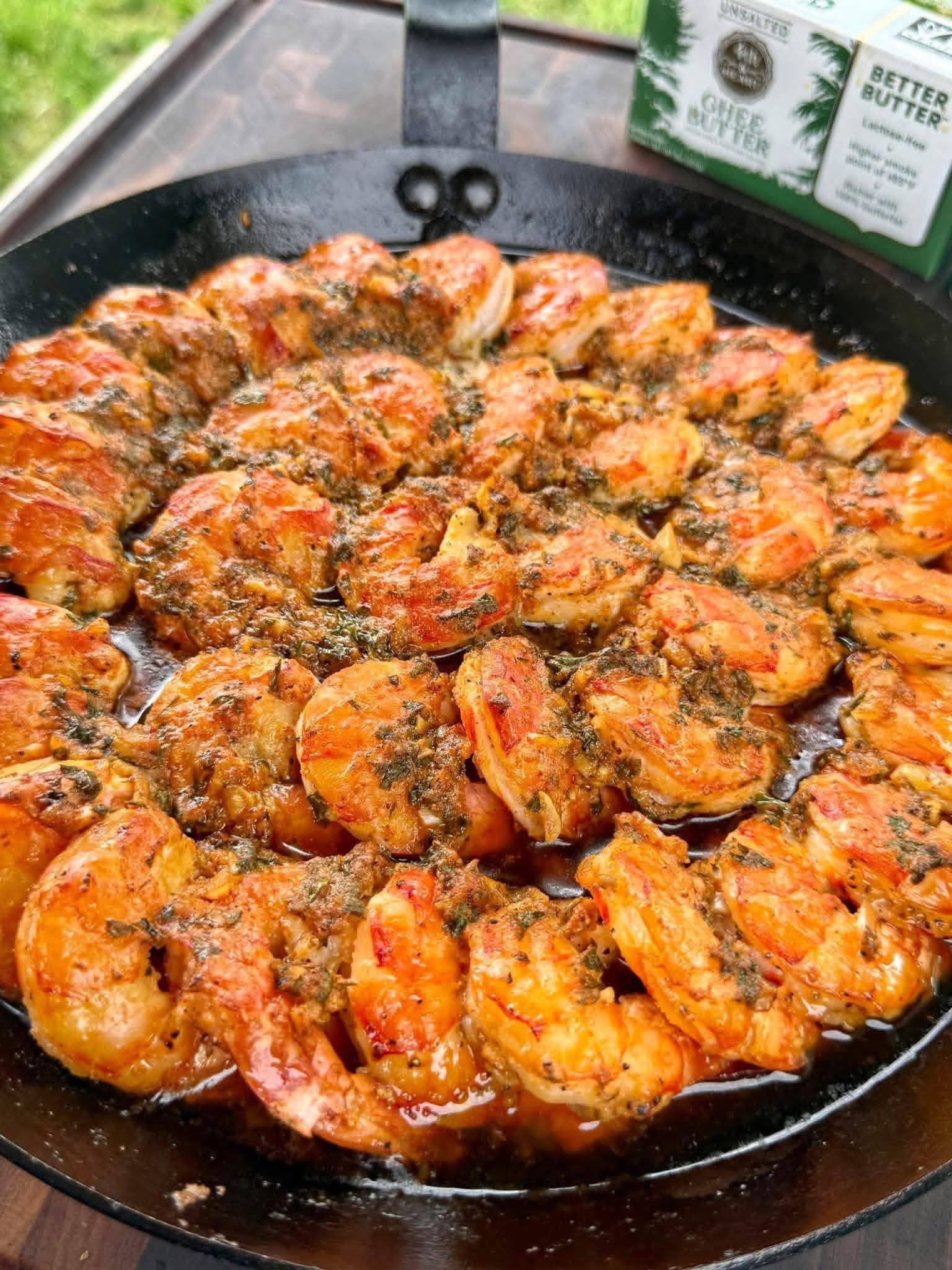
Why This Shrimp Recipe Is a Winner
This recipe works so well because it focuses on timing and heat control. Shrimp cook extremely fast, and when treated gently, they stay plump and juicy instead of rubbery.
Key strengths of this recipe:
- High heat for quick sear
- Butter + oil for flavor and stability
- Garlic added at the right moment
- Herbs for depth without overpowering
- A saucy finish that coats every shrimp
The result is shrimp that are:
- Tender and juicy
- Well-seasoned inside and out
- Glossy with butter sauce
- Never dry or overcooked
Flavor & Texture Profile
- Texture: Firm yet tender, never chewy
- Flavor: Savory, garlicky, lightly herbed
- Sauce: Rich, buttery, slightly spicy (optional)
- Finish: Juicy with a light sheen of oil and butter
This dish is bold but balanced—simple ingredients, maximum impact.
Ingredients List
Main Ingredients
- 900 g (2 lb) large shrimp, peeled and deveined (tails on or off)
- 3 tablespoons olive oil
- 4 tablespoons unsalted butter
Aromatics & Seasoning
- 6 cloves garlic, finely minced
- 1½ teaspoons salt
- 1 teaspoon black pepper
- 1 teaspoon paprika (smoked or sweet)
- ½ teaspoon chili flakes (optional)
Herbs & Finish
- 1½ teaspoons dried parsley or oregano
- Juice of ½ lemon (optional but recommended)
- Fresh parsley for garnish (optional)
Choosing the Right Shrimp
For best results:
- Use large or extra-large shrimp
- Fresh or frozen both work (thaw fully if frozen)
- Avoid pre-cooked shrimp
Large shrimp hold moisture better and don’t overcook as easily as small ones.
Step 1: Preparing the Shrimp Properly
If using frozen shrimp, thaw them completely and pat them very dry with paper towels. Excess moisture prevents proper searing.
Season the shrimp in a bowl with:
- Salt
- Black pepper
- Paprika
- Chili flakes (if using)
Toss gently until evenly coated.
Let the shrimp rest for 5–10 minutes at room temperature.
Step 2: Heating the Skillet
Use a wide, heavy skillet (cast iron or stainless steel works best).
Place it over medium-high heat and add the olive oil.
Heat until the oil shimmers but does not smoke. This ensures a fast sear without burning the butter later.
Step 3: Searing the Shrimp
Add the shrimp to the pan in a single layer. Do not overcrowd—cook in batches if necessary.
Let them cook undisturbed for 1½–2 minutes on the first side until:
- The bottom is lightly golden
- The shrimp begin turning pink around the edges
Flip and cook the second side for 1–1½ minutes.
At this stage, the shrimp should be about 80–90% cooked.
Step 4: Adding Butter and Garlic (Critical Timing)
Reduce heat to medium.
Add the butter to the pan. Once melted and foaming, add the minced garlic and dried herbs.
Stir constantly for 20–30 seconds only. Garlic burns quickly—this step is about releasing aroma, not browning.
Step 5: Coating and Finishing the Shrimp
Return all shrimp to the pan if cooked in batches.
Toss gently so every shrimp is coated in the garlic butter sauce.
Cook for another 30–60 seconds, just until the shrimp are fully opaque and curled into a loose “C” shape.
Squeeze in lemon juice if using and give one final toss.
Remove from heat immediately.
How to Know Shrimp Are Perfectly Cooked
Perfect shrimp are:
- Opaque, not translucent
- Firm but springy
- Curled gently, not tightly
Overcooked shrimp curl into a tight “O” and become rubbery—avoid this by removing them early.
Serving Suggestions
This garlic butter shrimp is extremely versatile.
Serve it with:
- Crusty bread or baguette
- Steamed rice or buttered noodles
- Mashed potatoes
- Garlic bread
- Simple green salad
It also works beautifully as:
- A topping for pasta
- A filling for tacos
- A seafood appetizer
Always spoon the sauce over when serving.
Flavor Variations
Lemon Garlic Shrimp
Add extra lemon zest and juice for brightness.
Spicy Shrimp
Increase chili flakes or add cayenne pepper.
Herb Butter Shrimp
Use fresh thyme, rosemary, or basil.
Honey Garlic Shrimp
Add 1 teaspoon honey to the butter for sweet-savory balance.
Creamy Version
Finish with a splash of cream and simmer 1 minute.
Tips for Juicy Shrimp Every Time
- Dry shrimp thoroughly before cooking
- Use high heat initially
- Do not overcrowd the pan
- Add garlic after butter, not before
- Remove shrimp as soon as they’re done
These details make all the difference.
Storage and Reheating
Store leftovers in an airtight container in the refrigerator for up to 2 days.
Reheat gently:
- In a pan over low heat with a splash of butter
- Avoid microwaving if possible
Shrimp overcook easily when reheated, so warm just until heated through.
Common Mistakes to Avoid
- Cooking shrimp too long
- Adding garlic too early
- Using low heat from the start
- Not seasoning enough
- Skipping the drying step
Avoiding these guarantees tender, flavorful shrimp.
Nutritional Notes
Shrimp are:
- High in protein
- Low in calories
- Rich in minerals like selenium
Butter adds richness, so serve with lighter sides for balance.
Why This Recipe Is Reliable
This recipe respects shrimp’s short cooking time and uses fat and aromatics strategically. The butter sauce forms naturally in the pan without needing flour or cream, keeping flavors clean and bold.
It’s fast, forgiving, and deeply satisfying.
Final Thoughts
This garlic butter skillet shrimp is everything a great shrimp dish should be: juicy, flavorful, fast, and unforgettable. With minimal ingredients and precise timing, you get a dish that tastes indulgent without being complicated