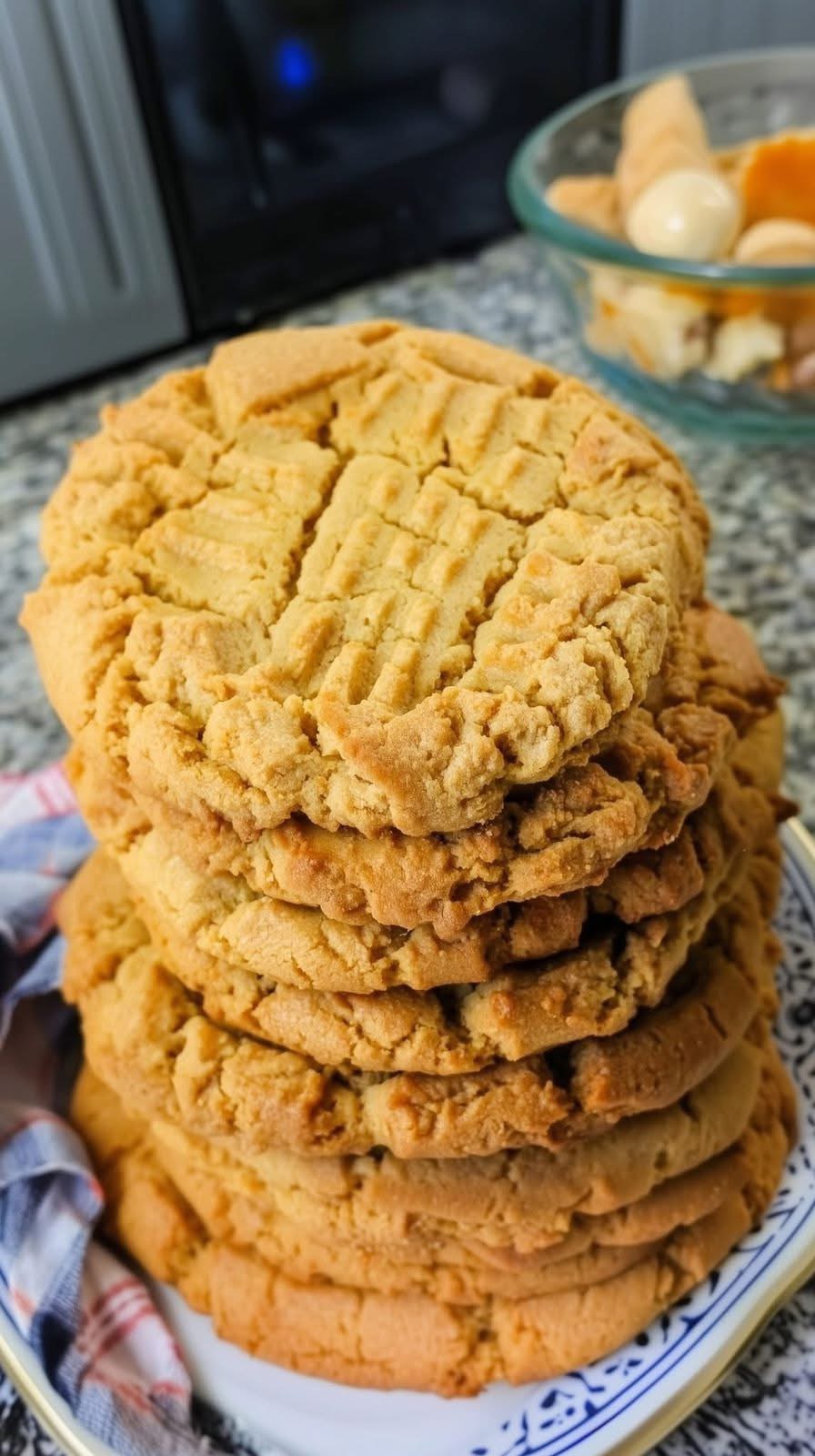
What Makes These Peanut Butter Cookies Special
These cookies stand out because they are:
- Thick and soft in the center
- Lightly crisp around the edges
- Richly flavored with peanut butter
- Not dry or overly sweet
- Perfectly shaped with the classic crisscross top
The texture comes from the right ratio of fat to flour and careful baking time. They are sturdy enough to stack, yet tender enough to crumble slightly when bitten.
Choosing the Right Peanut Butter
This recipe works best with regular creamy peanut butter (like Skippy or Jif style).
Avoid:
- Natural peanut butter (too oily, can cause spreading)
- Extra chunky varieties (affects texture)
Creamy peanut butter ensures:
- Smooth dough
- Even baking
- Balanced fat content
Ingredients List
Dry Ingredients
- 3 cups all-purpose flour
- 1 teaspoon baking soda
- ½ teaspoon baking powder
- ½ teaspoon salt
Wet Ingredients
- 1 cup unsalted butter, softened
- 1 cup creamy peanut butter
- 1 cup granulated sugar
- 1 cup brown sugar (packed)
- 2 large eggs (room temperature)
- 2 teaspoons vanilla extract
Step 1: Preparing the Dough Base
In a medium bowl, whisk together the flour, baking soda, baking powder, and salt. Set aside.
In a large mixing bowl, add the softened butter and peanut butter. Beat on medium speed until completely smooth and creamy, about 2–3 minutes. This step is crucial—proper creaming creates air pockets that help the cookies bake evenly.
Add the granulated sugar and brown sugar. Continue beating until the mixture becomes light, fluffy, and pale in color. Scrape down the sides of the bowl as needed.
Step 2: Adding Eggs and Vanilla
Add the eggs one at a time, beating well after each addition. This helps the dough emulsify properly and prevents separation.
Add the vanilla extract and mix until fully incorporated.
At this stage, the mixture should be smooth, thick, and glossy.
Step 3: Incorporating the Dry Ingredients
Gradually add the dry ingredients to the wet mixture in batches. Mix on low speed just until combined.
Do not overmix. Overmixing develops gluten, which can make cookies tough instead of tender.
The final dough should be:
- Thick
- Soft
- Not sticky
If the dough feels too soft, refrigerate it for 20–30 minutes.
Step 4: Shaping the Cookies
Preheat your oven to 175°C (350°F).
Line baking sheets with parchment paper.
Scoop about 2 tablespoons of dough for each cookie and roll into balls. Place them on the baking sheet, leaving space between each one.
Using a fork, gently press down on each dough ball to create a crisscross pattern. Do not press too hard—the cookies should remain thick.
Step 5: Baking the Cookies
Bake in the preheated oven for 10–12 minutes.
The cookies are ready when:
- The edges are lightly golden
- The centers look slightly underbaked
- The tops are set but still soft
Do not overbake. Peanut butter cookies firm up as they cool.
Remove the baking sheet from the oven and let the cookies rest on the sheet for 5 minutes before transferring to a wire rack.
Cooling and Texture Development
As the cookies cool:
- The centers set gently
- The crumb becomes tender
- The flavor deepens
This resting time is essential for achieving the perfect texture.
Tips for Perfect Peanut Butter Cookies
- Use room-temperature ingredients
- Measure flour accurately (spoon and level)
- Do not overbake
- Chill dough if kitchen is warm
- Always line baking sheets
Flavor Variations
Peanut Butter Sugar Cookies
Roll dough balls in granulated sugar before pressing.
Peanut Butter Chocolate Chip Cookies
Fold in 1½ cups chocolate chips before baking.
Peanut Butter Honey Cookies
Replace ¼ cup sugar with honey for a softer cookie.
Peanut Butter Oat Cookies
Add 1 cup rolled oats for a heartier texture.
Storage Instructions
Store cookies in an airtight container:
- At room temperature for up to 5 days
- In the freezer for up to 2 months
To freeze dough:
- Roll into balls
- Freeze solid
- Bake directly from frozen (add 1–2 minutes)
Common Mistakes to Avoid
- Using natural peanut butter
- Overmixing the dough
- Baking too long
- Pressing cookies too flat
- Skipping the cooling time
Avoiding these ensures bakery-style results every time.
Nutritional Notes
These cookies are rich and satisfying. Peanut butter provides protein and healthy fats, making these cookies more filling than standard sugar cookies. Enjoy in moderation as a treat.
Why This Recipe Works
This recipe balances:
- Fat (butter + peanut butter)
- Sugar (for tenderness and flavor)
- Flour (for structure)
The crisscross pattern isn’t just decorative—it helps the dense dough bake evenly.
Final Thoughts
These classic peanut butter cookies are thick, soft, and deeply comforting. With their golden color, crumbly texture, and rich peanut flavor, they are the kind of cookies that disappear quickly from the plate.