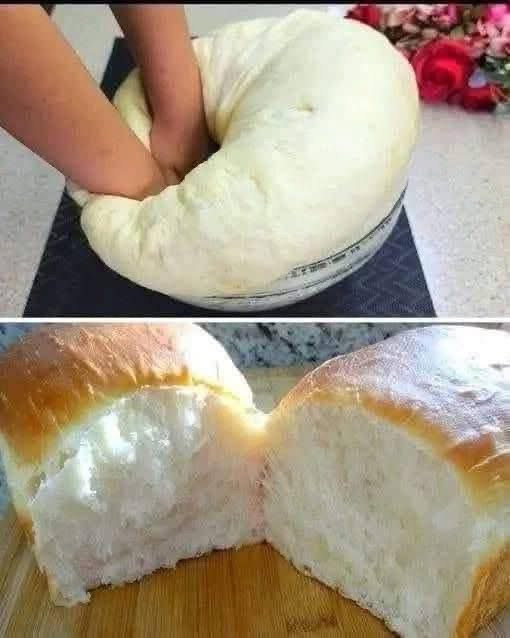
Ingredients (1 Large Loaf or 2 Medium Loaves)
Dry Ingredients
- 500 g all-purpose flour (about 4 cups)
- 60 g sugar (¼ cup + 1 tbsp)
- 8 g salt (1½ tsp)
- 10 g instant dry yeast (1 tbsp)
Wet Ingredients
- 250 ml warm milk (1 cup, about 35–40°C)
- 1 large egg (room temperature)
- 60 g unsalted butter (¼ cup), very soft
Optional (for extra softness)
- 2 tbsp heavy cream or
- 1 tbsp honey (replace part of sugar)
Why This Bread Is So Soft
This bread is soft because of four key factors:
- Milk instead of water – milk adds fat and proteins that soften gluten.
- Sugar and fat – they tenderize the crumb.
- Proper kneading – creates elastic gluten that traps air.
- Gentle baking – keeps moisture inside the loaf.
If you respect these four rules, you will succeed.
Step 1: Activate the Yeast (5–10 Minutes)
In a large bowl:
- Pour the warm milk
- Add 1 tbsp sugar (from the measured sugar)
- Add the yeast
Stir gently and let it rest for 5–10 minutes.
What You Should See
- Foam
- Bubbles
- A creamy, slightly thick surface
If nothing happens, your yeast is dead or the milk was too hot. Start again—this step is crucial.
Step 2: Mix the Dough
To the yeast mixture, add:
- The egg
- Remaining sugar
- Salt (keep salt away from yeast at first)
- Half of the flour
Mix with a spoon or your hand until smooth.
Gradually add the remaining flour, mixing until a soft, sticky dough forms.
👉 The dough should be soft, not dry. A slightly sticky dough = soft bread.
Step 3: Kneading (Most Important Step – 15–20 Minutes)
Transfer the dough to a clean surface.
Kneading by Hand
- Push the dough forward with your palm
- Fold it back over itself
- Turn 90 degrees
- Repeat
After 5 minutes, start adding the soft butter, one tablespoon at a time.
Yes, it will look messy. Keep kneading.
After 15–20 Minutes
The dough should:
- Be smooth and shiny
- Stretch without tearing (windowpane test)
- Feel elastic and alive
💡 If the dough sticks too much, lightly oil your hands—don’t add too much flour.
Step 4: First Rise (1–1½ Hours)
- Shape the dough into a ball
- Place it in a lightly oiled bowl
- Cover with plastic wrap or a towel
- Let rise in a warm place
When Is It Ready?
- Doubled in size
- Finger pressed into dough leaves a slow-filling dent
This rise builds flavor and structure.
Step 5: Shaping for Fluffy Layers
Punch down the dough gently to remove excess air.
For One Large Loaf
- Roll dough into a rectangle
- Roll tightly like a jelly roll
- Place seam-side down in greased loaf pan
For Two Small Loaves or Buns
- Divide dough evenly
- Shape into tight balls
- Place side by side
Cover and rest 15 minutes before final rise.
Step 6: Second Rise (45–60 Minutes)
Cover again and let the dough rise until:
- Almost doubled
- Very puffy
- Dough reaches near the top of the pan
This step creates the cotton-soft interior.
Do not rush this step.
Step 7: Baking (Gentle Heat)
Preheat oven to 170–175°C (340–350°F).
Before baking (optional):
- Brush top with milk or egg wash for shine
Bake for 25–30 minutes.
If Browning Too Fast
Cover loosely with aluminum foil for the last 10 minutes.
Step 8: Cooling (Hard but Necessary)
Remove bread from oven.
Let it cool 10 minutes in the pan, then transfer to a rack.
❗ Cutting too early releases steam and dries the bread.
Wait at least 20–30 minutes.
Final Result
You should get:
- A golden, soft crust
- A white, airy crumb
- Long, stretchy strands when pulled
- Bread that feels light like a pillow
If you squeeze it, it should slowly spring back.
Common Mistakes (Avoid These!)
- ❌ Too much flour → dense bread
- ❌ Skipping kneading → crumbly texture
- ❌ Over-baking → dry bread
- ❌ Killing yeast with hot milk
Variations
Sweet Milk Bread
- Add 2 extra tbsp sugar
- Add vanilla
- Top with powdered sugar
Savory Version
- Reduce sugar to 2 tbsp
- Add cheese, garlic butter, or herbs
No Egg Version
- Replace egg with 60 ml milk
- Add 1 tbsp oil
Storage & Freezing
- Room temperature: 2 days (wrapped)
- Refrigerator: not recommended (dries bread)
- Freezer: up to 2 months
To reheat:
- Wrap in foil
- Warm at 160°C for 8–10 minutes
Final Tip for Extreme Softness
If you want next-level softness, brush the bread with melted butter right after baking, then cover with a clean cloth while cooling. This traps moisture and gives that bakery-style texture.