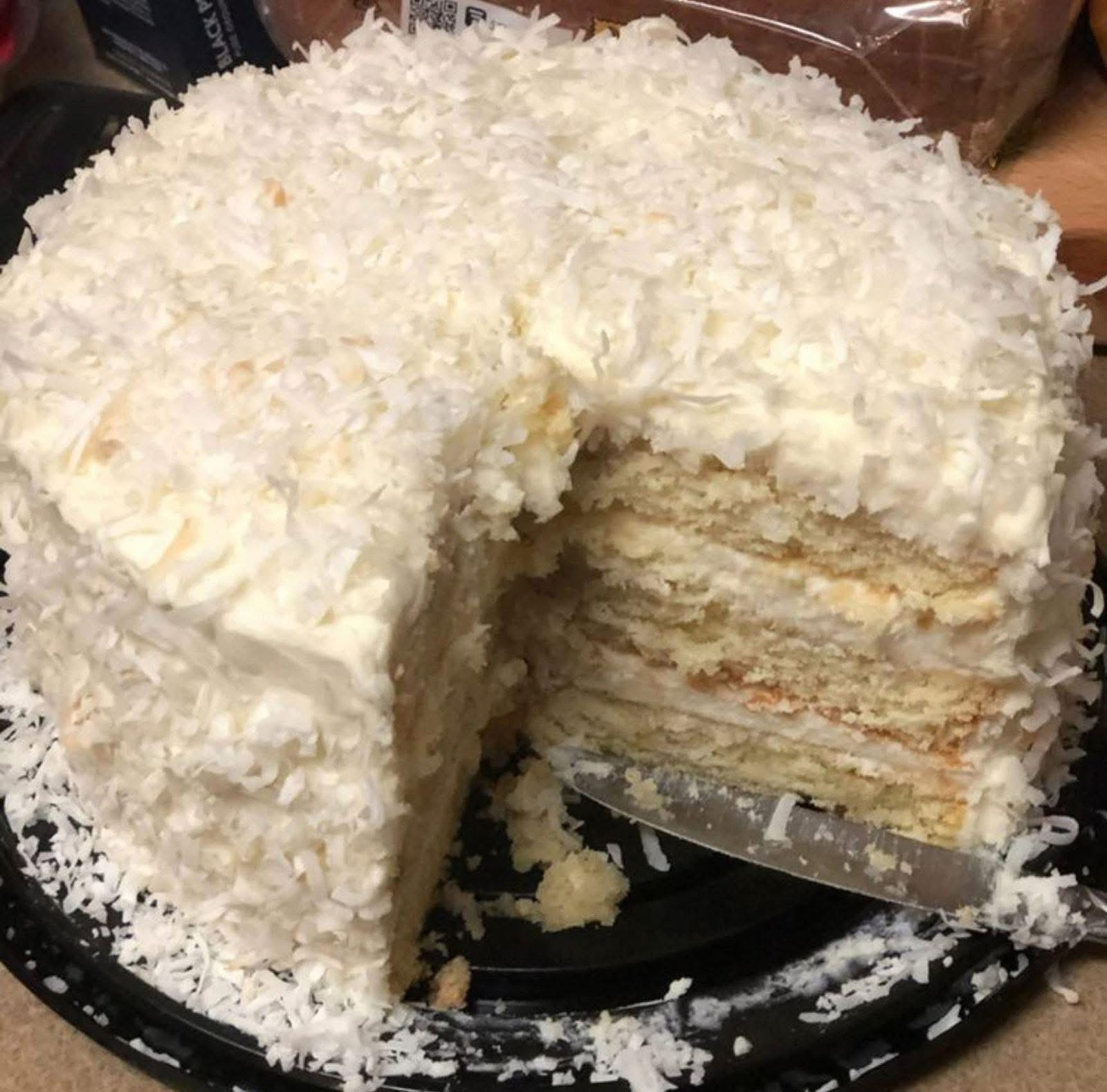
What Makes a Classic Coconut Layer Cake Special
This cake stands out because it balances lightness and richness. The cake itself is soft and airy, while the frosting adds creaminess without being heavy. The coconut provides texture and flavor without overpowering the vanilla base.
Key characteristics:
- Soft, fluffy cake layers
- Creamy coconut-infused frosting
- Sweet shredded coconut exterior
- Elegant, bakery-style appearance
- Perfect make-ahead dessert
Ingredients Overview
Understanding each ingredient helps you achieve the perfect result.
Cake Layers
- Flour provides structure
- Butter adds richness
- Sugar creates sweetness and tenderness
- Eggs give stability and softness
- Milk keeps the crumb moist
- Coconut flavor enhances the theme
Frosting
- Butter creates a creamy base
- Cream cheese adds slight tang (optional but classic)
- Powdered sugar sweetens smoothly
- Coconut milk intensifies flavor
Topping
- Sweetened shredded coconut for texture and decoration
Ingredients List (8–10 Servings)
For the Cake
- 340 g (2¾ cups) all-purpose flour
- 2½ tsp baking powder
- ½ tsp salt
- 170 g (¾ cup) unsalted butter, softened
- 300 g (1½ cups) granulated sugar
- 4 large egg whites, room temperature
- 1 tbsp vanilla extract
- 240 ml (1 cup) whole milk or coconut milk
For the Coconut Frosting
- 225 g (1 cup) unsalted butter, softened
- 115 g (½ cup) cream cheese, softened
- 500 g (4 cups) powdered sugar
- 3–4 tbsp coconut milk
- 1 tsp vanilla extract
For Decoration
- 200 g (2½ cups) sweetened shredded coconut
Equipment Needed
- Two or three 20 cm (8-inch) round cake pans
- Mixing bowls
- Electric mixer
- Rubber spatula
- Cooling racks
- Offset spatula
Preparing the Pans and Oven
Preheat the oven to 175°C (350°F).
Grease the cake pans thoroughly, line the bottoms with parchment paper, then lightly flour the sides.
This ensures easy release and clean, professional-looking layers.
Mixing the Dry Ingredients
In a medium bowl, whisk together:
- Flour
- Baking powder
- Salt
Set aside. This step evenly distributes the leavening agent and prevents uneven rising.
Creaming Butter and Sugar
In a large bowl, beat the butter and sugar together on medium speed for 4–5 minutes, until pale, fluffy, and light.
This step incorporates air into the batter, creating a soft and tender cake texture.
Adding Egg Whites and Flavoring
Add the egg whites one at a time, beating well after each addition.
Mix in the vanilla extract.
Using egg whites instead of whole eggs keeps the cake light in color and delicate in crumb.
Alternating Milk and Dry Ingredients
Reduce mixer speed to low.
Add the dry ingredients in three additions, alternating with the milk.
Start and end with the dry ingredients. Mix just until combined—do not overmix.
Dividing and Baking the Cake Layers
Divide the batter evenly between prepared pans. Smooth the tops gently.
Bake for 22–26 minutes, or until:
- The tops spring back when lightly touched
- A toothpick inserted into the center comes out clean
Remove from oven and let cool in pans for 10 minutes, then turn out onto racks to cool completely.
Preparing the Coconut Frosting
In a large bowl, beat butter and cream cheese together until smooth and creamy.
Gradually add powdered sugar, one cup at a time, beating on low speed.
Add coconut milk and vanilla extract, then increase speed and beat until fluffy and spreadable.
The frosting should be smooth, light, and easy to work with.
Toasting the Coconut (Optional but Recommended)
For extra depth of flavor, lightly toast the shredded coconut:
- Spread coconut on a baking sheet
- Bake at 170°C (340°F) for 5–7 minutes
- Stir halfway until lightly golden
Let cool completely before using.
Assembling the Cake
Place one cake layer on a serving plate. Spread a generous layer of frosting on top.
Add the second layer, frost again, then place the final layer on top.
Apply a thin crumb coat over the entire cake and chill for 20 minutes.
Final Frosting and Coconut Coating
Spread a thick, even layer of frosting over the entire cake.
Gently press shredded coconut onto the sides and top, covering the cake completely. Work slowly to ensure even coverage.
Texture and Flavor Profile
This classic coconut layer cake offers:
- Light, tender cake layers
- Creamy, smooth frosting
- Sweet coconut crunch on the outside
- Balanced sweetness without heaviness
It’s rich yet refreshing, making it perfect for warm weather and celebrations.
Variations and Enhancements
Lemon Coconut Cake
Add lemon zest to the batter and frosting for brightness.
Pineapple Coconut Cake
Spread a thin layer of crushed pineapple (well-drained) between layers.
Chocolate Coconut Cake
Add white chocolate shavings between layers for extra indulgence.
Storage and Make-Ahead Tips
- Store covered in the refrigerator for up to 4 days
- Bring to room temperature before serving
- Cake layers can be baked and frozen for up to 2 months
Serving Suggestions
Serve this cake:
- With tea or coffee
- As a holiday centerpiece
- With fresh berries
- For birthdays and anniversaries
It slices beautifully and holds its shape.
Common Mistakes to Avoid
- Overbaking the cake layers
- Using cold ingredients
- Skipping the crumb coat
- Frosting warm cakes
- Using dry coconut only (sweetened works best)
Final Thoughts
The Classic Coconut Layer Cake is a timeless dessert that never goes out of style. Soft, elegant, and beautifully balanced, it’s the kind of cake that becomes a family tradition. Whether you’re baking it for a celebration or sharing it online, this cake always delivers beauty, flavor, and comfort 🥥🍰