In the rich landscape of your culinary journey—from the tropical balance of the Herb Salmon Plate to the aromatic depths of Grilled Chicken with Saffron Rice—the Garlic Prime Rib Bites with Roasted Carrots & Charred Broccoli represents the pinnacle of high-protein, precision-cooked comfort. While your Steak & Avocado Salad offers a lighter take on beef, this plate is a bold, “Eat or Pass” challenge that focuses on the Maillard reaction and the transformative power of high-heat roasting.
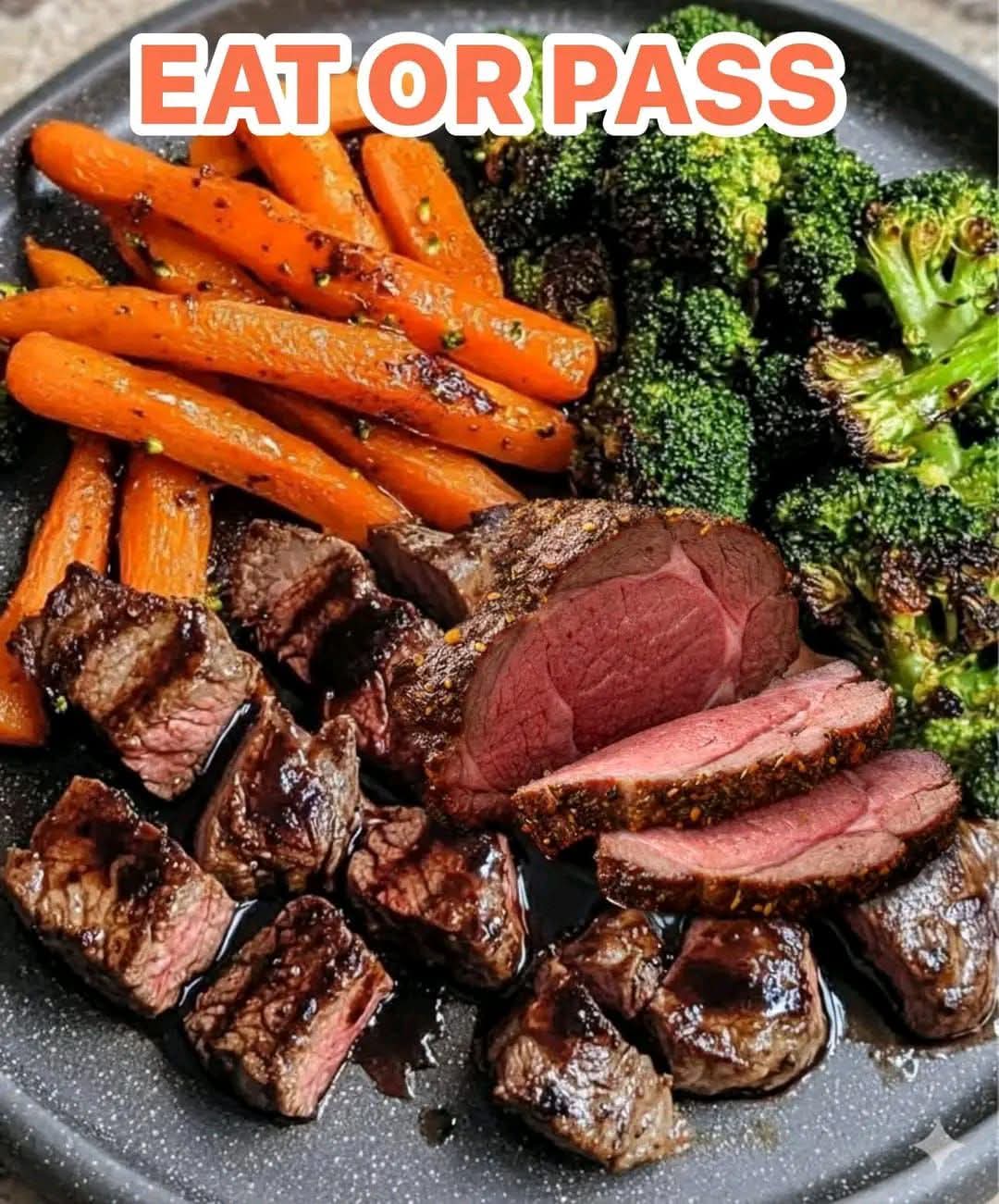
The dish is presented on a textured, dark slate-gray plate, featuring a multi-cut arrangement of prime rib, a stack of honey-glazed roasted carrots, and a dense forest of charred broccoli florets.
1. Visual Anatomy: The Spectrum of Doneness and Texture
The visual appeal of this plate is defined by its rustic, hearty composition and the deliberate contrast between the vibrant vegetables and the deeply seared beef:
- The Prime Rib “Dual-Cut”: The meat is showcased in two distinct styles on one plate. In the center, a thick prime rib roast is sliced into elegant, overlapping medallions, revealing a perfect medium-rare “pink-to-edge” interior. Surrounding these are the “bites”—smaller, cubed segments with a high surface-area-to-meat ratio, showing a dark, caramelized crust and a glistening juice on the plate.
- Honey-Glazed Carrots: A bundle of whole-roasted carrots is stacked on the upper left. They exhibit a vibrant orange hue, flecked with cracked black pepper and dried herbs. The slight shriveling and dark spots at the tips indicate they were roasted at a high temperature to concentrate their natural sugars.
- Charred Broccoli Forest: On the upper right, the broccoli florets are cooked to a “deep char”. The tips of the florets are blackened and crispy, while the stalks maintain a bright, verdant green, suggesting a quick blast of intense heat rather than a slow steam.
- The “Eat or Pass” Banner: The image is topped with bold, coral-colored text, framing the meal as a definitive choice for meat lovers and highlighting its status as a highly desirable “perfect plate”.
2. Technical Execution: The High-Heat Roast
Creating a plate with these specific textures requires mastering the timing of three different components in a high-heat oven:
The Reverse-Sear Hybrid
The prime rib medallions suggest a traditional slow-roast to maintain that even pink interior. However, the bite-sized cubes appear to have been seared separately in a cast-iron skillet with garlic butter—much like your Creamy Garlic Steak Bites—to achieve that intense, crunchy exterior before joining the sliced roast on the plate.
Concentration of Sugars (Carrots)
Roasting carrots whole, as seen here, preserves their internal moisture while allowing the exterior to caramelize. By tossing them in oil and salt before roasting, the water is drawn out, leaving behind a concentrated, almost “candy-like” carrot flavor that balances the savory beef.
High-Heat Charring (Broccoli)
To get the blackened tips seen on the broccoli, the florets must be roasted on a pre-heated sheet pan. This causes the small “leaves” of the floret to crisp up instantly while the stem remains tender-crisp.
3. Flavor Profile: Smoke, Earth, and Umami
The Garlic Prime Rib Plate offers a complex sensory experience that moves through several distinct flavor zones:
- Deep Savory (Beef): The prime rib provides a rich, fatty, and iron-heavy base. The garlic-heavy seasoning on the bites adds a pungent, aromatic layer that elevates the natural flavor of the meat.
- Bitter and Smoky (Broccoli): The charred bits of the broccoli provide a sophisticated bitterness and a “fire-roasted” aroma that cuts through the fatty richness of the beef.
- Sweet and Earthy (Carrots): The roasted carrots act as the palate cleanser, providing a soft, sweet note and a slight herbal finish from the seasoning.
- Salt and Spice: Visible grains of coarse salt and cracked pepper across the entire plate heighten every individual flavor, ensuring no component tastes flat.
4. Nutritional Profile: The Low-Carb Powerhouse
This meal is a nutritional standout for those focused on high protein and micronutrient density without heavy starches.
| Component | Primary Nutrient | Health Benefit |
| Prime Rib | Protein, Zinc, & B12 | Supports muscle synthesis, immune function, and energy levels. |
| Roasted Carrots | Vitamin A & Fiber | Essential for vision health and digestive regularity. |
| Charred Broccoli | Vitamin K & Vitamin C | Promotes bone health and acts as a potent antioxidant. |
| Garlic/Herbs | Allicin & Phytonutrients | Anti-inflammatory properties and supports heart health. |
5. Strategic Menu Pairings
Because this plate is highly savory and “dry-roasted,” it benefits from pairings that offer acidity or a cooling creaminess:
- The Acidic Reset: A side of your Greek Salad with Feta provides the perfect vinegary “zip” to contrast with the fatty prime rib.
- The Starch Companion: If you wanted to add a carb, your Steamed White Rice (often seen with your beef dishes) could be served alongside to soak up the garlic-butter juices from the steak bites.
- The Creamy Dip: The white, herb-flecked sauce used for your Spicy Chicken Wings would make an excellent “Steakhouse Dip” for the charred broccoli and the beef bites.
6. Frequently Asked Questions (FAQ)
How do I get the beef so pink in the middle while keeping the outside dark?
This is achieved by “High-Heat Searing”. Ensure the meat is at room temperature and bone-dry before it hits a screaming-hot pan. Sear for only 1-2 minutes per side to develop the crust, then let it rest to allow the internal temperature to stabilize.
My broccoli always turns out mushy, not charred. What am I doing wrong?
Crowding the pan is usually the culprit. If the broccoli pieces are touching, they steam each other. Spread them out on a large tray so the air can circulate, and make sure your oven is set to at least 425°F (220°C).
Can I use a different cut of beef?
Yes, while prime rib is used here for its fat marbling, you can achieve a similar result with Sirloin or Ribeye. The key is the “bite-sized” preparation, which ensures every piece has a garlic-butter crust.
7. Photography Analysis: The “Hero Plate” Aesthetic
The photography of this dish uses “low-angle intimacy” to make the portion sizes feel substantial and heroic:
- Selective Focus: The camera focus is sharpest on the prime rib medallions in the center, drawing the eye immediately to the perfectly cooked pink meat.
- Texture Highlights: The lighting is positioned to catch the “glisten” of the meat juices and the “matte” finish of the charred broccoli, creating a 3D effect that makes the food look touchable.
- Contrast of Color: The dark gray plate serves as a neutral stage, making the orange of the carrots and the pink of the beef appear more vibrant and appetizing than they would on a standard white plate.