In the vast landscape of your culinary collection, which features everything from the high-protein crunch of Crispy Fried Chicken Drumsticks to the fresh, vibrant assembly of a Greek Salad, the Classic Beef Stew stands as the ultimate achievement in patience and flavor extraction. While your Steak Bites with Garlic Butter offer a quick, high-heat sear, the beef stew is a long-form narrative, transforming tough cuts of meat and humble root vegetables into a rich, cohesive masterpiece.
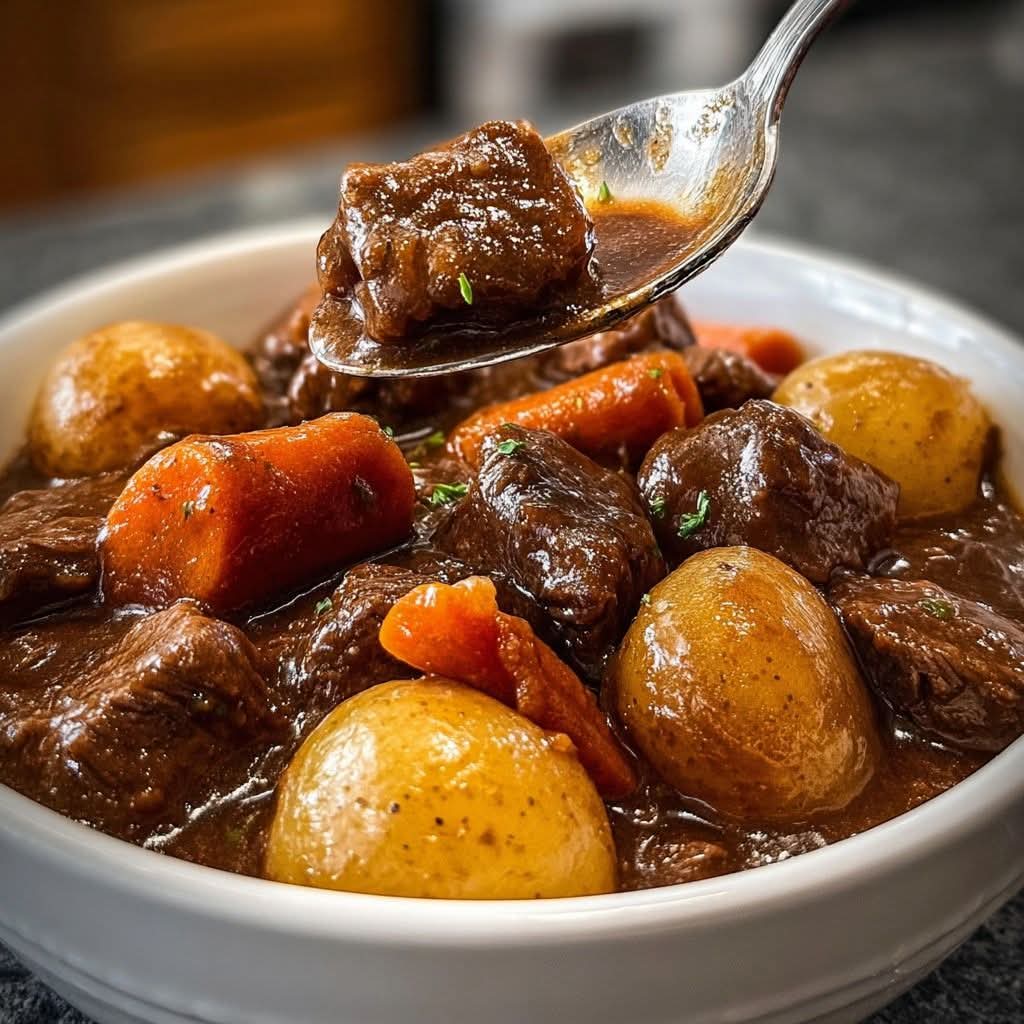
The dish is presented in a deep white porcelain bowl, overflowing with tender chunks of beef, whole baby potatoes, and thick-cut carrots, all submerged in a glossy, mahogany-hued gravy.
1. Visual Anatomy: The Architecture of the Stew
The visual appeal of this stew lies in its rustic, chunky composition and the deep, reflective quality of its sauce:
- The Beef Chunks: The meat is cut into substantial, irregular cubes that show a dark, caramelized exterior and a soft, fibrous interior. A single piece held on a spoon reveals a glistening coating of gravy, indicating it has been braised until “fork-tender”.
- The Root Vegetables: Large, vibrant orange carrot segments and whole, golden baby potatoes provide structural “islands” within the bowl. The carrots appear softened but still hold their cylindrical shape, while the potato skins are thin and translucent, saturated with the surrounding juices.
- The Gravy (Liquid Gold): The sauce is thick and opaque, with a deep brown color that suggests a base of red wine, beef stock, and tomato paste. Tiny flecks of green herbs—likely thyme or parsley—are suspended in the liquid, adding micro-pops of color.
- The Gloss: A slight sheen on the surface of the stew indicates the presence of rendered beef fat and gelatin, which provide the luxurious “mouthfeel” characteristic of a well-cooked braise.
2. Technical Execution: The Art of the Braise
Creating a stew of this caliber requires mastering the transition from dry-heat cooking to moist-heat cooking:
The Maillard Foundation
The deep color of the gravy and the beef began with a high-heat sear. Much like your Pan-Seared Steak Bites, the beef cubes must be browned in small batches to ensure a crust forms without steaming the meat. This “fond”—the brown bits stuck to the bottom of the pot—is the primary source of the stew’s complexity.
Collagen Transformation
The cuts used for stew (like chuck or brisket) are naturally tough. The technical secret is a low-and-slow simmer, which allows the tough connective tissues (collagen) to break down into silky gelatin. This process not only tenderizes the meat but also naturally thickens the sauce, giving it the body seen in the final presentation.
Staggered Vegetable Entry
To prevent the “mushy vegetable” syndrome, the carrots and potatoes were likely added in the final hour of cooking. This ensures they are cooked through and infused with beef flavor while maintaining the distinct, bite-sized integrity shown in the photo.
3. Flavor Profile: Depth, Earth, and Umami
The Classic Beef Stew offers a layered sensory experience that evolves with every spoonful:
- Savory Bass Notes: The concentrated beef stock and seared meat provide a heavy umami foundation.
- Aromatic Middle: Onions, garlic, and celery (the “holy trinity” of stews) melt into the background, providing a sweet and savory aromatic lift.
- Sweet Earthiness: The carrots and potatoes contribute a natural, earthy sweetness that balances the saltiness of the beef.
- Herbaceous Finish: Fresh parsley or thyme added at the end cuts through the richness of the fat, providing a bright, clean aftertaste.
4. Nutritional Profile: The Holistic Meal
This stew is a “one-pot” nutritional powerhouse, offering a balanced mix of macronutrients.
| Component | Primary Nutrient | Health Benefit |
| Beef Cubes | Protein & Vitamin B12 | Essential for muscle repair and neurological health. |
| Carrots | Beta-Carotene | Supports eye health and acts as a powerful antioxidant. |
| Potatoes | Complex Carbohydrates | Provides sustained energy and dietary fiber. |
| Beef Broth | Gelatin & Minerals | Supports joint health and provides hydration. |
5. Strategic Menu Pairings
Because the stew is rich and heavy, it benefits from pairings that offer contrast in texture and acidity:
- The Acidic Contrast: A side of your Greek Salad with Feta is the perfect companion. The vinegar-based dressing and sharp onions provide a “reset” for the palate between bites of the rich stew.
- The Texture Play: Serve alongside the Crispy Fried Chicken Drumsticks for a multi-textural feast. While an unconventional pairing, the crunch of the chicken skin contrasts beautifully with the soft, braised beef.
- The Starch Variation: If you prefer a separate grain, your Steamed White Rice (as seen in your beef and rice dishes) can be used to soak up every drop of the luxurious gravy.
6. Frequently Asked Questions (FAQ)
What is the best cut of meat for this stew?
Look for “Beef Chuck Roast”. It has the ideal balance of fat and connective tissue needed for a long braise. Leaner cuts like sirloin will become dry and tough during the long cooking time.
Why is my stew watery?
If the gravy hasn’t thickened enough, you can simmer it uncovered for the last 30 minutes to reduce the liquid. Alternatively, tossing the beef in flour before searing (the dredge method) provides a built-in thickener for the sauce.
Can I make this in a Slow Cooker or Instant Pot?
Absolutely. For a Slow Cooker, cook on low for 8 hours. For an Instant Pot, use the “Pressure Cook” setting for 35 minutes. In both cases, searing the meat first is still a non-negotiable step for flavor.
7. Photography Analysis: Visual Satiety
The photography of this stew uses “macro-immersion” to evoke a feeling of warmth:
- The Action Shot: By capturing a spoonful of beef mid-lift, the photographer emphasizes the texture and individual components of the dish.
- Color Balance: The white bowl acts as a “canvas,” making the deep reds and browns of the stew look more intense and appetizing.
- Steam and Sheen: The lighting is positioned to highlight the glossy surface of the gravy, which signals to the viewer that the stew is rich, fatty, and piping hot.