In your diverse collection of dishes—ranging from the rapid, high-heat execution of Spicy Garlic Butter Shrimp to the fresh, unheated assembly of the Steak & Avocado Salad—the Beef Stew with Rice represents the essential art of the braise. While your Beef Patty dish offers a quick, ground-protein comfort, this stew relies on the slow breakdown of tough connective tissues into rich, gelatinous luxury, creating a meal that is as much about the sauce as it is about the meat.
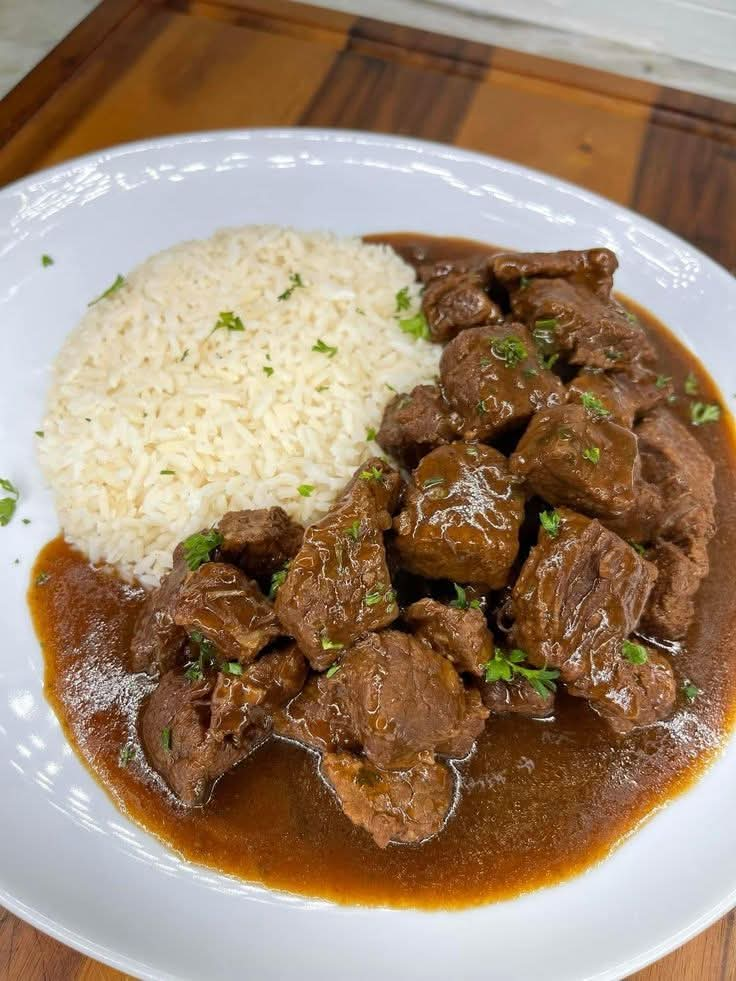
Presented on a clean white plate, the dish features a mountain of fluffy, long-grain white rice served alongside a generous portion of dark, glossy beef chunks submerged in a thick, mahogany-colored gravy.
1. Visual Anatomy: The Texture of Comfort
The visual appeal of this stew is rooted in its deep, saturated colors and the stark contrast with the white rice:
- The Beef Chunks: Each piece of beef is cut into substantial, irregular cubes. The visible fibers appear softened and saturated with sauce, indicating they have been simmered until “fork-tender”.
- The Glossy Gravy: The sauce has a reflective, mirror-like quality, suggesting a high concentration of gelatin and a careful reduction process. Its deep brown hue indicates a thorough initial sear of the meat and the inclusion of aromatic bases like tomato paste or red wine.
- The Fluffy Rice Bed: The rice is served as a distinct, clean mound. The individual grains are separate and well-defined, providing a neutral, absorbent canvas for the heavy stew.
- The Fresh Finish: A fine sprinkling of bright green parsley provides a necessary “flavor pop” against the dark tones of the beef, signaling that the dish is fresh and vibrant despite its long cooking time.
2. Technical Mastery: The Science of the Braise
Creating a stew with this level of visual and textural depth requires a multi-stage technical approach:
The Maillard Foundation
The darkness of the gravy starts with the sear. By browning the beef in small batches at high heat before adding liquid, you create a complex “fond” on the bottom of the pot. This caramelized protein provides the foundational color and savory depth for the entire sauce.
Low and Slow Transformation
Unlike the Steak and Potatoes, where the goal is to keep the meat fibers intact and juicy at a specific internal temperature, stew meat starts out tough. Through a low-temperature simmer, the collagen in the beef melts into gelatin. This gelatin is what gives the sauce the incredible gloss and “lip-smacking” mouthfeel seen in the photo.
Rice as a Technical Counterpoint
The rice must be perfectly steamed to act as a proper vessel. If the rice is too sticky, it competes with the heavy texture of the stew; if it is too dry, it doesn’t absorb the gravy. The grain definition shown here suggests a careful rinsing of starch before cooking and a gentle fluffing with a fork.
3. Flavor Harmony: A Deeply Savory Profile
The flavor profile of Beef Stew with Rice is designed for maximum satisfaction and warmth:
- Pure Umami: The primary note is the concentrated essence of beef, bolstered by aromatics like onions and garlic that have dissolved into the sauce.
- Subtle Sweetness: The deep brown color suggests a long caramelization of vegetables, which adds a faint, background sweetness to balance the salt.
- The Neutralizer: The plain white rice serves a critical function—it provides a “palate reset,” ensuring that the rich, heavy flavors of the stew don’t become fatiguing to the taste buds.
- Herbal Brightness: The parsley adds a momentary “high note” of earthiness that cuts through the dense fats of the beef.
4. Nutritional Profile: Sustained Strength
This dish is a classic example of a “complete meal,” providing long-burning fuel and essential minerals.
| Component | Found In | Health Benefit |
| High-Density Protein | Stew Beef | Essential for long-term muscle maintenance and satiety. |
| Complex Energy | White Rice | Provides readily available glucose for physical and mental energy. |
| Iron & B-Vitamins | Beef & Gravy | Supports red blood cell production and metabolic function. |
| Collagen & Gelatin | Reduced Sauce | Supports joint health and provides gut-friendly amino acids. |
5. Strategic Menu Pairings
To round out a meal featuring the Beef Stew with Rice, consider adding elements that provide crunch or acidity:
- The Acidic Start: Serve your Greek Salad with Feta as a first course. The vinegar, olives, and crisp cucumbers will sharpen the appetite for the heavy stew to follow.
- The Texture Boost: Pair with a side of the Roasted Broccoli from your vegetable tray. The charred, slightly bitter florets provide a welcome contrast to the soft beef and rice.
- The Indulgent Finish: After such a savory meal, a slice of the Double Layer Chocolate Cake provides the ultimate cocoa-rich conclusion.
6. Frequently Asked Questions (FAQ)
What is the best cut of beef for stewing?
Look for “tough” cuts like chuck roast, brisket, or shank. These contain the collagen necessary to create the thick, glossy sauce seen in your presentation; lean cuts like tenderloin will actually become dry and stringy if cooked this way.
How do I get the sauce so glossy?
The gloss comes from two things: the natural gelatin from the beef and a proper reduction. If your sauce is too thin, remove the lid for the last 30 minutes of cooking to let the water evaporate and concentrate the fats and proteins.
Can I make this in a slow cooker or pressure cooker?
Yes. A pressure cooker can achieve this “long-simmered” look in about 45 minutes, while a slow cooker will take 6-8 hours on low. Just remember to always sear the meat first for that deep brown color.
7. Photography Analysis: Visual Satiety
The photography of this plate uses a “diagonal composition” to lead the eye:
- Split Frame: By placing the white rice on one side and the dark beef on the other, the photographer creates a balanced tension that highlights the unique textures of both.
- Specular Reflection: The lighting is positioned to catch the surface of the gravy, creating highlights that communicate richness and heat.
- Top-Down Perspective: The slightly elevated angle shows the height of the rice mound and the depth of the stew “pool,” making the portion look generous and comforting.