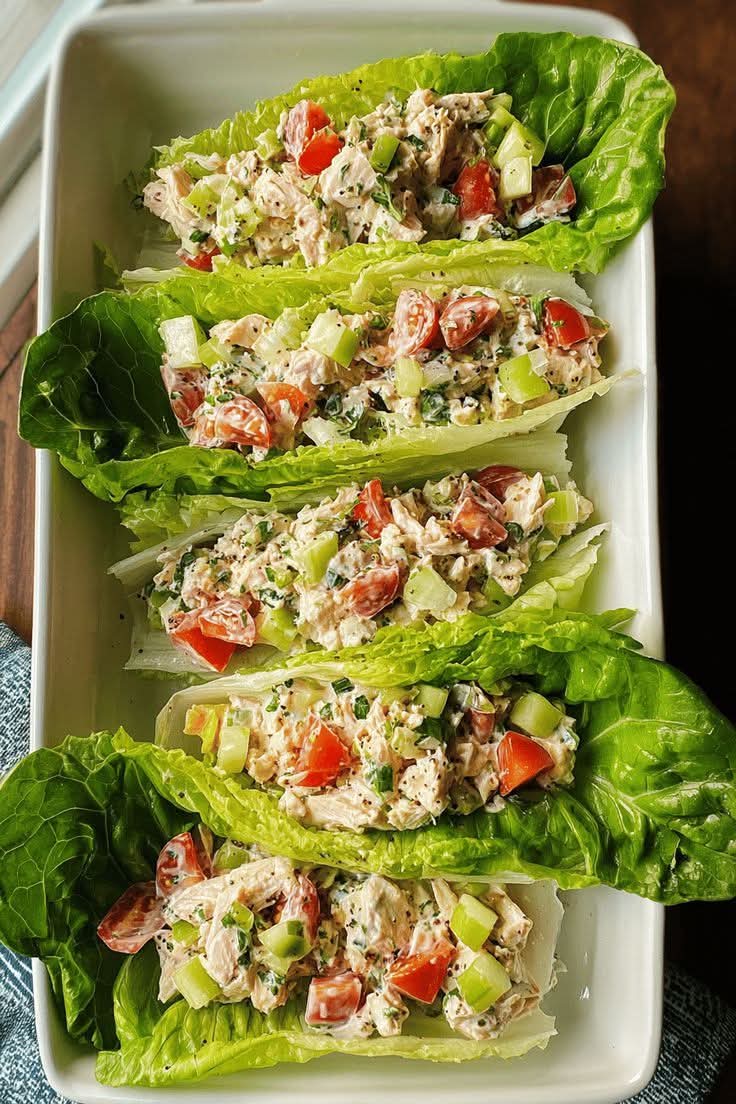
The BLTA Chicken Salad Lettuce Wraps showcased in your recent culinary gallery represent a sophisticated evolution of the classic deli sandwich, reimagined as a low-carb, nutrient-dense masterpiece. By substituting traditional bread for crisp Romaine heart leaves, this dish emphasizes the vibrant textures of its fillings: tender poached chicken, juicy cherry tomatoes, crisp celery, and a creamy, herb-flecked dressing.
This preparation is a masterclass in textural layering, where the “snap” of the lettuce boat provides a structural vehicle for the soft, savory chicken salad, creating a “clean-eating” alternative to heavier bakes like your Cheesy Ham & Corn Toast Bake.
1. The Anatomy of a High-Tier Lettuce Wrap
A professional-grade lettuce wrap is defined by the integrity of its “leaf-vessel” and the balance of its moisture content. Based on your image, this dish achieves success through five critical sensory layers:
- The Romaine Heart Foundation: The use of the inner leaves of Romaine provides a natural “boat” shape with a sturdy center rib, essential for supporting the weight of the chicken salad without folding.
- The Protein Core (Chicken & Bacon): Finely shredded or diced chicken breast serves as the base, complemented by the “B” in BLTA—crispy bacon bits—which provide smoky saltiness and fat.
- The Acidic Pop (Tomatoes): Diced cherry tomatoes offer a bright red visual contrast and a burst of acidity that cuts through the creamy dressing.
- The “Crunch” Factor (Celery & Scallions): Uniformly diced celery provides a watery, fibrous crunch that mirrors the crispness of the lettuce.
- The Herbed Emulsion: A visible dusting of cracked black pepper and finely minced parsley suggests a dressing enriched with fresh herbs and a hint of lemon or vinegar for brightness.
2. Technical Precision: Moisture Management
To replicate the professional results seen in your image, one must master the relationship between the dressing and the produce to avoid the “wilting” common in amateur wraps.
The “Dry-Prep” Technique
The most common failure in lettuce wraps is excess moisture pooling at the bottom of the leaf.
- The Tomato Deseed: When using cherry or plum tomatoes (as seen in the photo), remove the watery seeds before dicing to ensure the salad remains thick and scoopable.
- The Lettuce Chill: For the “extra-crisp” snap visible in your presentation, soak the Romaine leaves in ice water for 10 minutes, then spin them completely dry before serving.
The Dressing Emulsification
Notice how the dressing in your photo coats every ingredient without dripping?. This is achieved by using a high-viscosity base, such as Greek yogurt or a high-quality avocado-oil mayonnaise, which binds the ingredients together into a cohesive “scoop”.
3. Flavor Profiles: The Umami-Fresh Spectrum
The BLTA Chicken Salad relies on a “Savory-Garden” axis, providing a lighter alternative to the rich umami found in your Cheesy Beef Rotini.
- The Smoky “B”: The bacon provides a deep, cured umami that replaces the need for heavy sauces.
- The Creamy “A”: While hidden in the mix, the “A” (Avocado) provides a silken mouthfeel that mimics the richness of cheese without the dairy heaviness.
- Herbaceous Lift: The visible parsley and scallions provide “green” notes that emphasize the freshness of the meal.
- Cracked Pepper Heat: The coarse-ground black pepper visible on the surface provides a mild, lingering heat that stimulates the palate.
4. Nutritional Profile: The Keto-Friendly Powerhouse
This dish is a nutritional standout in your gallery, offering high satiety with a low glycemic index.
| Component | Nutritional Benefit |
| Chicken Breast | High-quality lean protein for muscle maintenance and satiety. |
| Romaine Lettuce | Provides Vitamin K, Vitamin A, and hydration with minimal calories. |
| Cherry Tomatoes | Rich in Lycopene and Vitamin C for immune support. |
| Avocado & Bacon | Sources of healthy monounsaturated fats and flavor-enhancing lipids. |
5. Aesthetic Staging for a “Fresh-Harvest” Presentation
To achieve the professional “platter” look seen in your photo, follow these visual principles:
- The “Shingled” Arrangement: Don’t just place the wraps; overlap them slightly in a rectangular white dish to create a sense of abundance and flow.
- Top-Down Garnishing: Apply the cracked pepper and fresh parsley after the salad has been placed into the leaves. This ensures the garnish sits on top of the cream-colored chicken, making the colors “pop”.
- Color Balancing: Notice how the red tomatoes and green celery are distributed evenly throughout the five wraps?. This visual symmetry makes the dish look more appetizing and professionally prepared.
6. Culinary Inspiration: Integrating Your Collection
The BLTA Chicken Salad Lettuce Wraps act as a perfect “light” anchor that can be paired with other elements from your kitchen:
- The Bread Pairing: If guests want more “heft,” serve these alongside your Soft Pan Flatbread—the bread can be used to wrap the salad for a more traditional “gyro” style experience.
- The Seafood Swap: Take inspiration from your Creamy Shrimp Gratin and swap the chicken for chilled, poached shrimp to create a “Seafood BLTA Wrap”.
- The “Dip” Evolution: If you have leftover chicken salad, it can be served as a dip for your Root Vegetable Gratinée chips or as a topping for your Cheesy Ham & Corn Toast.
- The Dessert Finish: After a light, crisp lunch, a more decadent dessert like your Mini Chocolate-Dipped Cheesecakes or Velvety Caramel Flan Muffins provides the perfect indulgent balance.
7. Frequently Asked Questions (FAQ)
How do I prevent the wraps from getting soggy?
Only assemble the wraps immediately before serving. If you are meal-prepping, store the chicken salad in an airtight container and the lettuce leaves separately in a damp paper towel.
Can I make this vegetarian?
Yes. Substitute the chicken with chickpeas and the bacon with “fakon” or smoked paprika-seasoned roasted walnuts to maintain the smoky flavor profile seen in the photo.
What is the best way to cook the chicken?
For the tender texture seen in the photo, poaching the chicken in salted water with a bay leaf ensures it remains moist. Once cooled, it should be finely diced rather than shredded for the best “bite”.