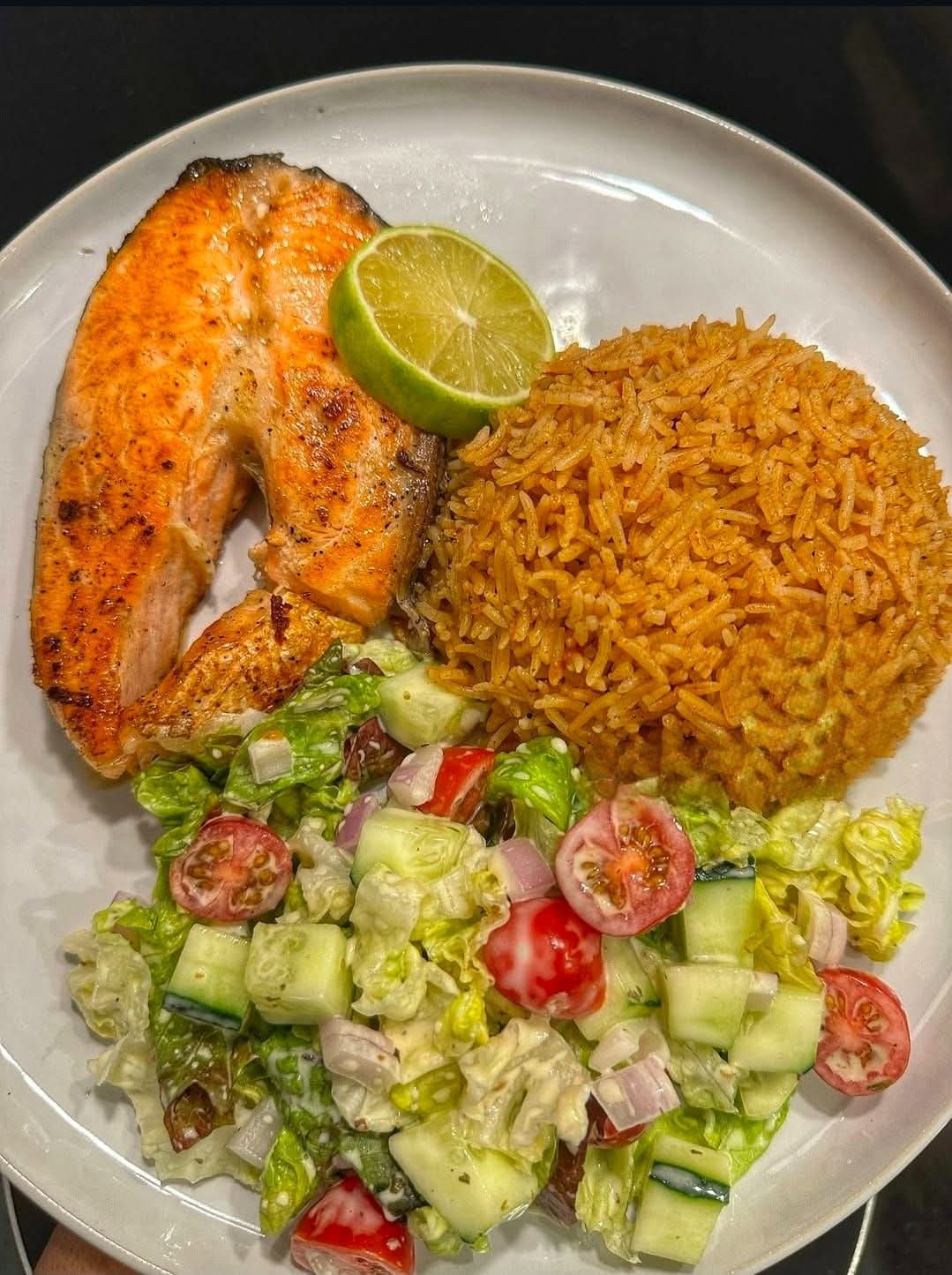
The Pan-Seared Salmon with Spiced Rice & Fresh Salad, as showcased in your exquisite culinary gallery, represents the pinnacle of “vibrant vitality” on a plate. This dish is a masterclass in balancing the rich, omega-3-packed fats of Atlantic salmon with the earthy complexity of spiced grains and the crisp, acidic snap of a garden-fresh salad. Characterized by its perfectly rendered, golden-pink salmon fillet—often topped with a delicate herb garnish—this meal is a favorite for those who value “Big Flavor” without compromising on clean, whole-food ingredients.
Achieving the professional, “flaky yet firm” texture of the salmon and the aromatic fluffiness of the spiced rice—as seen in your photography—requires mastery over pan-convection, spice blooming, and the art of the raw-to-cooked vegetable contrast. This comprehensive guide explores the technical precision, nutritional synergy, and artistic assembly required to recreate this modern healthy masterpiece.
1. The Anatomy of a Balanced “Power Platter”
A successful salmon platter relies on a careful architecture of temperature and texture. Based on the visual evidence in your collection, this dish hits several critical sensory targets:
- The Seared Salmon Fillet: A thick-cut portion of salmon featuring a crisp, seasoned exterior and a moist, translucent center that flakes easily with a fork.
- The Spiced Rice Foundation: A bed of long-grain rice (likely Jasmine or Basmati) infused with aromatics like turmeric, cumin, or even a hint of the maple-sriracha profile seen in your chicken bites.
- The Fresh Salad Contrast: A mix of raw greens, cherry tomatoes, and cucumber that provide a cooling effect to balance the warm components.
- The “Glisten” Factor: A final drizzle of extra virgin olive oil or a light citrus vinaigrette that makes the ingredients shine under the light, as seen in your “Colorful Feast” photo.
2. Technical Precision: Mastering the Salmon Sear
The primary challenge of cooking salmon is preventing it from drying out while still achieving a flavorful crust. To replicate the professional results seen in your image, moisture management is essential.
The Science of the Pan-Sear
- Temperature Tempering: Take the salmon out of the refrigerator 15 minutes before cooking. Putting a cold fish into a hot pan causes the muscle fibers to tighten instantly, pushing out moisture.
- The “Bone Dry” Skin: Pat the salmon skin and flesh with paper towels until completely dry. This is the only way to achieve the “snap” and prevents the fish from sticking to the pan.
- The High-Heat Start: Use a heavy-bottomed pan (like cast iron). Add oil with a high smoke point and wait until it shimmers. Place the salmon flesh-side down first to develop that golden-brown color seen in your gallery.
- The Internal Glow: For the best texture, aim for an internal temperature of 125°F (52°C) for medium-rare, allowing it to carry over to 130°F while resting.1
3. The Spiced Rice: An Aromatic Bed
The rice in your collection appears distinct and fluffy, rather than clumpy or heavy.
- Toasting the Grains: Before adding water, sauté the dry rice in a bit of butter or oil with your spices (cumin, coriander, or turmeric).2 This “blooms” the fat-soluble flavors and coats each grain to prevent sticking.
- The Liquid Gold: Using chicken or vegetable stock instead of water adds a layer of savory depth that complements the richness of the salmon.
- The Steam Finish: Once the water is absorbed, turn off the heat and let the rice sit covered for 10 minutes. This ensures the grains are tender all the way through without being mushy.
4. The Fresh Salad: Acidic Balance
The salad is the “brightness” of the dish. As evidenced by your other vegetable-forward plates, the ingredients should be cut with precision to ensure a balanced bite.
- The Texture Mix: Combine crunchy elements (like the red onions from your sheet-pan chicken) with soft elements (like the avocado from your tropical bowl).
- The Zesty Dressing: A simple mix of lemon juice, Dijon mustard, and honey provides a sharp contrast to the fatty salmon. This echoes the “Sweet-Heat” balance you’ve mastered in other dishes.
5. Nutritional Profile: Brain and Body Fuel
This platter is a nutritional powerhouse, offering a wealth of healthy fats, clean proteins, and essential minerals.
| Component | Primary Nutrients | Functional Benefit |
| Atlantic Salmon | Omega-3 Fatty Acids, Protein | Supports heart health and reduces inflammation. |
| Spiced Rice | Complex Carbs, Manganese | Provides sustained energy and supports bone health. |
| Leafy Greens | Vitamin K, Folate | Supports blood health and cognitive function. |
| Cherry Tomatoes | Lycopene | A powerful antioxidant that supports skin health. |
| Lemon/Citrus | Vitamin C | Enhances iron absorption from the greens. |
6. Professional Plating: The “Colorful Feast” Aesthetic
To ensure your salmon platter looks as professional as the one in your collection, follow these assembly steps:
- The Base Layer: Spread a generous portion of spiced rice across one side of the plate, creating a slightly raised mound to prop up the salmon.
- The Salmon Lean: Place the salmon fillet at an angle against the rice. This creates height and allows the juices from the fish to season the grains.
- The Salad Border: Arrange the fresh salad in the remaining space. Keep the colors grouped—tomatoes next to greens—to maintain the “vibrant” look of your photography.
- The Final Herb Garnish: Sprinkle fresh dill or parsley over the entire plate. This “green” pop is the signature of your culinary style.
7. Frequently Asked Questions (FAQ)
How do I prevent the white “stuff” (albumin) from appearing on my salmon?
Albumin is just protein being pushed out. It usually happens when salmon is cooked too fast at too high a temperature. Brining the salmon in a simple salt-water solution for 10 minutes before cooking can significantly reduce this.
Can I make the spiced rice in a rice cooker?
Yes! Simply add your spices and a teaspoon of oil to the rice cooker along with the grains and liquid. It will come out perfectly fluffy every time.
What is a good substitute for salmon?
If you want to maintain the “Colorful Feast” aesthetic, Rainbow Trout or Arctic Char are excellent alternatives with similar fat contents and vibrant colors.
8. Culinary Inspiration: Integrating Your Gallery
The Pan-Seared Salmon Platter is a versatile canvas that can be adapted using other successes from your collection:
- The “Burrata” Twist: Add a small dollop of the creamy Burrata Melt to your salad for a luxurious, Mediterranean touch.
- The Tropical Lift: Replace the standard salad with the Mango Avocado Salsa from your chicken bowl for a fruit-forward summer version.
- The Perfect Sip: Serve this salmon platter with the Black Coffee from your breakfast photos to provide a robust, earthy contrast to the delicate fish.