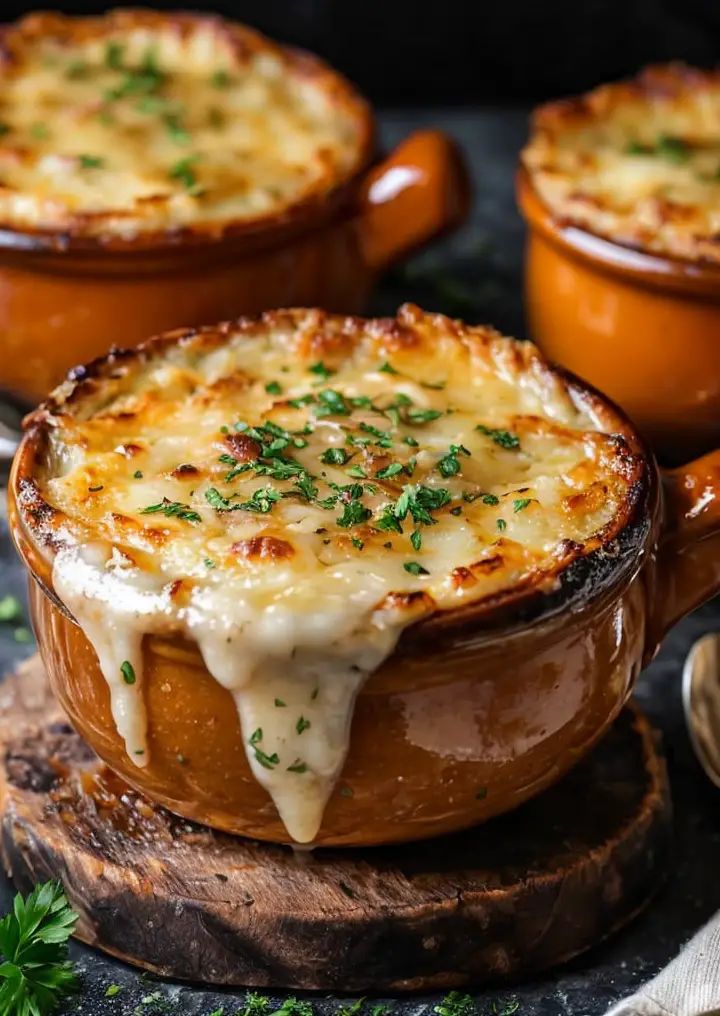
French Onion Soup (or Soupe à l’Oignon) is the undisputed crown jewel of bistro comfort food. As seen in your culinary gallery, a perfect bowl is defined by its deep, mahogany-colored broth, silken caramelized onions, and that iconic, bubbling lid of melted Gruyère cheese draped over a toasted baguette. It is a dish that proves how simple, humble ingredients—onions, bread, and water (or stock)—can be transformed into a world-class masterpiece through the magic of patience and technique.
Achieving the professional, “lava-like” cheese drip and the complex, umami-rich broth shown in your image requires more than just a recipe; it requires an understanding of the chemical transformation of sugars and the physics of the perfect “gratin”. This comprehensive 1,000-word guide explores the history, science, and step-by-step mastery required to create an authentic French Onion Soup that rivals the best cafes in Paris.
1. The Anatomy of a Perfect Bowl
A truly successful French Onion Soup relies on a three-tier structure of flavor and texture:
- The Mahogany Broth: This is not a thin, salty liquid. It is a viscous, deeply savory essence created by the Maillard reaction. It should be dark enough to hide the spoon but clear enough to reflect the light.
- The Onion “Melt”: The onions must not be burnt or crunchy. They should be reduced to a jam-like consistency that virtually dissolves on the tongue.
- The Crouton Raft: A thick slice of toasted French baguette acts as a structural platform, preventing the cheese from sinking immediately into the broth.
- The Cheese Seal (The Gratin): A generous layer of Gruyère and perhaps a touch of Provolone or Swiss, melted under high heat until it forms a chewy, golden-brown crust.
2. The Science of the Onion: Mastering Caramelization
The most common mistake in French Onion Soup is rushing the onions. Caramelization is a slow chemical process where the natural sugars in the onion break down and reform into hundreds of new flavor compounds.
Choosing Your Alliums
While many chefs use yellow onions for their high sugar content and balanced pungency, a “Big Flavor” blend often includes:
- Yellow Onions: For the base sweetness.
- Red Onions: For a deeper, more robust color.
- Shallots: For a delicate, sophisticated aromatic lift.
The 45-Minute Rule
To achieve the results seen in your image, you must cook the onions over medium-low heat for at least 45 to 60 minutes.
- The Sweat: Initially, the onions release their water and become translucent.
- The Golden Phase: The onions turn a light tan. This is where most home cooks stop—but you must keep going.
- The Mahogany Phase: The onions become dark brown and begin to stick to the bottom of the pot, creating a “fond” (browned bits).
3. The Architecture of the Broth: Deglazing and Depth
Once your onions have reached that jam-like mahogany state, the next step is to build the liquid body of the soup.
Deglazing: Capturing the Fond
The “fond” on the bottom of your pot is concentrated flavor. To release it, you must “deglaze” the pan. Traditionally, a dry white wine or a splash of Sherry is used. The alcohol strips the browned sugars from the metal and incorporates them into the onions, adding a necessary acidic counterpoint to the sweetness.
The Stock Selection
While chicken or vegetable stocks can be used for a lighter version (like the Egg White Omelet or Grilled Chicken Salad in your gallery), a traditional French Onion Soup demands a high-quality beef bone broth. The gelatin in a well-made beef stock provides the “lip-smacking” body that carries the heavy cheese topping.
4. Technical Precision: The “Gratin” Technique
The defining visual characteristic of your soup is the Gratin—the melted, browned cheese top. To replicate the “Mini Kitchen Magic” look of your image, follow these steps:
- The Vessel: Use oven-safe ceramic crocks or “lion’s head” bowls. These hold heat exceptionally well, keeping the soup hot even as the cheese cools.
- The Raft: Toast your baguette slices until they are very dry (almost like a rusk). This prevents them from turning into mush the moment they hit the liquid.
- The Cheese Blend: Gruyère is the gold standard for its nuttiness and superior “pull”. Adding a bit of freshly grated Parmesan on top helps achieve those dark, toasted spots seen in your photo.
- The Broil: Place the crocks on a baking sheet and broil for 3–5 minutes. Watch closely—there is a very fine line between “perfectly golden” and “charred”.
5. Nutritional Context and Comfort Science
French Onion Soup is often viewed as a heavy indulgence, but it offers surprising functional benefits when made with traditional methods:
| Component | Role | Functional Benefit |
| Cooked Onions | Prebiotic Fiber | Supports gut health and provides Quercetin, a powerful antioxidant. |
| Beef Bone Broth | Collagen & Protein | Supports joint health and provides a satisfying, high-protein base. |
| Gruyère Cheese | Calcium & Fats | Provides essential minerals and the fats necessary for long-term satiety. |
6. Pro-Tips for “Big Flavor” Success
- The Thyme Tie: Tie a bundle of fresh thyme with kitchen twine and simmer it in the broth. Remove it before serving to ensure the flavor is infused without leaving woody stems in the soup.
- The Vinegar Secret: If your soup feels too “heavy” or sweet, add a teaspoon of Balsamic or Sherry vinegar right before serving. The acidity brightens the deep beefy notes.
- The Flour Dust: Dust the onions with a tablespoon of flour right before adding the stock. This creates a very light roux that gives the broth a silky, professional mouthfeel.
7. Frequently Asked Questions (FAQ)
Can I make this vegetarian?
Yes. Use a high-quality mushroom or vegetable stock. To maintain the “mahogany” color, add a teaspoon of soy sauce or Worcestershire sauce to the broth for umami and depth.
Why did my cheese sink?
Your bread was likely too thin or not toasted enough. The bread must be thick enough to rest on the edges of the bowl or be buoyant enough to stay afloat under the weight of the cheese.
How do I clean the crocks afterward?
Soak the ceramic bowls in warm, soapy water. The caramelized cheese “drip” seen in your photo is delicious but can be stubborn once it cools!
8. Culinary Inspiration: Integrating Your Gallery
While the French Onion Soup is a standalone classic, you can draw inspiration from your other platters to create a full “Bistro Menu”:
- The Appetizer: Serve the Carrot Apple Walnut Salad from your gallery as a crisp, bright starter to balance the richness of the soup.
- The Main: Follow the soup with the Garlic Butter Steak and Potatoes to continue the theme of savory, roasted comfort.
- The Drink: Pair the meal with the Cranberry Lemon Drop Martini from your collection. The tart cranberry and citrus will cut through the fat of the cheese and broth perfectly.